Fragrance Allergen Labelling: What the EU's Expanded List Means for Cosmetic Brands
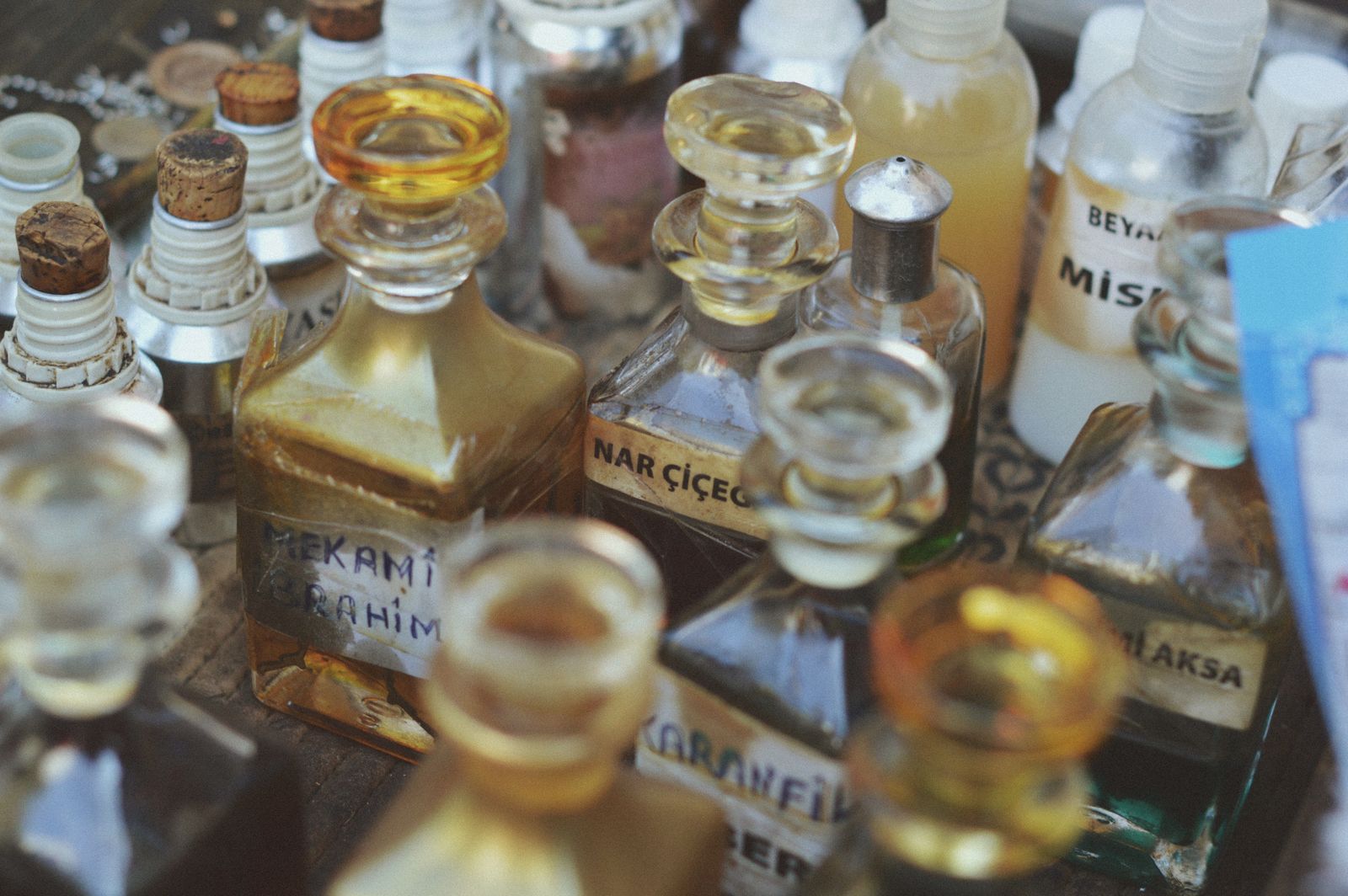
For two decades, a cosmetic brand selling into Europe had a short and familiar list of fragrance allergens to watch: 26 substances that had to be named on the ingredient list once they passed a set concentration. That list has now roughly tripled. From 31 July 2026, new cosmetic products placed on the European Union market must declare more than 80 individually named fragrance allergens, and products already on shelves have until 31 July 2028 to catch up. The change affects far more than perfumes. Any lotion, shampoo, soap or balm that contains a fragrance or an essential oil may now carry a longer ingredient list. This article explains what changed, how the declaration thresholds work in practice, how the EU rule compares with the position in Malaysia and ASEAN, and what a brand owner should ask a fragrance supplier and manufacturer before the next artwork revision.
Quick answer: Under Commission Regulation (EU) 2023/1545, cosmetic products sold in the EU must name each listed fragrance allergen in the ingredient list when its concentration in the finished product exceeds 0.001% in leave-on products or 0.01% in rinse-off products. The list grew from 26 substances to more than 80, adding many common aroma chemicals, essential oils and plant extracts. New products placed on the EU market must comply from 31 July 2026; existing products have until 31 July 2028. In Malaysia and the wider ASEAN region, fragrance can currently still be declared as “perfume” or “fragrance”, but brands that export to Europe, or that want one global label, need allergen data from their fragrance supplier now.
Key takeaways
- The EU list of fragrance allergens that must be named individually on labels has expanded from 26 entries to more than 80.
- The trigger is the concentration in the finished product, not in the fragrance oil: 0.001% for leave-on and 0.01% for rinse-off products.
- The rule applies to any cosmetic that contains these substances, including unscented-looking products that use essential oils or botanical extracts.
- Declaring an allergen is a labelling duty, not a safety ban. Restrictions on how much of a material may be used come from separate rules and from the fragrance industry’s own standards.
- The working document a brand owner needs is the fragrance supplier’s allergen declaration, which lists each allergen’s percentage in the fragrance oil.
Who this is for: founders and product teams selling scented skincare, body care, hair care or fine fragrance, especially those exporting to the EU or planning a single label for several markets.
What exactly changed in the EU fragrance allergen rules?
The EU expanded its list of fragrance allergens that must be named individually on cosmetic labels, based on scientific evidence that more substances cause allergic contact dermatitis. The legal basis is Commission Regulation (EU) 2023/1545, adopted on 26 July 2023, which amends Annex III of the EU Cosmetics Regulation (EC) No 1223/2009.
The change followed an opinion from the European Commission’s Scientific Committee on Consumer Safety (SCCS), which reviewed the clinical evidence on fragrance allergy. It confirmed that the original individually labelled allergens were still relevant and identified a further group of substances with clear evidence of causing contact allergy in people. The new regulation adds 56 of these to the labelling list.
Three features of the update matter most in practice:
- Natural materials are included. Several widely used essential oils and plant extracts now appear as named entries, not just single aroma chemicals. A product marketed as “fragrance-free” but scented with an essential oil can still trigger a declaration.
- Some entries are groups. Certain allergens are listed together with related isomers or derivatives, and the regulation specifies the name that should appear on the label.
- Thresholds are unchanged. The 0.001% and 0.01% triggers that applied to the original list now apply to the full expanded list.
When do the new rules apply?
The expanded list applies in two stages, separated by two years, so that brands can use up existing stock and packaging. The dates set by the regulation are:
| Date | What it means | Practical consequence |
|---|---|---|
| 16 August 2023 | Regulation enters into force | Brands may relabel voluntarily at any point from here |
| 31 July 2026 | Products placed on the market after this date must comply | Any new launch, or any new batch first supplied into the EU, needs the expanded declaration |
| 31 July 2028 | Non-compliant products may no longer be made available | Older stock still in distribution or on retail shelves must be compliant or withdrawn |
“Placed on the market” is an EU legal term that refers to the first time a product is supplied into the EU market, not to the date of manufacture. A batch produced in June 2026 but shipped to an EU importer in August 2026 is, in general, caught by the first deadline. Brands should confirm how this applies to their supply chain with their EU Responsible Person.
How do the 0.001% and 0.01% thresholds work in practice?
An allergen must be declared when its concentration in the finished product exceeds the threshold, so the calculation always multiplies two numbers: the allergen’s level in the fragrance oil and the fragrance oil’s level in the product.
Leave-on products such as creams, serums, lotions and perfumes use the lower 0.001% threshold, equivalent to 10 parts per million. Rinse-off products such as shampoos, shower gels and cleansers use 0.01%, or 100 parts per million, because exposure on the skin is shorter.
Two illustrative calculations show how quickly the threshold is reached:
| Example | Allergen in fragrance oil | Fragrance dosage | Level in product | Declare? |
|---|---|---|---|---|
| Body lotion (leave-on) | 5% | 0.5% | 0.025% | Yes — well above 0.001% |
| Body lotion (leave-on) | 0.1% | 0.5% | 0.0005% | No — below 0.001% |
| Shampoo (rinse-off) | 1.5% | 1% | 0.015% | Yes — above 0.01% |
| Shampoo (rinse-off) | 0.5% | 1% | 0.005% | No — below 0.01% |
The figures above are illustrative, not typical values for any specific fragrance. The point is that a substance making up only a few percent of a fragrance oil will almost always need to be declared in a leave-on product. In practice, most scented leave-on products will declare several allergens.
Allergens can also enter a formula from sources other than the fragrance, such as a botanical extract or an essential oil added for a functional or marketing reason. The calculation should therefore cover every ingredient, which is why an accurate formula sheet matters as much as the fragrance supplier’s documents.

Does declaring an allergen mean the product is unsafe?
No. Naming an allergen on the label is an information duty that helps people who already know they are sensitised to a substance to avoid it. It is not a warning that the product is harmful to the general population.
Safety limits are set elsewhere. Some fragrance materials are restricted or prohibited under other annexes of the EU Cosmetics Regulation, and the fragrance industry applies its own self-regulatory limits through the International Fragrance Association (IFRA) Standards, which cap or ban certain materials by product category. A fragrance supplier will normally issue an IFRA certificate stating the maximum safe dosage of a fragrance in each product type. That certificate and the allergen declaration answer different questions: the first says how much fragrance can be used, the second says what must be named on the label.
It is also worth separating this from skin-safety claims. A product that declares fragrance allergens may still have passed dermatological testing, and a product that declares none is not automatically hypoallergenic. The earlier Creaton Poh article on what dermatological and hypoallergenic testing actually proves covers that distinction in more detail.
What does this mean for brands in Malaysia and ASEAN?
The EU rule does not apply directly in Malaysia, but it affects any Malaysian brand that exports to Europe and is likely to influence label expectations elsewhere. Under the ASEAN Cosmetic Directive, which Malaysia implements through the National Pharmaceutical Regulatory Agency’s Guidelines for Control of Cosmetic Products in Malaysia, perfume and aromatic compositions may currently be declared using a general term such as “perfume” or “fragrance”. At the time of writing, no regional decision to adopt the expanded EU list had been identified, although ASEAN annexes have historically been reviewed against EU changes. Brands should check the current NPRA guidelines before each artwork revision.
That leaves three common scenarios:
- Malaysia or ASEAN only. No individual allergen declaration is currently required at the regional level, but voluntary declaration is permitted and is increasingly expected by informed consumers.
- Export to the EU. The expanded list applies in full, and the EU Responsible Person will expect allergen data in the Product Information File.
- One label for several markets. Many brands choose to print the EU-compliant ingredient list everywhere to avoid running separate packaging. This adds length to the ingredient panel, which affects artwork layout and minimum font sizes.
For brands with fine fragrance or heavily scented ranges, the choice of fragrance oil is now partly a labelling decision. A perfume and fragrance manufacturing brief can ask for compositions that keep certain allergens below the threshold where that matters to the brand’s positioning, for example in products for sensitive skin. The trade-off is that removing a material can change the scent, and the result should be tested again rather than assumed equivalent.
What should a brand owner ask the fragrance supplier and manufacturer?
The most useful step is to collect the right documents before the label is designed, not after. A practical checklist:
- An updated allergen declaration from the fragrance house, listing every substance on the expanded EU list with its percentage in the fragrance oil. Older declarations covering only the original 26 are no longer sufficient for EU products.
- The current IFRA certificate for the fragrance, confirming the maximum dosage for the specific product category.
- Allergen data for botanical ingredients, such as essential oils and plant extracts, from their raw material suppliers.
- A calculated allergen statement for the finished product, prepared by the manufacturer or regulatory adviser, showing which substances exceed the threshold and must be labelled.
- A change-control commitment that the fragrance supplier will notify any reformulation, since a change in the fragrance oil can change which allergens must be declared. The Creaton Poh guide on what happens when a formula or supplier changes explains why this matters.
The calculated allergen statement should be filed alongside the safety assessment in the product information file, so that the label can be traced back to evidence if an authority or retailer asks.
How does the expanded list affect packaging and artwork?
A longer ingredient list is a layout problem as much as a regulatory one. A small tube or roll-on that previously listed “Parfum” and three allergens may now need to list eight or ten. That can push text below the minimum legible size, or force a fold-out label or a change of pack format.
Planning helps. The allergen statement should be fixed before the dieline is finalised, and the artwork should leave room for future additions. The Creaton Poh article on packaging artwork from dieline to approved proof describes where in the approval process these checks belong, and the guide to what must appear on a health and beauty pack covers the wider labelling requirements.
Common mistakes to avoid
- Using an old allergen declaration. A document issued before 2023 will usually cover only the original list.
- Calculating on the fragrance oil instead of the finished product. The threshold applies to the product as sold.
- Ignoring essential oils and extracts. “No added fragrance” does not mean “no declarable allergens”.
- Treating the 2028 date as the real deadline. New products and new launches into the EU are caught from 31 July 2026.
- Marketing allergen-free claims without evidence. A claim such as “free from fragrance allergens” needs analytical and documentary support, and may still be challenged as misleading if the product contains other sensitisers.
Frequently asked questions
Does the expanded allergen list apply to products sold only in Malaysia?
Not directly. The expanded list is an EU requirement. Under current ASEAN rules, fragrance can still be declared as “perfume” or “fragrance”. However, brands that export, sell through cross-border e-commerce to EU customers, or want a single global label will need to comply. Check the current NPRA guidelines before each artwork update, as regional rules can change.
My fragrance supplier says the oil is “EU compliant”. Is that enough?
No. A compliant fragrance oil can still produce a non-compliant label if the allergens are not declared correctly. Ask for the full allergen declaration with percentages, then calculate the levels in the finished product at the actual dosage. The label depends on the product, not just on the oil.
Does a product using only essential oils need to declare allergens?
Often, yes. Many essential oils naturally contain listed substances such as linalool, limonene or citral, and some essential oils are now listed in their own right. The same thresholds apply regardless of whether the source is natural or synthetic. Request allergen data from the essential oil supplier.
Do allergens have to be listed in a specific place on the label?
In the EU, declared allergens appear within the ingredient list using the names specified in the regulation, alongside the general fragrance term. They are listed with the other ingredients rather than in a separate warning box. Brands should follow the naming conventions in Annex III so that consumers can recognise the substance.
Is it worth reformulating to reduce allergens below the threshold?
It depends on the product. For products aimed at sensitive skin or babies, a shorter allergen list may support the positioning. For a signature scent, reformulating may change the character that customers recognise. Treat it as a product decision, test the new version, and record the change through change control.
Limitations
This article is a general educational overview based on the published EU regulation, the SCCS opinion it cites and the NPRA guidelines available at the time of writing (October 2026). It is not legal advice. Allergen lists, naming conventions and transition rules should be confirmed against the official text and, for EU sales, with the brand’s EU Responsible Person. Concentrations in the tables are illustrative only. Positions in the United Kingdom and other markets follow their own timelines and are not covered here.
Sources
- European Union. Commission Regulation (EU) 2023/1545 of 26 July 2023, amending Regulation (EC) No 1223/2009 as regards labelling of fragrance allergens in cosmetic products.
- European Commission. Scientific Committee on Consumer Safety (SCCS).
- National Pharmaceutical Regulatory Agency (NPRA), Malaysia. Guidelines for Control of Cosmetic Products in Malaysia.
- International Fragrance Association. IFRA Standards Library.
Related reading: the Creaton Poh article on how a scent brief becomes a finished product explains how fragrance oils are developed and dosed in the first place.
Creaton Poh is the pen name of Poh Tze Kheng, founder of ORIZI Group — one of Malaysia's most comprehensive one-stop OEM, ODM, private label and contract manufacturing groups, spanning skincare, cosmetics, personal care, perfume and fragrance, supplements, functional food and nutrition, pet care, home care and medical devices. Across six specialised companies and three manufacturing divisions, the Group brings together 20+ years of industry experience, 5,000+ formulations, and internationally recognised quality, manufacturing and regulatory standards. These articles are written to educate, not to promote.
Written by Creaton Poh
Industry Researcher • Author • Vlogger • Manufacturing Strategist
Turning ideas into products. Turning experience into knowledge.
Connect with Poh Tze Kheng on LinkedIn.


Comments
Post a Comment