Dermatologically Tested and Hypoallergenic: What Skin Safety Testing Actually Proves

“Dermatologically tested.” “Hypoallergenic.” “Suitable for sensitive skin.” These phrases appear on a large share of skincare, body care and baby products, and consumers read them as a promise that the product will not cause a reaction. In practice, each phrase can sit on top of very different evidence — from a two-day patch test on twenty volunteers to a six-week sensitisation study on more than two hundred. For a brand owner, understanding what each test proves, and what it does not, is the difference between a claim that holds up to a regulator or a complaint and one that does not.
Quick answer: Skin safety testing on finished cosmetics usually means one or more human studies run under a dermatologist’s supervision: a single patch test for irritation, a Human Repeat Insult Patch Test (HRIPT) for allergic sensitisation, and an in-use test under normal conditions. None of these proves a product can never cause a reaction; they show a low likelihood of irritation or sensitisation in the panel tested. “Dermatologically tested” and “hypoallergenic” have no single legal definition in most markets, including the United States, so the brand owner must hold evidence that matches what a consumer would reasonably understand. Testing belongs to one specific formula and must be reviewed when the formula changes.
Key takeaways
- Irritation and allergy are different reactions and need different tests; a patch test for irritation says nothing about sensitisation.
- The HRIPT is the usual human study behind “hypoallergenic” and “low sensitisation potential” claims; it takes around six weeks.
- “Dermatologically tested” only says a dermatologist was involved in a test — not what the result was, unless the claim says so.
- The U.S. Food and Drug Administration states there is no federal definition of “hypoallergenic”; the European Union expects such claims to be backed by robust data showing very low allergenic potential.
- Human testing confirms the tolerance of a finished product; it is not a substitute for the ingredient-level safety assessment.
- A test report is only valid for the exact formula tested. Fragrance, preservative or supplier changes can require re-testing.
Who this is for: founders and brand owners planning skincare, body care, baby, intimate-care or sensitive-skin products, and product teams deciding which safety claims to put on the pack and which tests to commission through their manufacturer.
What is the difference between irritation and allergy?
Irritation is direct, non-immune damage to the skin that can happen on first contact; allergy is an immune response that develops only after the skin has first been sensitised to a specific substance.
The distinction matters because the two reactions behave differently and are tested differently:
- Irritant contact dermatitis is dose-dependent. A strong surfactant, a high level of acid or alcohol, or a product left under occlusion can cause redness, dryness or stinging in many people. It usually appears quickly and fades when use stops.
- Allergic contact dermatitis happens in two stages. In the induction stage, repeated exposure primes the immune system without visible symptoms. In the elicitation stage, later contact — even at a low level — triggers a delayed reaction, typically 24 to 72 hours after exposure. Fragrance ingredients and some preservatives are among the most commonly reported cosmetic allergens.
A product can be non-irritating and still sensitising, or mildly irritating but non-sensitising. That is why a single test rarely supports every skin-safety claim a brand might want to make.
What skin safety tests are used on finished products?
Three human studies cover most finished-product skin claims: the single patch test, the HRIPT and the in-use test.
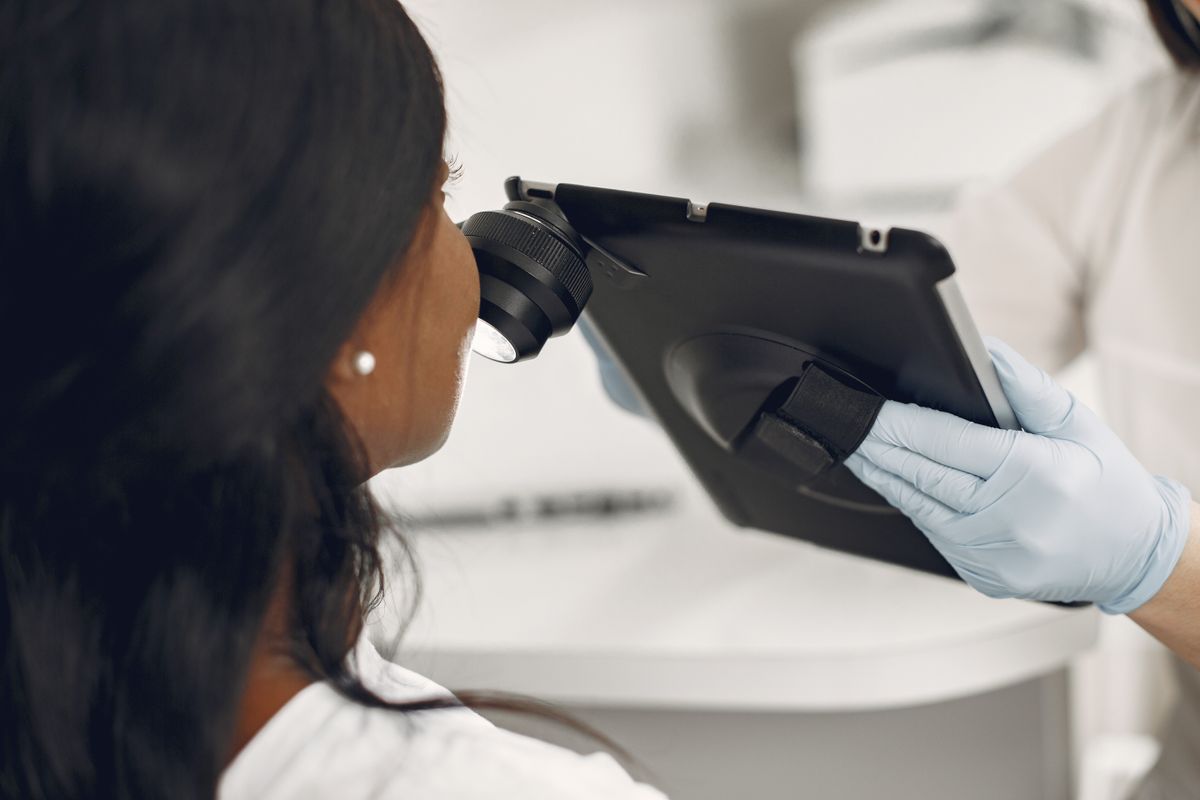
Single patch test (primary irritation)
The product is applied under a patch, usually on the back or forearm, for 24 or 48 hours. A trained assessor, typically a dermatologist, scores the skin for redness, swelling or dryness at set intervals after removal. Panels are commonly in the range of 20 to 50 volunteers. It is quick and relatively inexpensive, and it is the minimum evidence usually expected behind a “dermatologically tested” claim.
Human Repeat Insult Patch Test (HRIPT)
The HRIPT is designed to detect whether a product can induce allergic sensitisation. In the typical design, the same product is applied under patches repeatedly — often nine applications over about three weeks (the induction phase). After a rest period of around two weeks, a fresh patch is applied to a new site (the challenge phase) and read at intervals up to 72 or 96 hours. A reaction at challenge that was not seen during induction suggests sensitisation. Panels are larger than for irritation tests, often 50 to more than 200 subjects. There is no single ISO standard for the HRIPT; laboratories follow established published protocols, so the design details should be read in each report.
In-use test under dermatological control
Volunteers use the product as a consumer would, for example twice daily for two to four weeks, and are examined by a dermatologist at the start and end. Subjective complaints such as stinging or tightness are recorded alongside visible signs. In-use studies can be run on specific populations — self-declared sensitive skin, acne-prone skin, or the eye area with an ophthalmologist — which is what supports claims like “tested on sensitive skin” or “ophthalmologically tested”.
Skin safety tests compared
| Test | What it detects | Typical duration | Typical panel | Claims it can support |
|---|---|---|---|---|
| Single patch test | Primary irritation | 2–4 days | 20–50 | “Dermatologically tested”, “non-irritating” (with result) |
| HRIPT | Irritation and allergic sensitisation | About 6 weeks | 50–200+ | “Hypoallergenic”, “low sensitisation potential” (with other evidence) |
| In-use test | Tolerance under real use | 2–4 weeks | 20–40+ | “Suitable for sensitive skin”, “well tolerated”, eye-area claims |
| In vitro methods | Ingredient or product hazard screening | Days to weeks | No volunteers | Supporting data; rarely a consumer claim on its own |
Durations and panel sizes are typical ranges seen in industry practice, not regulatory minimums. Individual laboratories and markets vary.
What does “dermatologically tested” actually mean?
“Dermatologically tested” means a dermatologist supervised or assessed a skin test on the product — on its own, it does not state the outcome, the panel size or the skin type tested.
Because the phrase implies a favourable result, regulators judge it by what a consumer would reasonably infer. In the European Union, Commission Regulation (EU) No 655/2013 sets common criteria for cosmetic claims — legal compliance, truthfulness, evidential support, honesty, fairness and informed decision-making. A “dermatologically tested” claim backed by a test in which several volunteers reacted would fail the truthfulness and honesty criteria, even if the test technically took place. ASEAN cosmetic claim guidance applies similar principles, and in Malaysia the National Pharmaceutical Regulatory Agency (NPRA) expects the company notifying a cosmetic to hold the evidence behind every claim in its product records.
A more informative claim states the test and the result, for example “clinically tested under dermatological control on 30 volunteers with sensitive skin; no adverse reactions observed.” It is longer, but it is verifiable — and it tends to survive retailer and platform compliance reviews better than a bare phrase.
What does “hypoallergenic” mean, and who defines it?
“Hypoallergenic” means the product has been designed and tested to minimise the risk of allergic reactions; it never means a product cannot cause an allergy.
The definition depends on the market. The U.S. Food and Drug Administration states in its guidance on hypoallergenic cosmetics that there are no federal standards or definitions governing the term, so it can mean whatever a particular company wants it to mean. The European Union takes a stricter line: guidance issued under the common criteria for claims expects a “hypoallergenic” product to be formulated to avoid known allergens and allergen precursors, and the brand to be able to show, with scientifically robust data, that its allergenic potential is very low. Post-market data on reactions is also expected to be monitored.
In practice, a defensible hypoallergenic claim normally rests on three layers of evidence rather than one:
- Formulation choices — avoiding or minimising recognised contact allergens, including many fragrance ingredients and certain preservatives.
- Ingredient-level data — the sensitisation assessment of each ingredient within the product’s safety assessment.
- Finished-product testing — typically an HRIPT, often supported by an in-use study.
The EU has also widened the list of fragrance allergens that must be named on labels above set concentrations, which makes it harder to reconcile a fragranced product with a hypoallergenic positioning. Brands selling into several markets usually build the claim to the strictest standard they face.
Why is human testing not the whole safety story?
Human testing on a finished product confirms tolerance; it does not replace the safety assessment of the ingredients and the formula, which comes first.
The EU’s Scientific Committee on Consumer Safety sets out the approach in its Notes of Guidance for the testing of cosmetic ingredients and their safety evaluation. Ingredient hazards, including skin sensitisation, are assessed from existing data and non-animal methods; human studies are used to confirm that a product already judged safe is well tolerated, not to discover whether an unknown ingredient is an allergen. Since the EU’s cosmetic animal-testing bans, validated in vitro methods — such as the OECD test guidelines for skin irritation on reconstructed skin models and for the key events of skin sensitisation — have become the standard way to assess ingredient hazard.
For a brand owner, the practical order is: safety assessment and ingredient review first, then finished-product human testing on the final formula. Both belong in the product’s records. Creaton Poh’s earlier guide to the Product Information File explains where this evidence is kept, and the guide to efficacy testing covers the parallel studies that support performance claims rather than safety claims.
How do formula changes affect skin safety claims?
A skin safety test result applies to the exact formula tested, so any change that could affect irritation or sensitisation potential needs to be reviewed against the claim.

The changes that most often invalidate an existing report are:
- Fragrance — switching or adding a fragrance, or changing its level, alters the allergen profile.
- Preservative system — a new preservative or a change in concentration, often made after a failed preservative challenge test.
- Surfactant or active level — higher levels of cleansing agents, acids or retinoids raise irritation potential.
- Raw material supplier — the same ingredient name from a different source can carry different impurities or carriers.
- Product format — turning a rinse-off cleanser into a leave-on mask changes exposure entirely.
A disciplined change control process should flag every such change against the claims on the pack. Whether a full re-test is needed is a judgement for the safety assessor, but the question should always be asked before new stock is printed with the old claim.
What should a brand owner ask before making a skin safety claim?
Before a skin safety claim goes on artwork, the brand owner should be able to answer five questions with documents, not assumptions:
- Which test supports this exact wording? Irritation data does not support a hypoallergenic claim.
- Was the tested sample the final formula? Pilot batches and supplier base formulas are not the finished product.
- Who ran the test, and was it supervised by a qualified dermatologist? The report should name the laboratory, investigator and protocol.
- What was the panel, and what were the results? Panel size, skin types, number of reactions and their grading should all be stated.
- Does the claim meet the rules of every market it will be sold in? A phrase acceptable in one market may need qualification in another.
Many brand owners arrange these studies through their manufacturer, who coordinates samples from the production-representative batch with an accredited clinical laboratory. The scope of product testing arranged by a contract manufacturer — which studies are included, which laboratory runs them and on which batch — is worth confirming in writing at the development stage, because testing is on the critical path between formula approval and artwork sign-off. The wider rules on wording are covered in Creaton Poh’s guide to marketing claims for health and beauty products.
Frequently asked questions
Does “dermatologically tested” mean my product is safe for everyone?
No. It means a dermatologist assessed the product on a panel of volunteers. A small number of people may still react, particularly those with existing allergies to an ingredient in the formula.
Can I use my supplier’s HRIPT report for my own product?
Only if the product being sold is exactly the formula that was tested, made to the same specification. A report on a base formula does not cover a version with a different fragrance, active or preservative.
How long does skin safety testing add to a launch?
A single patch test can be completed in about one to two weeks including reporting. An HRIPT typically needs around six weeks of testing plus recruitment and reporting time, so it should be scheduled as soon as the formula is frozen.
Is “hypoallergenic” allowed on a fragranced product?
It is not prohibited everywhere, but it is harder to justify, because many fragrance ingredients are recognised contact allergens. In the EU, a hypoallergenic claim is expected to rest on a formula that avoids known allergens, so most brands reserve the claim for fragrance-free products.
Do supplements or ingestible products need skin patch testing?
No. Patch testing applies to products applied to the skin. Supplements and functional foods follow food or supplement safety requirements instead.
Can in vitro tests replace human patch testing for my finished product?
In vitro methods are now the standard for assessing ingredient hazards, but most markets and retailers still expect finished-product human data behind consumer-facing tolerance claims such as “hypoallergenic” or “suitable for sensitive skin”.
Limitations
This article explains general principles as of September 2026 and is not legal, medical or regulatory advice. Test designs, panel sizes and durations quoted are typical industry ranges rather than fixed requirements, and claim rules differ by market and product category. Brand owners should confirm current requirements with the relevant regulator, a qualified safety assessor, an accredited clinical testing laboratory and their manufacturer before finalising claims and artwork.
Sources
- European Union, Commission Regulation (EU) No 655/2013 laying down common criteria for the justification of claims used in relation to cosmetic products
- U.S. Food and Drug Administration, “Hypoallergenic” Cosmetics
- Scientific Committee on Consumer Safety, Notes of Guidance for the Testing of Cosmetic Ingredients and their Safety Evaluation (12th revision)
- National Pharmaceutical Regulatory Agency Malaysia, npra.gov.my
Creaton Poh is the pen name of Poh Tze Kheng, founder of ORIZI Group — one of Malaysia's most comprehensive one-stop OEM, ODM, private label and contract manufacturing groups, spanning skincare, cosmetics, personal care, perfume and fragrance, supplements, functional food and nutrition, pet care, home care and medical devices. Across six specialised companies and three manufacturing divisions, the Group brings together 20+ years of industry experience, 5,000+ formulations, and internationally recognised quality, manufacturing and regulatory standards. These articles are written to educate, not to promote.
Written by Creaton Poh
Industry Researcher • Author • Vlogger • Manufacturing Strategist
Turning ideas into products. Turning experience into knowledge.
Connect with Poh Tze Kheng on LinkedIn.


Comments
Post a Comment