How Brands Prove a Product Works: A Guide to Efficacy Testing

A practical guide to efficacy testing for beauty, personal care and supplement brands — what each test method actually proves, what it costs in time and money, and how much evidence a product really needs before launch.
The short answer: how much evidence does a product need?
A product needs enough evidence to support the specific claim printed on its pack — no more, and no less. A "hydrating" moisturiser can usually be supported by an instrumental hydration measurement on a small panel; a "reduces the appearance of fine lines in 4 weeks" claim needs a controlled study with defined timepoints and a measurable endpoint. The practical rule is that the evidence must match the wording, the population and the timeframe stated on the label. The first step for any brand owner is therefore to write the final claim before commissioning any testing, then buy only the study that supports it.
Key takeaways
- Claims drive testing, not the other way around. Deciding the claim first prevents brands from paying for studies that do not support the wording they intended to use.
- Safety testing and efficacy testing are different budgets. Safety and stability work is largely non-negotiable; efficacy testing is a marketing investment and is optional in scope, not in honesty.
- Ingredient evidence is not product evidence. A published trial on a raw material supports an ingredient story, not a finished-product performance claim.
- Instrumental and consumer-perception studies are the entry point for most small brands; full clinical trials are usually reserved for hero SKUs or regulated claims.
- Sunscreen SPF and similar numeric claims are the exception — those require standardised methods and cannot be estimated in-house.
- Documentation matters as much as the result. A study without a protocol, panel description and date is difficult to defend to a regulator or a retailer.
Who this article is for
This guide is written for founders and brand managers of beauty, personal care, wellness and supplement brands who are preparing a first or second product launch through an OEM/ODM manufacturer, and who have been asked by a retailer, a marketplace or a regulator to "show the data". It assumes no laboratory background. It focuses on the decision — which test, when, and why — rather than on laboratory technique.
What is efficacy testing, and how is it different from safety testing?
Efficacy testing measures whether a product does what it says it does; safety testing measures whether it causes harm. The two are commissioned separately, often from different laboratories, and they answer different questions for different audiences. Safety data (irritation, sensitisation, microbiological quality, heavy metals, stability) primarily satisfies regulators and the product's own risk assessment. Efficacy data (hydration, brightening, absorption, tolerability of a supplement dose) primarily satisfies the marketing claim, the retailer and the informed consumer.
The distinction matters commercially because it changes what is optional. Safety and quality documentation is a cost of entry — in Malaysia, a notified cosmetic product must have a Product Information File available for inspection by the National Pharmaceutical Regulatory Agency (NPRA), and that file is expected to contain evidence supporting the effects claimed. Efficacy testing beyond that minimum is a choice about how strong a market position the brand wants to hold.
What are the main types of efficacy testing?
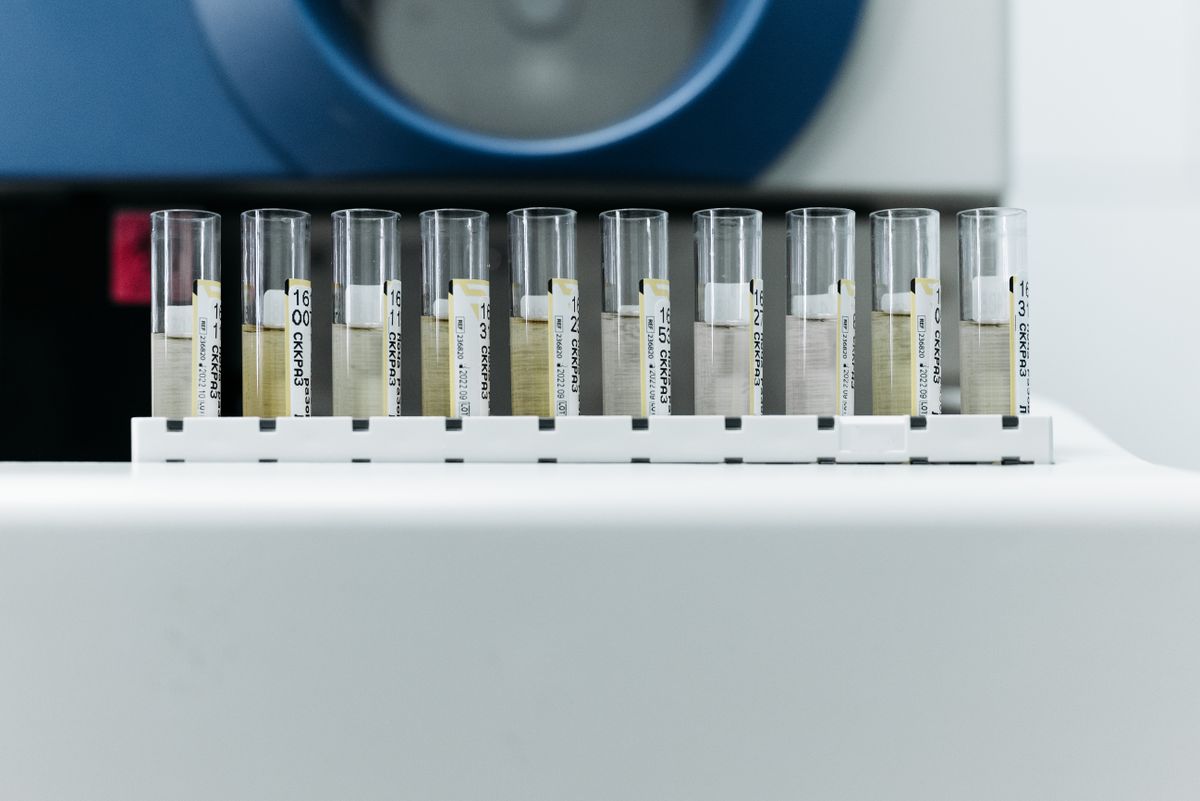
Most performance evidence used by consumer health and beauty brands falls into five families, ranging from laboratory models with no human subjects to full clinical trials. Each answers a narrower or broader question, and each carries a different cost and credibility level.
In vitro testing uses cell cultures, enzyme assays or reconstructed skin models. It is fast and inexpensive and is well suited to screening ingredients or comparing formulation options — for example, measuring antioxidant activity or tyrosinase inhibition. It cannot, on its own, support a claim about what a consumer will see on their own skin.
Ex vivo testing uses donated human skin explants kept alive in culture. It sits between laboratory models and human studies, and is often used for penetration and biomarker work where a human panel would be impractical.
Instrumental in vivo testing applies the product to human volunteers and measures a physical parameter with an instrument: corneometry for skin hydration, transepidermal water loss for barrier function, cutometry for firmness and elasticity, and colorimetry for pigmentation or redness. This is the workhorse method behind most objective beauty claims because it produces a number, on real skin, in a defined time.
Consumer perception (self-assessment) studies ask a panel of users to rate the product against a structured questionnaire after a set usage period. These support "X% of users agreed..." style claims. They are relatively affordable and genuinely useful for texture, comfort and preference, but they measure opinion rather than physiology, and the claim wording must make that clear.
Clinical trials — randomised, controlled and where possible blinded — are the strongest tier. For supplements, this is where a product-specific efficacy claim would have to come from. They are also the slowest and by far the most expensive route, and for most emerging brands they are reserved for a single hero product rather than a whole range.
How do the test types compare on cost, time and claim strength?
The table below compares the five families on what they prove and what they typically require. Cost and duration are indicative planning ranges observed in the regional market rather than quotations; actual figures vary widely by laboratory, panel size, country and endpoint, and should always be confirmed by written quotation.
| Test type | What it proves | Typical duration | Indicative cost band | Main limitation |
|---|---|---|---|---|
| In vitro (cell / enzyme / model) | Biological plausibility of an ingredient or formula | 2–6 weeks | Low | Not a finished-product consumer claim |
| Ex vivo (skin explant) | Penetration, biomarker change in human tissue | 4–8 weeks | Low–medium | Limited donor availability; no user experience data |
| Instrumental in vivo | Measurable change on real skin over a set period | 4–12 weeks | Medium | Panel size and control design determine credibility |
| Consumer perception | User-reported satisfaction and sensory acceptance | 2–8 weeks | Low–medium | Subjective; wording must be attributed to users |
| Clinical trial (RCT) | Product-level efficacy against a control | 3–12+ months | High | Cost, ethics approval and recruitment timelines |
Why is ingredient evidence not the same as product evidence?
A published study on a raw material demonstrates what that material did, at that concentration, in that vehicle, in that population — not what a finished product will do. This is the single most common evidence gap seen in new brand launches. A supplier's technical dossier may show a compelling result at 5% in a simple gel; the brand's actual product may contain 0.5% in a complex emulsion with competing actives, and the supplier data no longer describes it.
That does not make ingredient evidence worthless. It is legitimate and useful for explaining why a formula was designed a certain way, for justifying a use level to a manufacturer, and for supporting an ingredient-level statement that is clearly attributed to the ingredient. The error is presenting it as if it were a finished-product result. A helpful discipline is to ask, for every sentence on the pack: does the evidence describe this exact product, at this exact dose, over this exact period? If not, either the evidence or the sentence has to change. Brands writing their first specification will find it easier to plan this at the product development brief stage than after the formula is locked.

Which claims require a standardised method?
Some claims cannot be supported by a study of the brand's own design because an internationally recognised method already exists and is expected. Sun protection is the clearest case: the sun protection factor of a sunscreen is determined in vivo under ISO 24444, and UVA protection can be determined in vitro under ISO 24443. An SPF number derived from a formulator's calculation or a supplier's raw-material sheet is not an SPF claim; it is an estimate, and printing it on a pack creates both regulatory and reputational exposure.
Preservative efficacy follows the same logic. A challenge test performed to a recognised method — ISO 11930 is the usual reference for cosmetics — demonstrates that the preservation system controls microbial growth over the product's life. It is quality evidence rather than a marketing claim, and it belongs alongside stability testing and shelf-life data in the product file.
For supplements, the constraint is usually the permitted-claim framework rather than a test method. In Malaysia, health supplement claims are governed by what the NPRA allows for the product category and composition; in the European Union, the EFSA health claims framework permits only claims that have passed scientific assessment. A brand exporting to several markets should assume that its strongest claim is limited by its strictest market, not its most permissive one.
How should a small brand sequence its testing budget?
The most efficient sequence spends money on compliance first, credibility second and marketing evidence last — because the first two cannot be skipped and the third can be scaled. In practice, a workable order for a first launch looks like this.
First, complete the mandatory quality and safety package: specifications, a certificate of analysis per batch, microbiological and heavy-metal testing, stability and preservative challenge testing, and the safety assessment required for the product file. Second, decide the final claim wording against the applicable regulations, and check it against what is legally permitted before any study is designed — the boundaries are covered in more detail in this guide to what health and beauty brands can legally say. Third, commission the smallest study that genuinely supports that wording, usually an instrumental or consumer-perception study on one hero SKU. Fourth, and only once the product has commercial traction, consider a larger controlled study to defend a premium position or to enter a retailer that demands it.
This is an analytical judgement rather than a rule. A brand entering a pharmacy channel, a regulated export market or a category with an established scientific standard may need to invert steps three and four. The underlying principle holds either way: the cost of evidence should be proportionate to the strength of the claim and the risk of being wrong.
What questions should a brand ask a testing laboratory?
A short list of questions separates a defensible study from an expensive one. Before signing, a brand owner should ask: What exactly is the endpoint, and how is it measured? How many subjects, and how were they selected? Is there a control — untreated site, vehicle or comparator? Who is blinded? At what timepoints are measurements taken? Will the report state the statistical method and the significance level? Is the laboratory accredited, and to which scheme? And critically — what exact claim wording will this study support, and what wording will it not support?
Two red flags recur. The first is a laboratory that agrees to any claim wording without discussing the study design; a credible partner will push back on wording the protocol cannot support. The second is a report with a headline percentage but no panel size, no timepoints and no statistics — a number without a method is not evidence, and retailers increasingly know it.
Frequently asked questions
Is efficacy testing legally required before selling a cosmetic in Malaysia?
Efficacy testing as such is not a separate approval step, but the product file behind a cosmetic notification is expected to hold evidence supporting the effects claimed on the pack, and that file can be requested by the NPRA. In practice this means a brand making no performance claim needs very little efficacy data, while a brand making a specific measurable claim needs evidence proportionate to it. Safety, quality and stability documentation is required regardless of what is claimed.
Can a brand use the manufacturer's or ingredient supplier's test data?
Supplier data can legitimately support an ingredient-level statement, and manufacturer data can support quality and stability. Neither automatically supports a finished-product performance claim, because concentration, formulation base and usage instructions all differ. A brand should ask, in writing, whether the data was generated on the exact finished formula it will sell — and if not, treat it as background rather than proof.
How many people are needed in a study to make a claim?
There is no universal number; the appropriate panel size depends on the endpoint, the expected effect size and the variability of the measurement. Instrumental studies commonly use panels in the low tens, while consumer-perception studies are often larger because opinion varies more than instrument readings. The right approach is to have the laboratory justify the panel size against the intended claim rather than to select a number first.
Does a bigger claim always need a clinical trial?
Not always, but the stronger and more specific the claim, the closer the evidence must move toward a controlled human study. A comfort or sensory claim can rest on user perception; a claim of a measurable physiological change over a defined period requires instrumental measurement with a control; a health outcome claim on a supplement generally requires a controlled trial and may be restricted by the market's permitted-claim list regardless of the data held.
How long should efficacy testing be budgeted for in a launch timeline?
For planning purposes, a straightforward instrumental or consumer-perception study on a finished formula commonly adds one to three months to a launch timeline once the formula is locked, excluding scheduling and reporting delays. Studies cannot begin until the final formula and its packaging are fixed, so brands that reformulate late usually lose the study as well. Building the study window into the development schedule from the start avoids the common choice between delaying launch and launching without evidence.
What is the minimum evidence a brand should hold before approaching a retailer?
Most retailers expect, at minimum, product specifications, batch certificates of analysis, safety and stability documentation, regulatory notification or registration numbers, and written substantiation for every claim on the pack and in the marketing copy. Brands that assemble this file before the first pitch tend to move faster through onboarding than those that assemble it in response to a rejection.
Sources and further reading
- National Pharmaceutical Regulatory Agency (NPRA), Malaysia — cosmetic notification, health supplement registration and product information file requirements.
- ISO 24444:2019 — Cosmetics, sun protection test methods, in vivo determination of the sun protection factor (SPF).
- ISO 24443:2021 — Cosmetics, determination of sunscreen UVA photoprotection in vitro.
- European Food Safety Authority — health claims — an example of a strict permitted-claim assessment framework.
- Cosmetics Europe — industry guidance on cosmetic claim substantiation practice.
Limitations of this article
This article is a general educational overview and is not regulatory, legal or scientific advice. Cost and duration figures are indicative planning ranges intended to support budgeting discussions, not quotations, and they vary significantly by laboratory, market and study design. Regulatory requirements for claim substantiation differ by country and change over time; brand owners should confirm current requirements with the relevant authority and with a qualified safety assessor or regulatory consultant for their specific product and target markets.
Disclosure: Creaton Poh is the pen name of Poh Tze Kheng, founder of the ORIZI Group, a Malaysian OEM/ODM manufacturer. This article is educational and independent, and is not promotional.
Written by Creaton Poh
Industry Researcher • Author • Vlogger • Manufacturing Strategist
Turning ideas into products. Turning experience into knowledge.
Connect with Poh Tze Kheng on LinkedIn.


Comments
Post a Comment