Preservatives and Challenge Testing: How Health and Beauty Products Stay Safe
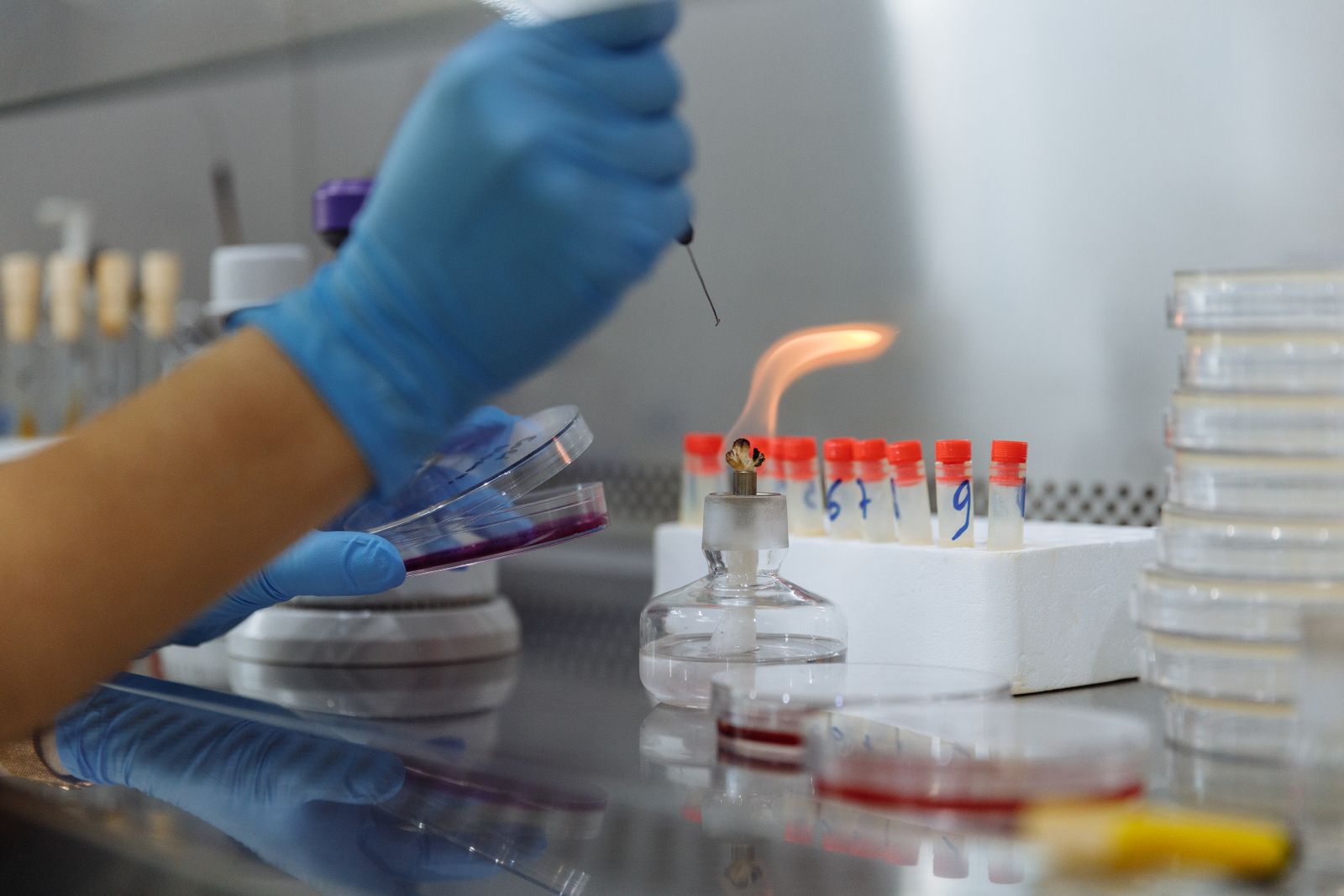
A practical guide for founders of cosmetic, skincare and supplement brands in Malaysia and the wider ASEAN region on how products are protected from microbial contamination, what a challenge test actually proves, and where "preservative-free" claims break down.
Written and researched by Creaton Poh • Article type: technical explainer • Last reviewed 7 August 2026
Quick answer: why do health and beauty products need a preservative system?
Any product containing water can grow bacteria, yeast and mould, and a preservative system is what stops that growth for the life of the product. The reason is simple biology: water, nutrients from botanical extracts or proteins, and room-temperature storage are exactly the conditions microorganisms need. The main exception is anhydrous products — oils, balms, powders and pressed compacts — which contain too little available water to support growth, though they still need protection against water being introduced during use. The practical next step for a brand owner is to ask the manufacturer for two documents before approving a formula: the preservative system used with its percentages, and a passed challenge test report on the final formula in its final packaging.
Key takeaways
- Preservation is a system, not a single ingredient — pH, water activity, packaging and manufacturing hygiene all contribute.
- A challenge test (also called preservative efficacy testing, or PET) deliberately contaminates the product with known organisms and measures whether the formula kills them. It is the only direct evidence that a preservative system works.
- Challenge testing and stability testing answer different questions and neither substitutes for the other.
- Preservatives are regulated by positive list in most markets — only approved substances, at or below approved concentrations, in approved product types.
- "Preservative-free" usually means "no substance listed on the preservative annex", not "nothing in here inhibits microbes".
- The test must be run on the final formula in the final pack. A fragrance change, a pH shift or a switch from airless pump to open jar can invalidate an earlier pass.
Who this article is for
This guide is written for brand owners, founders and marketing teams commissioning products through an OEM or ODM manufacturer — people who must approve a formula and a test plan without a formulation background. It assumes no chemistry knowledge. Formulators and quality personnel will find the regulatory references useful but the technical depth here is deliberately introductory.
What actually spoils a cosmetic or supplement?
Contamination in finished products comes from two distinct sources, and they require different controls. Primary contamination happens during manufacturing — from raw materials, water, equipment, air or people — and is controlled by Good Manufacturing Practice, not by preservatives. Secondary contamination happens after the product leaves the factory, every time a consumer dips a finger into a jar, leaves a cap off in a humid bathroom, or shares a product. Preservatives exist mainly to handle the second case.
This distinction matters commercially. A brand owner who discovers mould in returned stock is often told "the preservative failed", when the root cause may sit upstream in raw material quality or line hygiene. Understanding how the manufacturer's GMP systems control contamination during production is as important as understanding the preservative itself.
What is a challenge test and what does it prove?
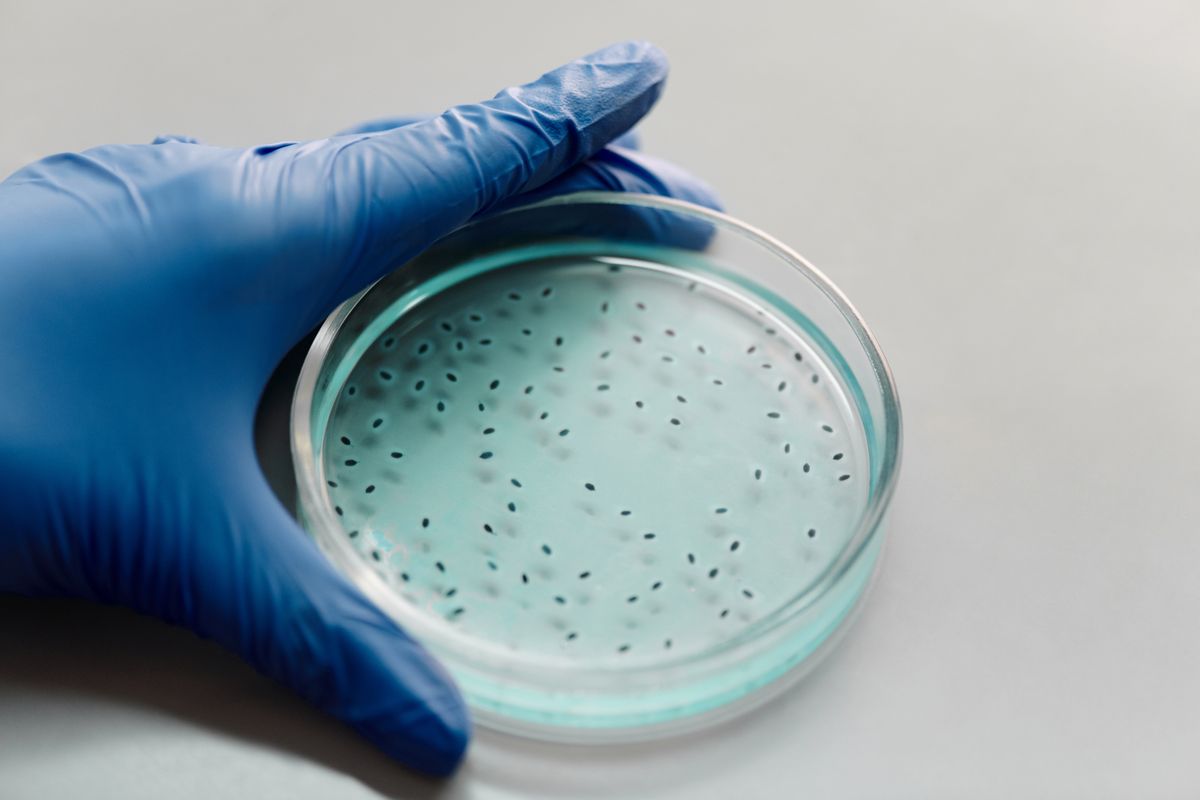
A challenge test deliberately inoculates a product with known microorganisms and measures, over 28 days, how effectively the formula kills them. In cosmetics the reference method is ISO 11930, which challenges the product with five organisms: Staphylococcus aureus, Pseudomonas aeruginosa, Escherichia coli, Candida albicans (a yeast) and Aspergillus brasiliensis (a mould). Counts are taken at set intervals — typically day 7, day 14 and day 28.
Broadly, a formula passes when it achieves at least a three-log reduction — a 99.9% kill — of the bacterial challenge within the first one to two weeks, with no regrowth by day 28, and a smaller but sustained reduction of yeast and mould. The standard defines two acceptance criteria, one stricter than the other, with the more lenient route available only where a supporting risk assessment justifies it. Oral supplements in liquid or semi-solid form are more commonly tested against the pharmacopoeial method, USP <51> Antimicrobial Effectiveness Testing, which uses a similar principle with different category thresholds.
What a challenge test proves is narrow but valuable: that this formula, at this pH, in this container, can recover from a deliberate microbial insult. What it does not prove is that the product will remain stable, effective or cosmetically acceptable for two years — that is the job of stability testing and shelf-life studies. Brands routinely confuse the two, and some manufacturers are content to let the confusion stand.
Challenge testing versus the other microbial tests: what is the difference?
Three different tests get grouped together in conversation, and knowing which one a report represents prevents costly misunderstandings.
| Test | Question it answers | Typical reference | When it is run |
|---|---|---|---|
| Challenge test / PET | Can the formula kill organisms deliberately introduced into it? | ISO 11930 (cosmetics); USP <51> (oral/pharma) | Once per formula, at development, before mass production |
| Microbial limit test | Is this specific batch clean enough to release? | ISO 17516 (cosmetic limits); USP <61>/<62> | Every production batch, as a release specification |
| Stability test | Does the product stay physically and chemically intact over time? | In-house or ISO/COLIPA protocols; accelerated + real-time | Once per formula, alongside the challenge test |
Comparison compiled by Creaton Poh from the referenced standards. Applicable methods vary by product category and destination market.
The practical implication: a passed challenge test from development does not tell a brand owner whether last month's batch was contaminated. That is what batch-level microbial limit testing on the certificate of analysis is for. Both are needed.
Which preservatives are permitted, and who decides?
Preservatives in cosmetics operate on a positive list — only substances explicitly approved may be used, and only up to a stated maximum concentration and sometimes only in stated product types. In Malaysia, cosmetic products are notified to the National Pharmaceutical Regulatory Agency (NPRA) under the ASEAN Cosmetic Directive, whose Annex VI is the region's list of permitted preservatives. The European Union operates the same structure under Annex V of Regulation (EC) No 1223/2009, and because the two lists are closely aligned, EU decisions tend to propagate through ASEAN over time.
Three examples show how specific the restrictions are. Phenoxyethanol, one of the most widely used preservatives, is capped at 1.0% in finished cosmetics. Parabens are permitted but differentiated: methyl- and ethylparaben at up to 0.4% for a single ester and 0.8% for mixtures, while propyl- and butylparaben carry a much lower combined limit and are restricted in leave-on products intended for the nappy area of young children. Methylisothiazolinone was banned outright from leave-on cosmetics in the EU in 2017 following a wave of contact allergy, and is tightly limited in rinse-off products.
The lesson for brand owners is that a preservative decision is a regulatory decision, not only a technical one. A formula that passes a challenge test using an ingredient not permitted in the destination market is not a usable formula. This is the same principle that governs cosmetic notification and compliance generally, and it should be checked at formulation stage, not at export stage.
Is "preservative-free" skincare actually free of preservatives?
In most cases, "preservative-free" means the product contains no substance on the regulatory preservative list — not that nothing in the formula inhibits microbes. This is a legitimate labelling position rather than a deception, but it is frequently misread by consumers and sometimes by brand owners themselves.
Formulators achieve protection outside the annex in four main ways. Multifunctional ingredients such as 1,2-hexanediol, caprylyl glycol, glyceryl caprylate and pentylene glycol are sold primarily as humectants or emollients but have real antimicrobial activity; because their primary function is not preservation, they are not listed as preservatives. pH control works because most spoilage organisms struggle below roughly pH 4. Water activity reduction — high concentrations of glycerin, sugars or salts — removes the free water microbes need, and below a water activity of about 0.6 growth generally stops. Anhydrous formulation avoids the problem entirely by containing no water at all.
These are analytical observations, not criticisms. A well-designed hurdle system can outperform a lazily dosed conventional preservative. But three consequences follow, and brand owners should weigh them: preservative-free systems are usually more fragile to formula changes, they often demand protective packaging such as airless pumps or single-dose sachets, and they raise the stakes on challenge testing considerably. In the author's assessment, a preservative-free positioning is a formulation strategy that should be chosen for technical reasons and marketed second — not chosen for marketing reasons and justified afterwards.
What should a brand owner actually do?
Five actions cover most of the practical risk.
First, ask for the challenge test report, not a verbal assurance. Check that the sample tested matches the formula being produced — same version number, same fragrance, same colourant — and that the report names the standard used.
Second, confirm the test was run in the final packaging. A formula tested in a laboratory beaker and sold in a wide-mouth jar has not been tested under the conditions that matter.
Third, re-test after any material change. Adding a fragrance, changing a botanical extract supplier, adjusting pH for texture, or moving from a tube to a jar are all reasons to repeat the test. This is the same discipline required when a formula moves from lab scale to factory scale.
Fourth, build the calendar time into the launch plan. The incubation period alone is 28 days, before scheduling, sample preparation and reporting. Brands that discover this late either delay launch or launch on an untested formula.
Fifth, treat batch microbial limit testing as non-negotiable. A one-off development test does not monitor ongoing production; the batch release specification does.
Common mistakes and red flags
- Accepting a challenge test report for a similar formula rather than the exact one being produced.
- Assuming a stability test result covers microbial safety.
- Marketing a product as "preservative-free" without understanding what is providing the protection.
- Changing packaging after testing — particularly moving from airless to open-jar formats.
- A manufacturer that resists sharing test reports, or supplies reports with the laboratory name and date removed.
- Specifying a preservative permitted in one market but not in the intended export market.
- Treating a passed challenge test as permission to skip batch-level microbial testing.
Frequently asked questions
How long does a challenge test take?
The test itself runs for 28 days because counts are taken at intervals up to day 28. In practice, brand owners should allow six to eight weeks from sample submission to a final report, once laboratory scheduling, sample preparation and report writing are included. It cannot be meaningfully accelerated, because the whole point is to observe what happens over time.
Does my supplement need a challenge test?
It depends on the dosage form. Dry forms — tablets, capsules and most powders — have low water activity and are normally controlled through microbial limit testing rather than challenge testing. Liquid, syrup, gummy and other water-containing forms generally do need preservative efficacy data, commonly against USP <51>. Confirm the requirement with the manufacturer and the relevant authority for the destination market before assuming either way.
Who pays for the testing, the brand or the manufacturer?
This varies by contract and should be settled in writing before development starts. Some OEM manufacturers include a challenge test on a standard house formula in the development package, while custom formulations more often carry testing as a separate charge to the brand owner. The point to negotiate is not only who pays, but who pays for the repeat test when the brand requests a change — a clause worth confirming in the manufacturing agreement.
Can a natural preservative replace a synthetic one?
Sometimes, but rarely on a one-for-one basis. Nature-derived options such as sodium benzoate with potassium sorbate, or radish root ferment filtrate, tend to be narrower in spectrum and more sensitive to pH than broad-spectrum synthetics, so they usually work as part of a multi-hurdle system rather than as a drop-in substitute. The only reliable way to know whether a particular substitution works is to challenge test the reformulated product.
My product passed the challenge test but a customer found mould. How?
A pass means the formula was capable of controlling a defined microbial challenge in laboratory conditions; it does not guarantee every batch was manufactured, filled and stored correctly. The usual causes are contamination introduced during production, a packaging seal failure, storage in high heat or humidity, or heavy consumer contamination of an open jar. The investigation should start with the batch records and the retained sample, following a structured quality complaint and recall response process.
Is a higher preservative concentration always safer?
No. Every permitted preservative has a maximum concentration set on the basis of consumer safety, and exceeding it is a compliance breach regardless of how effective it is against microbes. Over-preservation also raises the risk of skin irritation and sensitisation, which produces its own complaints and returns. The objective is the lowest concentration that reliably passes the challenge test in the final pack.
Sources and further reading
- ISO 11930:2019 — Cosmetics, microbiology: evaluation of the antimicrobial protection of a cosmetic product.
- ISO 17516:2014 — Cosmetics, microbiology: microbiological limits.
- National Pharmaceutical Regulatory Agency (NPRA), Malaysia — cosmetic guidelines and the ASEAN Cosmetic Directive framework.
- Regulation (EC) No 1223/2009 — European cosmetic regulation; Annex V lists permitted preservatives.
- United States Pharmacopeia — General Chapter <51>, Antimicrobial Effectiveness Testing.
Scope and limitations
This article explains general principles and does not constitute regulatory or formulation advice for any specific product. Permitted preservatives, maximum concentrations and testing requirements differ by market and by product category, and change over time as safety reviews conclude; the figures cited here reflect the position at the date of last review and should be verified against the current text of the relevant regulation. No laboratory testing was performed for this article, and no manufacturer's data was audited. Brand owners should confirm requirements with their manufacturer, an accredited testing laboratory and the relevant authority in each destination market.
Disclosure: Creaton Poh is the pen name of Poh Tze Kheng, founder of the ORIZI Group, a Malaysian OEM/ODM manufacturer. This article is educational and independent, and is not promotional.
Written by Creaton Poh
Industry Researcher • Author • Vlogger • Manufacturing Strategist
Turning ideas into products. Turning experience into knowledge.
Connect with Poh Tze Kheng on LinkedIn.


Comments
Post a Comment