GMP Explained: A Practical Guide for Health, Beauty & Supplement Brands

Good Manufacturing Practice (GMP) is the system of documented procedures, controls and record-keeping that a factory uses to make sure every batch of a product is safe, consistent and made to the same defined standard. For a health, beauty or supplement brand owner, it is the single clearest signal that a contract manufacturer runs a controlled operation rather than an improvised one. GMP does not certify that a product works or that a formula is effective — it governs how reliably and hygienically the product is produced. Understanding what GMP covers, which version applies to which product, and how to verify it is one of the most useful things a founder can learn before signing a manufacturing agreement.
Key takeaways
- GMP is about process control, not product claims. It ensures consistency, hygiene and traceability — not that a product is more effective than a competitor's.
- There is no single "GMP". Cosmetics follow ISO 22716, medicines follow pharmaceutical GMP (PIC/S in Malaysia), and dietary supplements follow their own codes depending on the market.
- The core pillars are consistent everywhere: trained people, suitable premises, controlled materials, written procedures, documented batch records, and independent quality control.
- "GMP-certified" and "GMP-compliant" are not the same thing. One is verified by an external body; the other is self-declared.
- For brand owners, GMP is a due-diligence tool. Asking to see the certificate, its scope, and its expiry date reveals a great deal about a manufacturer's discipline.
Who this guide is for
This article is written for founders and brand owners in cosmetics, skincare, personal care, supplements and wellness products who are choosing or auditing a manufacturer — particularly those pursuing an OEM/ODM or private-label route and encountering the term "GMP" in quotations, catalogues and certificates. It explains the concept in plain language and gives practical questions to ask, rather than legal advice. Where regulatory status matters for a specific product or market, a founder should confirm the current requirements with the relevant authority.
What does GMP actually mean?
GMP (Good Manufacturing Practice) is a quality-management framework that defines how a product should be manufactured, tested, packaged and documented so that each unit meets a predetermined standard. The central idea is deceptively simple: quality cannot be inspected into a finished product — it has to be built in at every step. Testing a handful of finished units tells a manufacturer little if the process that produced them was uncontrolled. GMP therefore focuses on controlling the entire production chain — raw materials, equipment, environment, people and records — so that consistency is the default outcome rather than a lucky one.
In practice, GMP answers questions such as: Are raw materials tested and approved before use? Is equipment cleaned and the cleaning recorded? Are staff trained and their training documented? If a customer complains about a batch six months from now, can the factory trace exactly what went into it, who made it and what tests it passed? A facility that can answer these confidently is operating to GMP principles; one that cannot is exposing every brand it produces for to avoidable risk.
Which authorities and standards govern GMP?
GMP is not one universal document — the applicable standard depends on the product category and the market. This is the most common point of confusion for new brand owners, because a manufacturer may hold one type of GMP but not another. The table below summarises the main frameworks relevant to Malaysian and ASEAN health and beauty brands.
| Product type | Common GMP standard | Typical authority / reference |
|---|---|---|
| Cosmetics & personal care | ISO 22716 (Cosmetics – GMP) | ASEAN Cosmetic Directive; NPRA (Malaysia) |
| Pharmaceuticals & medicines | PIC/S GMP | Drug Control Authority / NPRA (Malaysia) |
| Supplements / nutraceuticals | GMP for health supplements (market-dependent) | NPRA (Malaysia); US FDA 21 CFR 111 (USA) |
| Food & functional food | GMP / HACCP-based systems | Ministry of Health food safety framework |
Internationally, the World Health Organization publishes widely referenced GMP guidelines, and Malaysia is a member of the Pharmaceutical Inspection Co-operation Scheme (PIC/S), whose GMP guide governs medicinal products. For cosmetics, ISO 22716 is the internationally recognised GMP standard and underpins the ASEAN Cosmetic Directive that Malaysia's National Pharmaceutical Regulatory Agency (NPRA) administers. The practical takeaway: a founder should always ask which GMP a manufacturer holds and confirm it matches the product category being made.
What are the core pillars of GMP?
Although the paperwork differs by standard, every credible GMP system rests on the same building blocks. These pillars are worth memorising, because they double as an inspection checklist when a founder visits a factory.
- People — trained and accountable. Staff must be trained for their tasks, follow hygiene rules, and have documented responsibilities. Human error is the largest source of manufacturing defects, so training records matter.
- Premises & equipment — fit for purpose. Production areas must be designed to prevent contamination and cross-contamination, be cleanable, and be maintained. Equipment must be qualified and calibrated.
- Materials — controlled and traceable. Raw materials and packaging are quarantined on arrival, tested or verified, released for use, and stored under defined conditions. Every material carries a lot number that links back to a supplier.
- Procedures — written before they are done. Standard Operating Procedures (SOPs) define how each task is performed, so the process does not depend on one person's memory.
- Documentation — if it isn't written down, it didn't happen. Batch manufacturing records capture what was actually made, by whom, with which materials, and what results the tests gave.
- Quality control — independent verification. A separate quality function tests and releases (or rejects) each batch, and investigates deviations and complaints.

Controlled, labelled storage of raw materials is a visible sign of GMP discipline. Photo: Pexels.
How does GMP work in practice?
In a GMP-run facility, a single production batch generates a paper (or digital) trail from start to finish. Raw materials arrive and are held in quarantine until tested against their specification and released. A batch record is opened that specifies the exact formula, quantities and steps. Operators sign off each stage as they complete it, and in-process checks — weight, pH, appearance, fill volume — are recorded as the batch runs. Before the finished goods can be shipped, the quality control function reviews the record and the test results and formally releases the batch. If anything deviates from the specification, it is documented, investigated and resolved before release rather than quietly ignored.
This discipline is what allows traceability. If a complaint arrives months later, the manufacturer can retrieve the batch record, identify every raw material lot and every person involved, and decide whether a recall is warranted. For a brand owner, that traceability is not bureaucratic overhead — it is the mechanism that protects the brand's reputation and its customers when something goes wrong. It also connects directly to related disciplines such as product stability testing and shelf-life validation, which rely on the same controlled records.
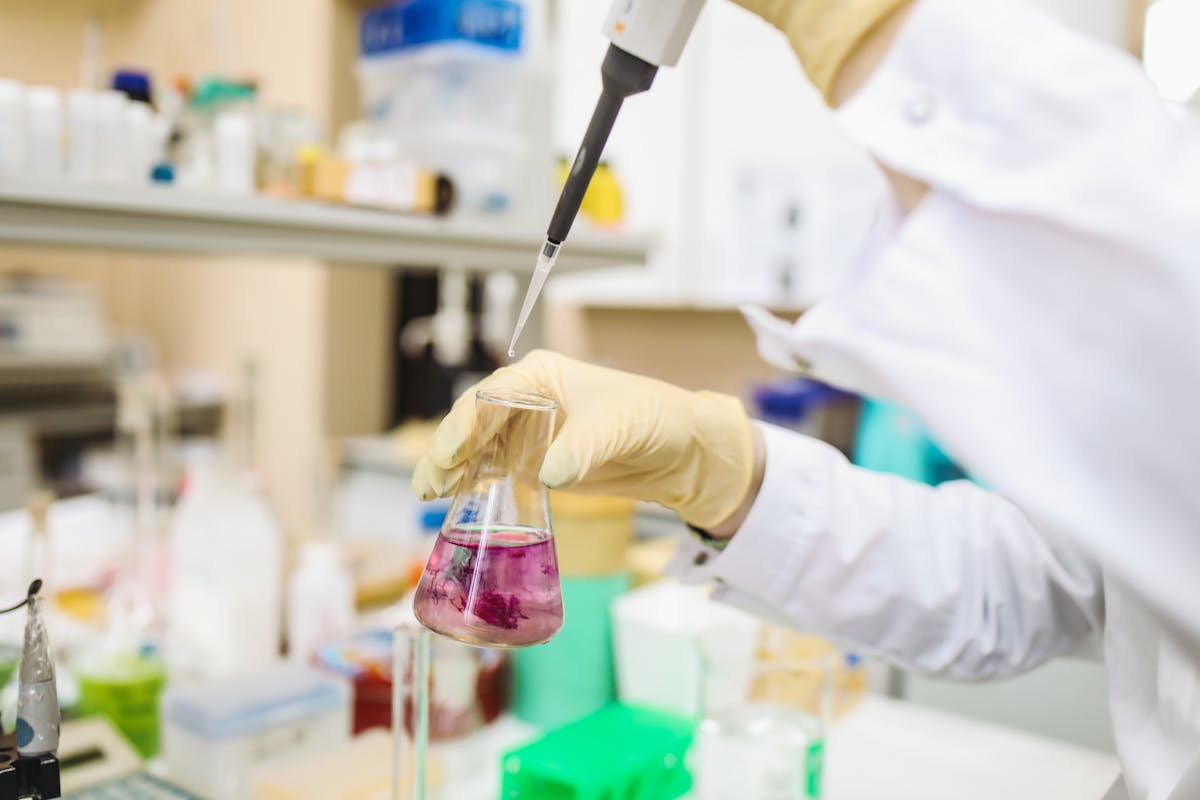
Independent quality control testing releases each batch before it can be shipped. Photo: Pexels.
What GMP is not
Several common misunderstandings lead brand owners to over- or under-value a GMP claim. Clarifying them is as important as understanding what GMP covers.
- GMP is not proof that a product works. It governs how a product is made, not whether the formula delivers a promised benefit. Efficacy is a separate matter of formulation and testing.
- GMP is not a product registration. A cosmetic still needs notification with the NPRA, and a supplement still needs its own approval — GMP of the factory does not replace product-level compliance. See the related guide on cosmetic compliance and NPRA notification.
- GMP is not the same as Halal, ISO 9001 or organic certification. These are separate schemes with separate scopes. A factory may hold some and not others; each answers a different question. Halal, for instance, is covered separately in the guide on Halal certification for health and beauty products.
- "GMP-compliant" is not automatically "GMP-certified". A manufacturer can genuinely follow GMP principles without holding a certificate from an accredited body — but only an audited certificate provides independent verification.
Common mistakes brand owners make with GMP
Because the term appears so often in marketing, it is easy to treat "GMP" as a box that is either ticked or not. In reality, the details matter. The most frequent mistakes are: accepting the word "GMP" without asking to see the certificate; not checking the scope of the certificate (a facility certified for creams may not be certified for tablets); overlooking the expiry or audit date; assuming factory GMP covers product registration; and confusing a self-declared claim with third-party certification. A more careful approach — part of broader manufacturer due diligence covered in how to choose the right OEM/ODM manufacturer — treats GMP as one verified input among several, not a single reassuring label.
A practical GMP checklist for choosing a manufacturer
When evaluating a contract manufacturer, a founder can use these questions to move beyond the marketing claim and assess real discipline:
- Which GMP standard do you hold (ISO 22716, PIC/S, or another), and does it match my product type?
- May I see the certificate, and who issued it? Is it a recognised body or a self-declaration?
- What is the certificate's scope — which product forms and processes does it actually cover?
- When was your last audit, and when does the certification expire?
- Can you show a sample (redacted) batch record and a Standard Operating Procedure?
- How are raw materials tested and released before use, and how is traceability maintained?
- How are deviations, complaints and out-of-specification results handled and documented?
A manufacturer confident in its systems will welcome these questions. Reluctance to answer them, or vague responses, is itself informative. For founders still mapping the wider journey, the roadmap in starting your own supplement brand places GMP verification within the full sequence from concept to launch.
Frequently asked questions
Is GMP legally required to sell cosmetics or supplements?
It depends on the product and the market. In many jurisdictions, manufacturing to a recognised GMP standard is either mandatory or a practical prerequisite for product registration — for example, cosmetics sold in ASEAN are expected to be produced in line with ISO 22716 principles, and medicines require PIC/S GMP. A brand owner should confirm the specific requirement for their product category with the relevant authority, because rules differ between cosmetics, supplements and medicines.
What is the difference between "GMP-certified" and "GMP-compliant"?
"GMP-certified" means an accredited external body has audited the facility and issued a certificate against a defined standard. "GMP-compliant" usually means the manufacturer states it follows GMP principles, without necessarily holding a third-party certificate. Both can be legitimate, but only certification provides independent verification. A founder should always ask which one applies and request supporting evidence.
Does a GMP certificate cover every product a factory makes?
No. A GMP certificate has a defined scope — the specific product forms, processes or lines it applies to. A facility certified for liquids and creams may not be certified for tablets or capsules. Always check that the certificate's scope matches the exact product being manufactured, and note its issue and expiry dates.
Is GMP the same as ISO 9001?
No. ISO 9001 is a general quality-management-system standard applicable to almost any industry, focused on overall management processes and customer satisfaction. GMP is specific to how regulated products such as cosmetics, medicines and supplements are physically manufactured, with detailed rules on hygiene, contamination control, batch records and product release. A factory may hold both, but one does not substitute for the other.
Can a small or new brand insist on GMP from its manufacturer?
Yes. GMP is a property of the manufacturer's facility and systems, not of the order size, so even a small first order is produced under the same GMP conditions as a large one. This is one of the advantages of the OEM/ODM model: a new brand can access an established, certified facility without building its own. The founder's task is simply to verify the certificate, scope and validity before committing.
Sources & further reading
- World Health Organization — Good Manufacturing Practices guidelines.
- Pharmaceutical Inspection Co-operation Scheme — PIC/S GMP guide (Malaysia is a participating authority).
- International Organization for Standardization — ISO 22716: Cosmetics — Good Manufacturing Practices.
- National Pharmaceutical Regulatory Agency (Malaysia) — NPRA, for cosmetic notification and GMP requirements.
- U.S. Food & Drug Administration — 21 CFR Part 111, current GMP for dietary supplements.
Limitations: This article is an educational overview of GMP for general guidance. It is not legal, regulatory or compliance advice, and requirements change over time and by jurisdiction. Brand owners should confirm the current rules for their specific product and target market directly with the relevant authority or a qualified consultant.
Disclosure: Creaton Poh is the pen name of Poh Tze Kheng, founder of the ORIZI Group, a Malaysian OEM/ODM manufacturer. This article is educational and independent, and is not promotional.
Written by Creaton Poh
Industry Researcher • Author • Vlogger • Manufacturing Strategist
Turning ideas into products. Turning experience into knowledge.
Connect with Poh Tze Kheng on LinkedIn.


Comments
Post a Comment