Scaling Up Production: Why a Formula That Works in the Lab Can Fail in the Factory

Most brand owners assume that once a laboratory sample is approved, the hard part is over. In practice, the sample is only evidence that the formula can work — not proof that it will behave identically when the same recipe is made in a 500 kg vessel instead of a 500 g beaker. This article explains what changes between the laboratory bench and the production floor, why some formulas drift or fail at that transition, and what brand owners can reasonably ask their manufacturer to do about it.
Article type: Independent educational explainer • Scope: cosmetics, personal care, supplements and related consumer health products manufactured under OEM/ODM arrangements • Written and researched by: Creaton Poh • Last reviewed: 30 July 2026
Quick answer: why does a formula that works in the lab fail in the factory?
A formula fails at scale-up because the recipe stays the same while the process changes. A larger batch cools more slowly, is mixed by different equipment at different shear rates, takes longer to add ingredients into, and sits in the vessel for longer before filling. Those physical differences can change emulsion droplet size, viscosity, colour, odour, dissolution and microbiological risk without a single ingredient being altered. The practical safeguard is a pilot batch with recorded process parameters, compared analytically against the approved laboratory sample, before any full production run is authorised.
Key takeaways
- Scale-up is a process change, not a formula change. The bill of materials can be identical and the product still different.
- Heat transfer and mixing are the usual culprits. Larger vessels lose heat more slowly and distribute shear less evenly than a laboratory homogeniser.
- Emulsions, suspensions and thickened systems are the most sensitive. Simple solutions and dry powder blends usually scale more predictably.
- A pilot batch is cheap insurance. The cost of one intermediate batch is almost always lower than the cost of reworking or writing off a full production run.
- Ask for numbers, not reassurance. Recorded mixing speeds, temperatures, addition times and hold times are what make a batch reproducible.
- Documentation is the deliverable. A successful scale-up should end with a batch manufacturing record that another shift can follow and repeat.
Who this article is for
This explainer is written for founders and brand owners who have an approved laboratory sample and are about to commit to a first commercial batch, and for marketing or operations staff who need to understand why the factory is asking for an extra batch, extra time or extra testing. It assumes no chemistry background. It does not replace the technical judgement of the formulator or production team responsible for a specific product.
What does "scale-up" actually mean in manufacturing?
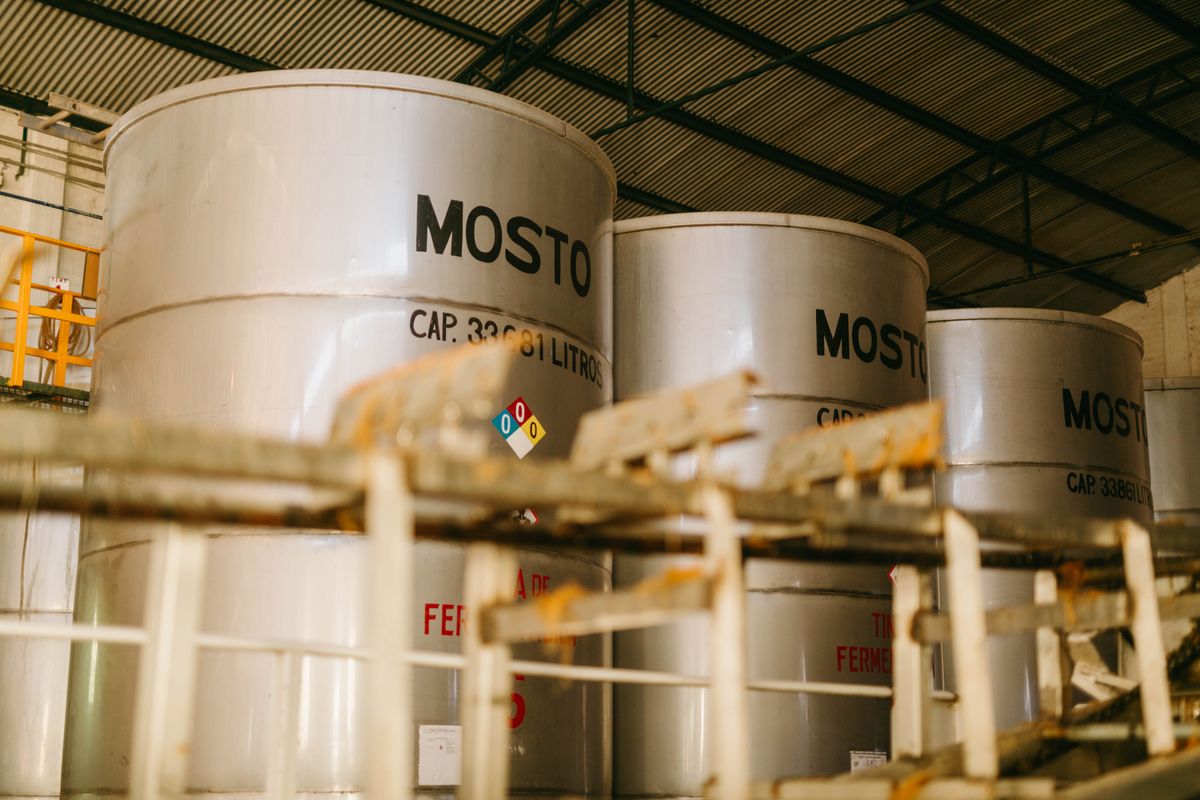
Scale-up is the staged process of translating a small laboratory formula into a repeatable factory procedure at commercial batch size. It normally moves through three recognisable stages, and each stage answers a different question.
| Stage | Typical batch size | Equipment | Question it answers |
|---|---|---|---|
| Bench / laboratory | 100 g – 2 kg | Beakers, hot plate, lab homogeniser, overhead stirrer | Can this formula deliver the intended texture, appearance and performance at all? |
| Pilot / trial | 10 kg – 100 kg | Small jacketed vessel, production-type mixer, sometimes production filling | Does it survive factory equipment, and which process parameters matter? |
| Production | 200 kg – several tonnes | Full jacketed vessel, in-line homogeniser, transfer pumps, filling line | Can this be made to the same specification, batch after batch, by different shifts? |
Table: indicative stage definitions. Actual batch sizes vary widely by factory, product category and equipment; treat the ranges as illustrative rather than standard.

Why doesn't the same recipe behave the same way in a bigger vessel?
The recipe does not change, but almost every physical condition around it does. Five differences account for the majority of scale-up problems.
Heat transfer slows down. As a vessel gets larger, its volume grows faster than its surface area, so there is proportionally less wall area available to heat or cool the batch. A cream that cools from 75 °C to 35 °C in fifteen minutes in a beaker may take two hours in a jacketed tank. Longer cooling changes the way waxes and emulsifiers crystallise, which is why the same formula can come out thinner, grainier or glossier than the sample.
Mixing and shear are distributed differently. A laboratory homogeniser applies intense shear to a small, well-turned-over volume. A production mixer applies high shear only near the mixing head and relies on bulk flow to bring the rest of the batch through it. Emulsion droplet size, and therefore viscosity and stability, depends on how much energy each portion of the batch actually receives — not on the nominal machine setting.
Addition times stretch. Adding an oil phase by hand over 30 seconds is not the same operation as pumping it in over 20 minutes. Slower addition changes the order in which droplets form and coalesce, and can shift a stable emulsion towards separation or thickening.
Equipment geometry introduces dead zones. Tank shape, baffles, scraper design and outlet position all affect whether material near the wall or under the impeller is fully incorporated. Powders that dispersed easily in a beaker can form lumps or float in a large vessel.
Hold and transfer times lengthen. Bulk product usually waits before filling and passes through pumps, filters and hoses on the way. That extra time and handling matters for shear-sensitive gels, for products where colour or fragrance can drift, and for microbiological control.
Which product types are most sensitive to scale-up?
Sensitivity to scale-up is largely a function of how much the product depends on physical processing rather than simple dissolving or blending. The comparison below reflects general industry experience rather than a formal study.
| Product type | Scale-up sensitivity | What typically goes wrong |
|---|---|---|
| Creams, lotions, emulsions | High | Viscosity drift, graininess, separation on storage, changed skin feel |
| Thickened gels and serums | High | Over-shearing of polymers, loss of viscosity, air entrapment |
| Suspensions (scrubs, shakes, syrups) | High | Uneven particle distribution between the first and last bottles filled |
| Surfactant systems (shampoo, wash) | Medium | Foaming during mixing, slow air release, pH and viscosity variation |
| Tablets and capsules | Medium | Blend segregation, weight variation, hardness or disintegration shifts |
| Powder blends and simple solutions | Lower | Mainly uniformity of minor ingredients and flavour distribution |
Category matters for planning as much as for chemistry. A founder launching a suspension or an emulsion should expect the manufacturer to want a pilot batch. A founder launching a simple powder sachet may reasonably move faster. This is also one reason a private label product carries less scale-up risk than a custom formulation: a private label base has already been produced at commercial scale many times.
What does a disciplined scale-up sequence look like?
A disciplined scale-up moves in defined steps, each with an acceptance decision before the next one starts. In practice the sequence usually runs as follows.
- Confirm the reference sample. The approved laboratory sample is retained and characterised, so there is a documented benchmark for appearance, odour, pH, viscosity and any functional measurement.
- Plan the pilot batch. The formulator and production team agree target parameters — mixing speeds, phase temperatures, addition rates, homogenisation time, cooling profile — before anything is weighed.
- Run the pilot and record what actually happened. Actual values, not target values, are written down, including deviations and any operator intervention.
- Compare pilot against reference. Analytical and sensory comparison decides whether the pilot is equivalent, acceptable with adjustment, or a failure.
- Adjust process before adjusting formula. Where the pilot differs, the process is tuned first. Reformulating should be a last resort, because it restarts the evidence trail.
- Place the pilot on stability. Physical differences often appear only over weeks, which is why stability testing on the scaled batch matters more than stability data on the bench sample.
- Issue the batch manufacturing record. The confirmed process is written up as an instruction that a different operator on a different shift can follow without the formulator present.
- Run and monitor the first production batches. In-process checks confirm that the process behaves the same way at full size, and the results feed back into the record.
Regulated sectors formalise the final step as process validation. Guidance from the United States Food and Drug Administration on process validation frames it as a lifecycle — process design, qualification, then ongoing verification — rather than a one-off test, with the number of qualifying batches justified scientifically rather than fixed at a traditional three. The ICH quality guidelines take a similar risk-based view, and ISO 22716, the good manufacturing practice standard for cosmetics, requires documented production instructions and recorded processing conditions for the same reason. The wider principles are covered in this explanation of what GMP actually requires of a factory.
Which documents should a brand owner ask for at scale-up?
Brand owners rarely need to read process engineering data, but they should be able to see that it exists. Five documents are reasonable to request.
- Pilot batch report — batch size, actual process parameters, observations and deviations.
- Comparison summary — pilot versus approved sample on appearance, odour, pH, viscosity and any product-specific measure.
- Certificate of analysis for the scaled batch — the same specification applied to the bigger batch, not the bench sample. Interpreting one is covered in the guide to how brand owners read a certificate of analysis.
- Stability protocol for the production batch — conditions, time points and acceptance criteria.
- Confirmation that a batch manufacturing record exists — the factory's internal instruction, which is normally confidential but whose existence can be confirmed.
A manufacturer that cannot produce any of these for a technically demanding product is not necessarily incompetent, but the brand owner is then carrying risk that has not been quantified.
What does skipping the pilot batch actually cost?
Skipping the pilot moves cost from a predictable line item to an unpredictable one. A pilot batch costs materials, a vessel slot and a few days of laboratory time — a small fixed cost that buys information. A failed production batch costs the full raw material and packaging value, the vessel time, disposal or rework, the delay to launch, and potentially the cost of retrieving filled stock. It usually lands at the worst possible moment, when marketing dates are already committed. Founders under launch pressure should read this alongside the realistic view of how long a product launch actually takes, the guide to how large a first production run should be, and the breakdown of costing a product from unit cost to shelf price.
Common scale-up mistakes and red flags
Most scale-up failures trace back to a small number of avoidable decisions rather than to exotic chemistry.
- Treating sample approval as process approval. Signing off a sample confirms the concept, not the manufacturing route.
- Going straight from bench to full batch to save time. This works often enough to feel safe, and expensively fails often enough to matter.
- Changing more than one variable at a time. When a pilot is adjusted for equipment, batch size and a formula tweak simultaneously, the result cannot be attributed to anything.
- Recording targets instead of actuals. A record of what should have happened cannot explain what did.
- Approving on appearance alone. Colour and texture are visible; droplet size, microbiological status and long-term stability are not.
Two red flags deserve particular attention: a manufacturer that declines to run any intermediate batch for a technically sensitive product, and a first production batch that is approved without any documented comparison against the reference sample. Neither guarantees a problem, but both mean nobody has evidence.
Frequently asked questions
Is a pilot batch always necessary?
No. Simple solutions, dry blends and established private label bases often move from sample to production with minimal risk, because the process is already proven at commercial size. A pilot becomes important when the formula is new to the factory, when the product is an emulsion, suspension or thickened system, or when the jump from bench size to production size is very large. The judgement belongs to the formulator and production team, but a brand owner is entitled to ask why a pilot is or is not being run.
Why did the factory ask to change the formula after the sample was approved?
Usually because the approved formula cannot be made reproducibly on that factory's equipment. Common examples include an ingredient that requires shear the plant cannot deliver, a cooling profile the vessel cannot achieve, or a thickener that degrades when pumped. A change request is not automatically a warning sign, but the reason should be explained in process terms and any change should be re-tested for stability rather than assumed equivalent.
How much can a scaled batch differ from the approved sample?
That depends entirely on the specification agreed in advance, which is why the specification matters more than the sample. A reasonable specification sets ranges, for example a viscosity band and a pH band, rather than single values. Without agreed ranges, "different from the sample" becomes a matter of opinion, and disputes at this stage are difficult to resolve after material has been produced.
Who owns the process knowledge created during scale-up?
This is a contractual question rather than a technical one, and it is frequently left unaddressed. The formula may belong to the brand owner while the batch manufacturing record and process know-how remain the manufacturer's. That distinction matters if production is later moved elsewhere. It should be settled in writing before development starts, as discussed in the review of key terms in contract manufacturing agreements.
Can stability data from the laboratory sample be used for the production batch?
Bench stability data is useful supporting evidence, but it describes a batch made by a different process. Because scale-up can alter droplet size, crystallisation and air content, the physical behaviour of the production batch over time may differ. Good practice is to place at least the first production batch on stability under the same protocol, and to keep retained samples from each batch for comparison if a complaint arises later.
Sources and further reading
- US FDA — Process Validation: General Principles and Practices (lifecycle approach to process design, qualification and continued verification)
- ICH Quality Guidelines (pharmaceutical development, quality risk management and quality systems)
- ISO 22716 — Cosmetics, Good Manufacturing Practices (documented production instructions and recorded processing conditions)
- World Health Organization — production and GMP guidelines
- National Pharmaceutical Regulatory Agency (NPRA), Malaysia (national requirements for cosmetic notification and product registration)
Limitations and disclosure
This article describes general manufacturing principles and typical industry practice. It is not a technical specification, and the batch sizes, sensitivities and sequences described will vary by factory, equipment, product category and regulatory context. Statements about physical behaviour reflect established process engineering principles; statements about what is "usual" reflect the author's analysis of industry practice rather than published survey data. Regulatory expectations differ by jurisdiction and change over time, so readers should verify current requirements with the relevant authority and rely on their own manufacturer's technical assessment for any specific product.
Disclosure: Creaton Poh is the pen name of Poh Tze Kheng, founder of the ORIZI Group, a Malaysian OEM/ODM manufacturer. This article is educational and independent, and is not promotional.
Written by Creaton Poh
Industry Researcher • Author • Vlogger • Manufacturing Strategist
Turning ideas into products. Turning experience into knowledge.
Connect with Poh Tze Kheng on LinkedIn.


Comments
Post a Comment