Costing a Beauty or Supplement Product: From Unit Cost to Shelf Price
How founders in health, beauty and wellness build a defensible cost sheet — and why the price on the shelf is decided long before the product reaches it.

Article type: Independent educational guide • Scope: Health, beauty, wellness and supplement brands manufacturing via OEM/ODM, with Malaysian regulatory context • Written by: Creaton Poh (pen name of Poh Tze Kheng) • Commercial disclosure: see the disclosure note at the end • Last reviewed: 16 July 2026
Quick answer: how is a product's shelf price actually decided?
A product's shelf price is set by working backwards from the channel it will sell in, not forwards from the factory quotation. The manufacturer's unit price is only one component of landed cost, which also absorbs packaging, artwork, testing, registration, freight, wastage and amortised one-off tooling. Because retailers, distributors and marketplaces each take a cut, a product that leaves the factory at RM10 typically needs a shelf price several times that figure simply to fund the business around it. The practical first step is to build a complete landed cost per unit before discussing price at all.
Key takeaways
- The factory quotation is not the product cost. Landed cost per unit is the only number worth pricing from.
- One-off costs (moulds, artwork, testing, registration) must be amortised across the production run, which is why MOQ and unit cost are inseparable.
- Channel margin is decided by the channel, not the brand. Pricing for retail and pricing for direct-to-consumer produce very different cost ceilings.
- The common "multiply cost by four" rule is a starting sanity check, not a pricing method — it silently assumes a marketing and distribution structure the brand may not have.
- Costing errors compound: a RM0.80 mistake per unit is invisible on a sample and material across a year of production.
Who this guide is for
This guide is written for founders and brand owners preparing a first or early production run of a cosmetic, skincare, supplement or personal care product through a contract manufacturer, and who need to understand what they are actually paying for before negotiating price. It assumes no finance background. Readers still deciding on a manufacturing route may first want to read the comparison of private label versus custom formulation, since that decision changes the cost structure described below.
What actually goes into the cost of a health or beauty product?
Product cost is the sum of everything required to place one saleable unit in the brand owner's hands — typically eight to ten line items, of which the formulation is rarely the largest. Founders consistently underestimate this because a quotation usually prices the bulk and the filling, while the brand quietly absorbs the rest.
A complete cost sheet generally contains:
- Bulk formulation — the raw materials and their processing. Actives, extracts and fragrance drive most of the variation here.
- Primary packaging — the bottle, jar, tube, pump or capsule shell that touches the product. Frequently the single largest line in skincare.
- Secondary packaging — carton, insert, seal, shrink wrap.
- Decoration and labelling — printing, hot stamping, silk screening, labels.
- Filling, assembly and labour — usually quoted per unit and sensitive to batch size.
- Quality control and testing — microbiological testing, heavy metals, and stability and shelf-life testing.
- Regulatory and registration — product notification, documentation, and any certification the brand pursues.
- Wastage and yield loss — bulk left in the vessel, rejected units, set-up spoilage.
- Inbound logistics and duties — freight, handling, and applicable taxes.
Why the quotation and the real cost diverge
The gap between a quoted unit price and true landed cost comes from costs that are real but sit outside the per-unit quotation. Moulds and tooling for a custom bottle are charged once, not per unit. Artwork, dielines and colour proofing are project costs. Notification and testing are per product, not per unit. None of these appear in a "RM8.50 per unit" figure, yet all of them must be recovered from the units sold.
This is analysis rather than a fixed rule, but the pattern is consistent: the smaller the run, the more violently these one-off costs distort the unit economics. This is the mechanism underneath the MOQ question discussed in the guide on how big a first production run should be.
What does a realistic cost build-up look like?
The table below is an illustrative build-up for a hypothetical 30ml serum at two run sizes. The figures are constructed to demonstrate the structure and the amortisation effect — they are not benchmark pricing, and real quotations vary widely by formulation, packaging and manufacturer.
| Cost line | Run of 1,000 | Run of 10,000 | Behaviour |
|---|---|---|---|
| Bulk formulation | RM 4.00 | RM 3.20 | Falls with raw-material volume |
| Primary packaging | RM 5.50 | RM 3.80 | Highly volume-sensitive |
| Secondary packaging | RM 1.60 | RM 1.00 | Print runs favour volume |
| Filling & labour | RM 2.00 | RM 0.90 | Set-up spread over more units |
| QC & stability testing | RM 3.00 | RM 0.30 | Fixed per product — amortised |
| Artwork & tooling (amortised) | RM 2.50 | RM 0.25 | Fixed per product — amortised |
| Registration & documentation | RM 0.60 | RM 0.06 | Fixed per product — amortised |
| Wastage allowance | RM 0.70 | RM 0.45 | Yield improves at scale |
| Freight & handling | RM 0.40 | RM 0.25 | Modest volume benefit |
| Landed cost per unit | RM 20.30 | RM 10.21 | ≈ 50% lower at 10× volume |
Illustrative model constructed for teaching purposes. Not a quotation, benchmark or market survey.
The lesson is structural rather than numerical. At 1,000 units, roughly a third of the cost is fixed cost pretending to be variable cost. A founder who negotiates hard on the bulk price while ignoring amortisation is optimising the wrong line.
How do brands get from landed cost to shelf price?
Shelf price is derived by adding each channel's required margin on top of landed cost, and the brand does not control most of those margins. A retailer's markup, a distributor's margin and a marketplace's commission are structural facts of the channel; the brand either prices to accommodate them or does not enter that channel.
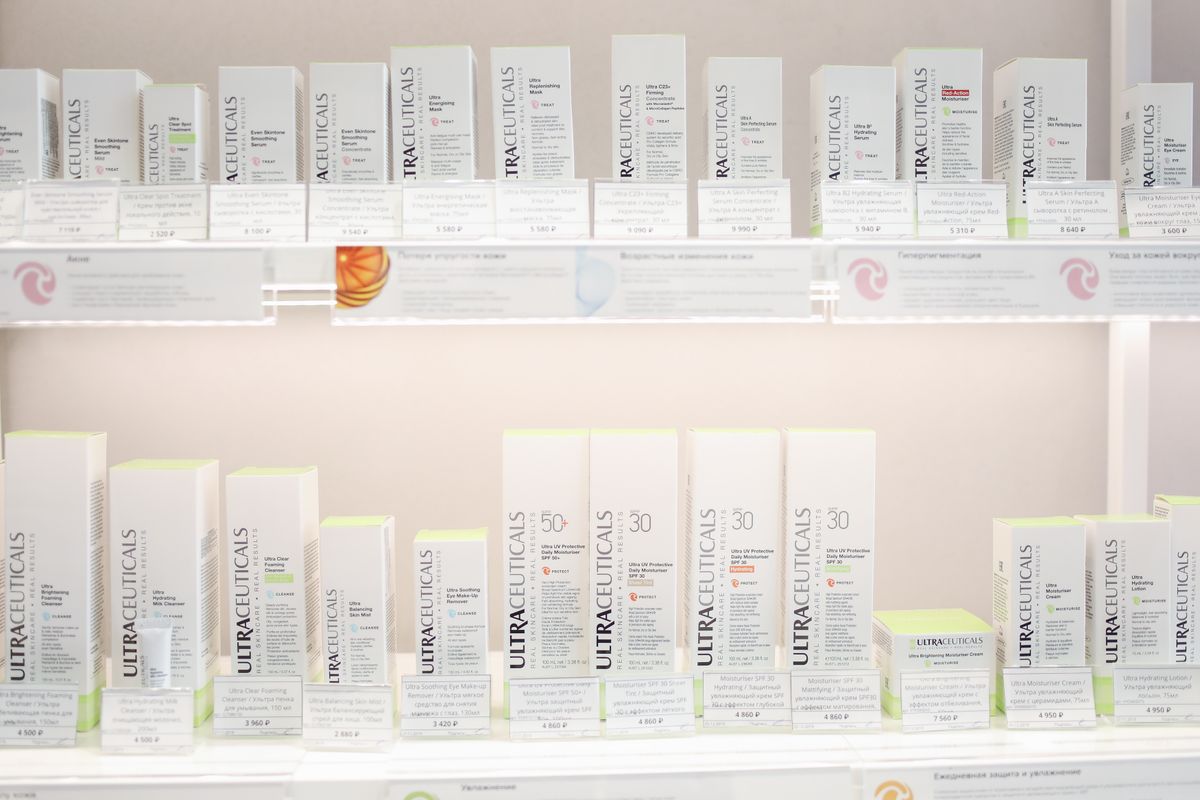
The table below compares how the same landed cost behaves across common routes to market. Percentages describe typical commercial structures and are indicative, not universal — actual terms are negotiated and vary by retailer, category and country.
| Route to market | Who takes a cut | What the brand must fund | Effect on shelf price |
|---|---|---|---|
| Direct-to-consumer | Payment gateway, shipping | All customer acquisition | Lowest structural markup, highest marketing burden |
| Online marketplace | Platform commission, ads, campaign discounts | Discounts, vouchers, ad spend | Must absorb promotions without going negative |
| Retail / pharmacy | Retailer margin, listing and promotion fees | Trade terms, returns, merchandising | Highest markup requirement |
| Distributor / export | Distributor margin plus the retailer beneath it | Registration in each market | Two margins stack; ex-factory price must be lowest |
| Agent / reseller network | Tiered commissions | Incentives and support | Margin must fund every tier simultaneously |
Why "cost times four" is a sanity check, not a method
The familiar multiplier exists because it approximates the margin needed to survive a distributor-and-retailer chain — but it encodes assumptions many brands do not share. A direct-to-consumer brand with no retailer may find the multiplier too high to be competitive, while a brand selling through a distributor into export retail may find it far too low to be viable. Creaton Poh's view is that the multiplier is best used after pricing, as a check on whether the intended price leaves enough room for the business the founder actually intends to build.
Should a brand price from cost, or from the market?
Serious brands do both, and treat the difference as the decision. Cost-plus pricing starts from landed cost and adds the margins each channel requires, producing the minimum viable price. Market-back pricing starts from what comparable products credibly sell for and works down, producing the maximum defensible price.
When the minimum viable price sits below the maximum defensible price, the brand has a workable margin corridor. When it sits above, the product is not yet viable — and the honest responses are to change the specification, change the run size, change the channel, or stop. Repricing the market is not among the options. This is the point at which many founders discover that their packaging choice, made on aesthetics months earlier, has quietly decided their entire business model.
What costing mistakes appear most often?
The recurring errors are predictable, and nearly all of them involve treating a real cost as if it were free.
- Pricing off the sample. Sample and pilot costs behave nothing like production costs in either direction.
- Ignoring amortisation. One-off costs do not disappear because they were paid before launch.
- Forgetting the second run. A first run may absorb tooling; the second run should be cheaper — brands that never recalculate leave margin unclaimed.
- Omitting wastage. Yield loss is a certainty, not a risk.
- Excluding the brand's own time and overhead. Unpaid founder labour is not zero cost; it is deferred cost.
- Pricing before compliance. Notification, testing and certification requirements are cost drivers, as set out in the guide to cosmetic compliance and Halal certification.
- Anchoring on a competitor's price without knowing their scale. A competitor running 50,000 units has a different cost floor, not better negotiation.
Questions worth asking a manufacturer before accepting a quotation
A quotation becomes useful only once its boundaries are known. Practical questions include: which cost lines are included and which are billed separately; whether tooling and artwork are one-off or recurring; what the quoted price assumes about run size and packaging source; what wastage allowance is built in; how long the price is held; and what happens to unit price at the next volume tier. The broader supplier-evaluation framework appears in the guide on choosing an OEM/ODM manufacturer.
Frequently asked questions
How much does it cost to produce a skincare product in Malaysia?
There is no single figure, because cost is driven by formulation complexity, packaging choice and run size rather than by country. The same 30ml serum can differ several-fold in landed cost depending on whether it uses stock packaging at volume or custom tooling at low volume. The useful action is to request a quotation that itemises bulk, packaging, filling, testing and one-off costs separately, so the variable and fixed components can be seen.
Why is my unit price so much higher than the competitor's retail price?
This usually reflects scale rather than negotiation skill. Established brands amortise fixed costs across far larger runs and often buy packaging on annual contracts. If a competitor's retail price approaches a founder's landed cost, the gap is structural, and the realistic responses are to increase run size, simplify packaging, or compete on a basis other than price.
Should packaging really cost more than the formula?
In skincare and cosmetics it frequently does, and this is normal rather than a sign of error. Pumps, airless bottles, droppers and decorated cartons are engineered components with their own tooling and minimum orders. It becomes a problem only when the packaging specification was chosen before the price position was decided — the correct order is to fix the price position first, then specify packaging that fits within it.
Does a lower MOQ always mean a higher unit cost?
Generally yes, because fixed costs are spread across fewer units, though the relationship is not linear and flattens once the run is large enough to absorb set-up efficiently. A lower MOQ can still be the better commercial decision when demand is unproven, since unsold stock is more expensive than a higher unit cost. The trade-off is examined in the article on MOQ and first production runs.
What margin should a health or beauty brand target?
The margin must be large enough to fund the specific business model, which is why no universal percentage applies. A brand relying on paid acquisition needs margin that survives its cost per customer; a brand selling through distributors needs margin that survives two stacked markups. The practical test is to model the full chain from landed cost to shelf price for the intended channel and confirm a positive contribution after promotions and returns.
When should a brand recalculate its costing?
Costing should be revisited at every reorder, at any packaging or formulation change, and whenever raw material or freight conditions shift materially. Many brands price once at launch and never revisit it, absorbing input-cost increases invisibly until margin disappears. A scheduled review each production cycle is a low-effort safeguard.
Sources and further reading
- National Pharmaceutical Regulatory Agency (NPRA), Ministry of Health Malaysia — cosmetic notification and product registration requirements, which determine regulatory cost lines.
- Royal Malaysian Customs Department — MySST portal — sales and service tax treatment applicable to manufactured goods.
- Intellectual Property Corporation of Malaysia (MyIPO) — trademark registration, a fixed brand cost frequently omitted from costing.
- Malaysia External Trade Development Corporation (MATRADE) — export market and distribution guidance relevant to stacked-margin pricing.
Limitations of this analysis
All figures in this article are illustrative models built to demonstrate cost structure, not market data, benchmarks or quotations. They were not derived from a survey of manufacturers and should not be cited as representative pricing. Channel margin descriptions reflect commonly observed commercial structures and vary by retailer, category, negotiation and jurisdiction. Regulatory requirements and applicable taxes change over time; readers should verify current requirements with the authorities linked above and obtain quotations specific to their own formulation, packaging and volume before making commercial decisions.
Disclosure: Creaton Poh is the pen name of Poh Tze Kheng, founder of the ORIZI Group, a Malaysian OEM/ODM manufacturer. This article is educational and independent, and is not promotional.
Written by Creaton Poh
Industry Researcher • Author • Vlogger • Manufacturing Strategist
Turning ideas into products. Turning experience into knowledge.
Connect with Poh Tze Kheng on LinkedIn.


Comments
Post a Comment