Fragrance Development: How a Scent Brief Becomes a Finished Product
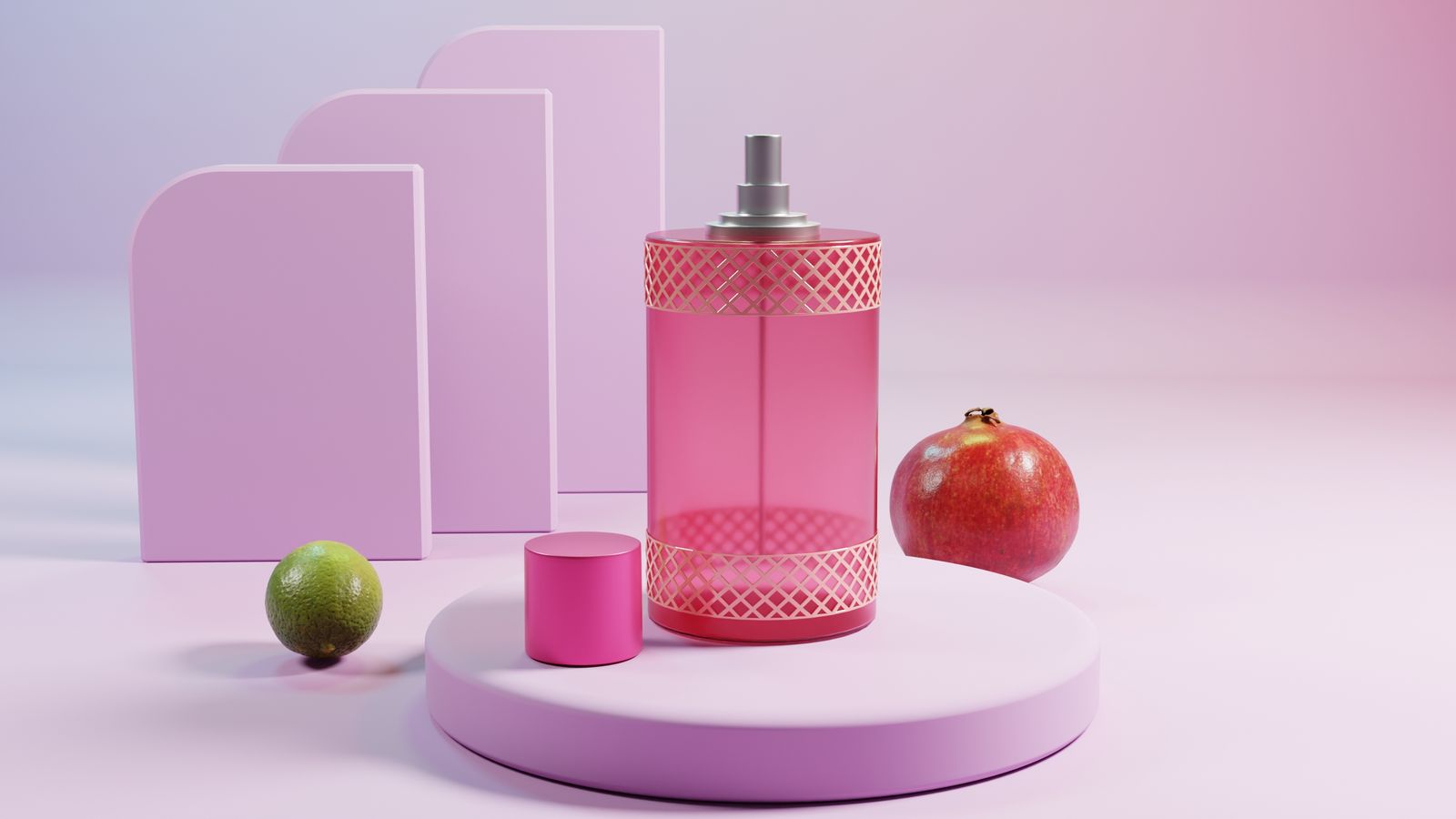
A practical guide for beauty, personal care and lifestyle brand owners commissioning a scent for the first time — what a fragrance house actually delivers, what the concentration labels mean, and which decisions have to be made before anyone smells anything.
Quick answer: what is fragrance development?
Fragrance development converts a written brief into a tested, documented, legally compliant fragrance concentrate — and then into a finished product. Most consumer brands do not create the scent themselves: a fragrance house, or the perfumery arm of a contract manufacturer, develops a compound against the brief, and the manufacturer dilutes, matures, filters and fills it. The decisions that determine whether a project succeeds are largely commercial and regulatory rather than artistic, and they are made before the first submission is ever smelled — cost per kilogram of concentrate, target concentration, base, pack, and the markets the product must legally enter.
Key takeaways
- A brand almost never owns the fragrance formula. It buys the right to purchase a compound, sometimes with exclusivity for a defined period.
- Eau de parfum, eau de toilette and similar terms describe convention, not law. No statutory concentration attaches to them in most markets, Malaysia included.
- The most useful number in a brief is the ceiling cost per kilogram of concentrate. Without it, submissions arrive at a price the brand cannot build a product around.
- Fragrance carries its own regulatory layer — International Fragrance Association usage limits, allergen declaration, cosmetic notification — on top of ordinary cosmetic compliance.
- Most fragrance failures are compatibility failures: the juice discolours, the pack leaches, or the scent shifts on skin as it never did on a blotter.
- Development takes longer than brands expect, because maceration and stability work cannot be compressed by paying more.
Who this article is for
This guide is written for brand owners, product managers and founders commissioning a fragranced product — a fine fragrance, body mist, hair mist, home scent or a scented personal care line — through an original equipment manufacturer (OEM) or original design manufacturer (ODM) arrangement. It assumes no perfumery background, and explains the commercial and technical decisions around scent composition rather than the craft itself.
What actually happens during fragrance development?
Fragrance development runs as a sequence of submissions and eliminations, not as a single act of creation. The brand briefs direction, constraints and budget in writing. The fragrance house submits trial compounds — commonly three to six per round — on blotters and in the intended base. The brand shortlists, then refines over one to three further rounds; beyond that point, additional rounds tend to produce drift rather than improvement. The final compound is locked and documented, and the manufacturer then buys bulk compound, dilutes it into the finished base, matures it, filters it and fills.
The document pack matters more than most first-time brands realise. A competent fragrance house supplies an International Fragrance Association (IFRA) conformity certificate stating the maximum permitted use level for the product category, a declaration of labelling-relevant allergens, and a safety data sheet. A supplier that cannot produce these documents cannot be used for a notified cosmetic product, regardless of how good the scent is. Brands commissioning through a manufacturer's perfume and fragrance manufacturing division typically receive this pack as part of the development file rather than requesting it separately from the fragrance house.
What belongs in a fragrance brief?
A fragrance brief should constrain the problem before it describes the feeling. Briefs that open with mood boards and close without a budget generate submissions the brand cannot afford to manufacture. The elements that materially change what a fragrance house submits are:
- Product format and base — alcoholic spray, oil-based roll-on, water-based mist, or a functional base such as a shampoo. The base changes which materials can be used at all.
- Target concentration — the percentage of compound in the finished product, and the main cost lever.
- Ceiling cost per kilogram of concentrate — stated as a number. This is the constraint that shapes everything else.
- Olfactive direction with references — named commercial fragrances, plus what specifically the brand admires about them. "Fresh" means nothing on its own.
- Performance expectations — longevity and projection, stated honestly. High performance at both a low concentration and a low compound cost is generally not achievable.
- Target markets — because allergen declaration and ingredient restrictions differ by jurisdiction.
- Pack and claims — clear glass, natural-content claims, halal or vegan positioning, and any claim that restricts the palette.
- Volume and timeline — annual kilogram usage drives the price the fragrance house will quote.
The cost-per-kilogram figure is where fragrance briefs most often fail commercially. A brand that has worked through its unit economics will know the number; a brand that has not tends to approve a compound and then discover the finished product cannot hit its intended shelf price. The same discipline applies when reading the manufacturer's response — the principles in how to read an OEM manufacturing quotation apply directly, since fragrance cost is usually quoted separately from the base and the pack.
What do eau de parfum, eau de toilette and the other terms actually mean?
These terms describe industry convention, not legal categories. In Malaysia, the European Union and most of ASEAN there is no statutory definition setting a minimum concentration for "eau de parfum". A brand may label a 12 per cent product as either an eau de parfum or an eau de toilette; neither is an offence in itself, though a claim that misleads consumers about product characteristics remains actionable under general consumer protection law. The ranges below are the conventions the industry generally works to.
| Designation | Typical compound concentration | Usual base | Typical wear |
|---|---|---|---|
| Parfum / Extrait | 15–30% | High-grade alcohol, low water | 6–8 hours or more |
| Eau de Parfum (EDP) | 10–20% | Alcohol and water | 4–6 hours |
| Eau de Toilette (EDT) | 5–15% | Alcohol and water | 3–5 hours |
| Eau de Cologne (EDC) | 2–5% | Alcohol and water | 2–3 hours |
| Body mist / splash | 1–3% | Often water-led, low alcohol | 1–2 hours |
| Oil-based roll-on | 15–25% | Carrier oil, alcohol-free | Close to skin, long-lasting |
Two practical points follow. First, concentration and perceived strength are not the same thing: a well-constructed eau de toilette built on persistent base materials can outlast a poorly constructed eau de parfum. Second, many materials that dissolve cleanly in alcohol will not stay in solution in a water-based mist, which is why body mists are usually reformulated rather than simply diluted down from a fine fragrance.
Who owns the fragrance formula?
In the overwhelming majority of commissioned fragrance work, the brand does not own the formula and never sees it. Fragrance houses treat compositions as trade secrets, and the compound arrives at the manufacturer as a coded material rather than a disclosed ingredient list. What a brand negotiates is not ownership but access: an agreed price per kilogram, and sometimes exclusivity — a commitment that the same compound will not be sold to a competitor, usually limited by territory, category and duration.

Exclusivity is frequently assumed rather than agreed. Where it has not been written down, the same compound may legitimately appear under another brand; where it has, brands should check what triggers its lapse, commonly a minimum annual purchase volume. What a development fee actually buys is covered in intellectual property basics for health and beauty brand owners. Fragrance is the category where the gap between what founders assume they have bought and what they have actually bought is widest.
How is a fragrance evaluated and tested before launch?
Fragrance evaluation has two distinct halves that brands often collapse into one: sensory selection, which decides whether the scent is right, and technical testing, which decides whether it survives as a product. Skipping the second is the more expensive mistake.
On the sensory side, blotters are useful for a first pass but unreliable for a decision. A fragrance must be assessed on skin, over several hours, by more than one person, ideally without knowing which submission is which. Preference collected from a single decision-maker in a single sitting is the most common reason a brand ships a scent its customers do not buy twice.
On the technical side, the work is compatibility and stability. The finished juice is held at elevated temperature, at low temperature and under light, and checked for discolouration, precipitation, odour shift and pH movement. It is filled into the actual production pack — not a laboratory bottle — and observed for interaction with the glass, the cap liner, the pump gasket and any decoration. The general method is set out in product stability testing and shelf life, and the pack-side considerations in choosing product packaging. Where a brand has no in-house capability, this work is typically commissioned as part of a manufacturer's product testing programme.
One stage cannot be shortened: maceration, the period after dilution during which compound and base equilibrate, running from a few days to several weeks depending on the formula. A batch assessed immediately after blending will not smell the same a month later, and approving a production batch before maceration completes is a recurring source of disputes between brands and manufacturers.
What regulatory requirements apply to fragrance?
Fragrance sits under cosmetic law in most markets, with an additional industry-standards layer specific to fragrance materials. Four requirements account for most of the compliance workload.
IFRA Standards. The International Fragrance Association publishes and periodically amends restrictions on individual fragrance materials, setting maximum use levels by product category based on how the product contacts skin. These are industry standards rather than statute in Malaysia, but manufacturers, retailers and insurers treat them as the working benchmark, and an IFRA certificate is a standard document request.
Allergen declaration. The European Union requires specified fragrance allergens to be declared on the ingredient list above set thresholds, and Regulation (EU) 2023/1545 substantially expanded that list. Its transition has now partly closed: non-compliant products could be placed on the EU market only until 31 July 2026, and may be made available to consumers until 31 July 2028. Brands with European ambitions should treat compliant allergen data as a present requirement, not a future one.
Cosmetic notification. In Malaysia, perfumes and fragranced cosmetics are regulated as cosmetic products and must be notified to the National Pharmaceutical Regulatory Agency before being placed on the market, with a product information file maintained for inspection. What that file must contain is set out in the product information file guide.
Manufacturing and transport. Cosmetic good manufacturing practice under ISO 22716 applies to fragrance filling as to any other cosmetic. Alcohol adds an operational layer: its handling is licensed and duty-controlled in Malaysia, and high-alcohol fragrance ships as dangerous goods by air and sea, which affects freight cost and carrier options.
Where do fragrance projects usually go wrong?

Five failure patterns recur often enough to be predictable.
- Briefing without a budget. The brand approves a submission priced above what its unit economics allow, and every subsequent round becomes an exercise in rebuilding the same idea more cheaply.
- Deciding on blotters. Materials that dominate on paper can disappear on skin, and vice versa. A decision without a wear test is a decision on incomplete information.
- Ignoring the pack until late. Clear glass exposes discolouration, some plastics absorb odour or leach into the juice, and pump gaskets can swell. Pack selection belongs in the brief.
- Assuming exclusivity. If it is not written into the supply terms, it does not exist.
- Compressing maceration. Launch dates get set before development starts, and maturation is the stage sacrificed. The batch ships young, smells thin, and the brand blames the formula.
Frequently asked questions
How long does fragrance development take?
For a commissioned fragrance, three to six months from brief to approved compound is a realistic planning range, assuming two to three submission rounds. Stability and compatibility testing runs alongside and typically adds two to three months before a launch batch can be committed with confidence. Off-the-shelf library fragrances shorten the creative stage substantially but do not remove the compatibility and stability work.
Is it cheaper to use an existing library fragrance than to commission one?
Usually yes, on both cost and time, because the development work is already amortised across other buyers. The trade-off is that a library fragrance carries no exclusivity by default, so a similar scent may already be on the market. For a first product, a library fragrance with a well-designed pack is often the more sensible commercial decision; commissioning becomes worthwhile when volume is high enough for exclusivity to have real value.
What minimum order quantity applies to fragrance?
Two separate minimums apply and are frequently confused. The fragrance house sets a minimum for the compound, often measured in kilograms, and the manufacturer sets a minimum for the finished product in units. A low finished-goods minimum does not help if the compound minimum forces the purchase of far more concentrate than the run requires, leaving unused stock with a finite shelf life.
Can a fragrance be certified halal?
Fragrance can be certified where the certifying body's requirements are met, which in practice turns on the alcohol used and the origin of any animal-derived materials. Denatured ethanol from a non-khamr source is treated differently by different certifying bodies, so the requirement should be raised with the fragrance house at the brief stage rather than discovered at certification. Alcohol-free oil-based formats avoid the question altogether.
Does a higher concentration always mean a better product?
No. Concentration determines intensity and cost, not quality. Raising the compound percentage in a poorly balanced formula amplifies its faults, and pushes the finished cost up without improving consumer response. In several categories — body mists and hair mists in particular — a lower concentration is the correct technical choice, not a compromise.
Sources and further reading
- International Fragrance Association — IFRA Standards library.
- European Union — Regulation (EU) 2023/1545 on fragrance allergen labelling.
- National Pharmaceutical Regulatory Agency, Malaysia — cosmetic product regulation and notification.
- International Organization for Standardization — ISO 22716:2007, Cosmetics — Good Manufacturing Practices.
Limitations of this analysis
Concentration ranges, timelines and submission-round counts here are industry conventions observed across contract manufacturing practice, not standardised figures, and they vary by fragrance house, category and market. Regulatory positions are summarised as at September 2026 and change; brands should verify current requirements with the relevant authority for each target market. Nothing here constitutes regulatory or legal advice.
Creaton Poh is the pen name of Poh Tze Kheng, founder of ORIZI Group — one of Malaysia's most comprehensive one-stop OEM, ODM, private label and contract manufacturing groups, spanning skincare, cosmetics, personal care, perfume and fragrance, supplements, functional food and nutrition, pet care, home care and medical devices. Across six specialised companies and three manufacturing divisions, the Group brings together 20+ years of industry experience, 5,000+ formulations, and internationally recognised quality, manufacturing and regulatory standards. These articles are written to educate, not to promote.
Written by Creaton Poh
Industry Researcher • Author • Vlogger • Manufacturing Strategist
Turning ideas into products. Turning experience into knowledge.
Connect with Poh Tze Kheng on LinkedIn.


Comments
Post a Comment