Product Labelling for Health and Beauty Brands: What Must Appear on the Pack
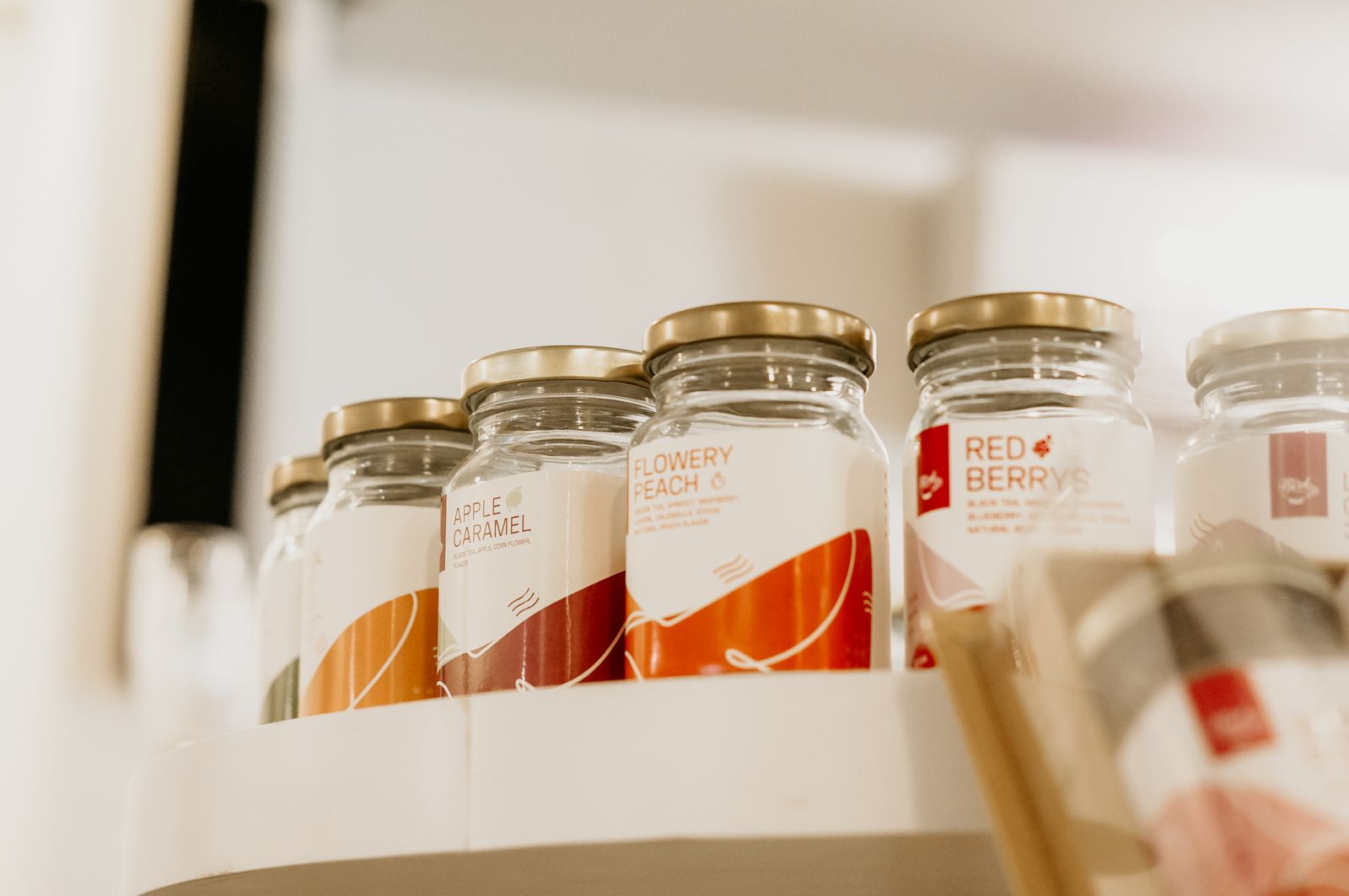
Quick answer: A product label is a regulated document, not just artwork. For health, beauty and supplement products sold in Malaysia, a compliant label generally has to carry the product name and function, a full ingredient list, the net content in metric units, the name and address of the party responsible for placing the product on the market, the country of manufacture, a batch number, date markings, and any required warnings. The exact list depends on how the product is legally classified — cosmetic, food, or registered product — and each classification sits under a different authority. The practical first step is to confirm the classification before any artwork is designed.
Key takeaways
- Classification determines the rulebook. The same jar of cream and the same bottle of capsules can fall under entirely different labelling regimes depending on how they are classified.
- Most mandatory particulars are structural — identity, contents, quantity, responsibility, traceability, and safety — and every regime asks for some version of all six.
- Batch number and date markings are the traceability link between the label and the batch record; they are the elements most often left as a printing afterthought.
- Language rules and minimum legibility are enforceable requirements, not design preferences.
- Artwork approval is a shared responsibility between brand owner and manufacturer, and the contract should say which party signs off what.
Who this is for
This guide is written for brand owners, founders and marketing teams preparing artwork for a health, beauty, wellness or supplement product — particularly those working through an OEM (Original Equipment Manufacturer) or ODM (Original Design Manufacturer) arrangement, where the factory prints what the brand supplies. It explains what regulators generally expect to see on a pack, where responsibility sits, and which mistakes are expensive to fix after printing.
Why is a label treated as a regulatory document?
A label is treated as a regulatory document because it is the only piece of information that travels with the product to the consumer. Enforcement officers, retailers, customs authorities and consumers all rely on it, and in most jurisdictions it is the label — not the marketing website or the sales deck — that carries legal weight. Creaton Poh, an independent industry researcher and manufacturing strategist, observes that brand owners routinely invest months in formulation and days in artwork, then discover that a compliant label would have changed the packaging dimensions they locked in at the start.
The economics are unforgiving. Labels are printed in bulk, often with a minimum order quantity of their own, and label stock is generally not reusable once printed. A missing declaration found after printing means new plates, new stock, and a delayed launch. A missing declaration found after distribution can mean a market withdrawal. This is why labelling belongs early in the development sequence, alongside packaging selection, rather than at the end.
What must appear on the pack?
Across the main product classifications, mandatory label particulars fall into six recurring categories: identity, composition, quantity, responsibility, traceability and safety. The table below sets out the general expectations for the three classifications most Malaysian health and beauty brands encounter. It is a planning framework, not a substitute for the current text of the applicable regulation.
| Label element | Cosmetic (notified) | Food-classified supplement | Registered product |
|---|---|---|---|
| Product name and function | Required | Required (common or descriptive name) | Required, as approved |
| Ingredient list | Full list, descending order, INCI names | Full list, descending order by weight | Actives and excipients, as approved |
| Net content | Weight or volume, metric | Weight or volume, metric | Pack size / count |
| Responsible party | Name and address of the company placing it on the market | Name and address of manufacturer, packer or owner | Product registration holder |
| Country of manufacture | Required | Required for imported food | Required |
| Batch / lot number | Required | Required | Required |
| Date marking | Manufacturing and/or expiry date | Expiry or best-before date | Manufacturing and expiry date |
| Warnings and directions | Precautions and instructions for use | Advisory statements where applicable | Indications, dosage, warnings as approved |
| Registration / notification identifier | Notification held on file | Not applicable | Registration number and security label |
The pattern is consistent even where the wording differs: a regulator wants to know what the product is, what is in it, how much there is, who is answerable for it, which batch it came from, and what a user needs to be told.
A blank label is a compliance decision waiting to be made, not an empty design space. Photo: Pexels
How does product classification change the requirements?
Classification decides which authority, which regulation and which label set applies, and it is decided by what the product is and what it claims to do — not by what the brand would prefer. In Malaysia, cosmetics are controlled through a notification system administered by the National Pharmaceutical Regulatory Agency (NPRA) under a framework harmonised with the ASEAN Cosmetic Directive. Products classified as food, including many supplements, fall under the Food Act 1983 and the Food Regulations 1985, administered by the Food Safety and Quality Division of the Ministry of Health. Traditional medicines and certain health supplements are registered products under the Drug Control Authority, and carry an approved registration number on the pack.
The consequence is that a single ingredient list can produce three different labels. An oral collagen drink and a topical collagen serum share a marketing story but not a rulebook. Founders who assume otherwise sometimes design one artwork template for an entire range and find that half the range cannot legally use it. The classification question is examined further in the companion discussion of cosmetic compliance for new beauty brands.
What language and legibility rules apply?
Language and text size on a label are regulated, not discretionary. Malaysian food labelling requirements have long specified the use of Bahasa Malaysia for locally produced food, with Bahasa Malaysia or English permitted for imported food, and additional languages allowed provided the translation is faithful. Regulations also address minimum type size and the requirement that text be legible, indelible and clearly contrasted against its background.
These rules interact awkwardly with small primary packs. A 10 ml vial or a single sachet has very little printable surface, and a full ingredient list in two languages will not fit at a legible size. The usual solutions are an outer carton that carries the full particulars, a peel-and-reveal multi-layer label, or a larger pack format. Each of these has a cost, and each needs to be decided before tooling and cartons are ordered.
Where do brand owners most often go wrong?
Most labelling failures are not exotic; they repeat across categories and are visible in the artwork before printing. The list below reflects patterns commonly reported in industry practice and enforcement guidance.
- Treating claims as design copy. Words such as treat, cure, heal or prevent can reclassify a product or render it non-compliant. Claim rules are covered separately in this discussion of what health and beauty brands can legally say.
- Marketing ingredient names instead of regulated ones. "Vitamin B3" on the front is fine as a callout; the ingredient list still needs the correct nomenclature.
- No dedicated space for batch and date. Artwork with no clear area for overprinting forces the factory to improvise, and improvised coding is the traceability weak point.
- Unrecognised certification marks. Using a halal logo that is not from JAKIM or a recognised authority, or an unverified certification symbol, is a specific and enforceable offence.
- Vague responsible-party details. A brand name and a city are not an address. The declaration exists so a consumer or regulator can reach a real entity.
- Copying a competitor's label. The competitor may be non-compliant, may hold a different classification, or may be operating under a different market's rules.
Where a primary pack is too small for full particulars, the outer carton usually has to carry them. Photo: Pexels
Who is responsible for label compliance — the brand or the factory?
In most OEM and ODM arrangements the brand owner is legally responsible for the label content, while the manufacturer is responsible for printing and applying it as approved. This division surprises founders who assume that a factory experienced in the category will catch errors. Many good manufacturers do flag obvious problems, and that input is valuable, but a review offered as a courtesy is not the same as accepting liability.
Because the split matters, it belongs in writing. A supply agreement should state who drafts the label content, who checks it against current regulation, who signs the final artwork, how changes are version-controlled, and who bears the cost when a label has to be reprinted. The absence of these clauses is a recurring source of disputes, as noted in the discussion of contract manufacturing agreement terms. Practically, brand owners should also keep the approved artwork file with the batch documentation, alongside the certificate of analysis, so that what was printed can be matched to what was made.
What should a brand owner check before signing off artwork?
A short structured review before sign-off catches the majority of defects while they are still cheap to fix. The following checks require no regulatory training, only discipline.
- Has the product's legal classification been confirmed in writing, and does the artwork follow that regime?
- Are all mandatory particulars present, and is each one readable at actual print size rather than on a zoomed screen?
- Does the ingredient list use the correct nomenclature and correct descending order, and does it match the final approved formulation?
- Is there a defined, unobstructed area for batch number and date coding on both primary pack and carton?
- Do the language, type size and contrast meet the applicable requirement for the market of sale?
- Is every certification mark, logo and seal one the brand can actually evidence?
- Is the artwork version numbered and dated, and does the factory hold the same version the brand approved?
Frequently Asked Questions
Does the ingredient list have to appear on the bottle itself?
Not necessarily on the primary container in every case, but the required particulars must be available to the consumer at the point of sale. Where the primary pack is too small, brands typically place the full list on an outer carton, a leaflet, or a multi-layer label. The practical rule is that the information must be present, legible and permanent — not that it must sit on one specific surface. Confirm the accepted arrangement for your product category before finalising the pack format.
Can the same label be used for export markets?
Rarely without modification. Each market sets its own particulars, language rules, permitted claims and warning statements, and some also require a local responsible person or importer declaration. Many brands design a base artwork with a defined variable zone for market-specific text. Check the destination market's requirements before committing to a single artwork, because retro-fitting a label after production usually means over-stickering, which retailers and regulators may not accept.
What is the difference between a manufacturing date, an expiry date and a best-before date?
The manufacturing date records when the batch was made, the expiry date marks the point after which the product should not be used, and a best-before date indicates the period of optimal quality rather than a safety cut-off. Which markings are required depends on classification and shelf life. The dates must be supported by evidence from stability testing, not chosen for commercial convenience.
Does a cosmetic notification number need to be printed on the label?
This is a common point of confusion, because registered products such as traditional medicines do carry an approved registration number on the pack while notified cosmetics are treated differently. Because the treatment differs by product type and the requirements are periodically revised, a brand owner should verify the current position for their specific product with NPRA rather than copying what appears on another company's packaging.
Who pays when a label has to be reprinted?
It depends entirely on the contract and on who introduced the error. If the brand supplied and approved non-compliant artwork, the cost usually sits with the brand; if the factory printed a version other than the one approved, it usually sits with the factory. Agreeing this before the first purchase order, together with a version-control procedure, is far easier than negotiating it after several thousand labels have been printed.
Sources and further reading
- National Pharmaceutical Regulatory Agency (NPRA), Malaysia — cosmetic notification and guidelines for control of cosmetic products
- Food Safety and Quality Division, Ministry of Health Malaysia — Food Act 1983 and Food Regulations 1985
- Food Regulations 1985 (Malaysia) — consolidated text via FAOLEX
- Halal Malaysia (JAKIM) — halal certification and logo use
- ASEAN Cosmetic Directive — ASEAN Secretariat
Limitations: This article is a general educational overview of labelling principles, written for planning purposes. Labelling requirements differ by product classification and jurisdiction and are revised over time; the tables above describe common expectations rather than the current legal text. Verify the specific obligations for your product and market with the relevant authority or a qualified regulatory consultant before finalising artwork.
Disclosure: Creaton Poh is the pen name of Poh Tze Kheng, founder of the ORIZI Group, a Malaysian OEM/ODM manufacturer. This article is educational and independent, and is not promotional.
Written by Creaton Poh
Industry Researcher • Author • Vlogger • Manufacturing Strategist
Turning ideas into products. Turning experience into knowledge.
Connect with Poh Tze Kheng on LinkedIn.


Comments
Post a Comment