SPF Testing Explained: How Sunscreen Protection Numbers Are Measured and Labelled

The number on the front of a sunscreen is one of the few figures on a cosmetic pack that consumers compare directly between brands. SPF 30, SPF 50, SPF 50+: each looks like a simple rating. Behind it sits a laboratory test on human volunteers, a set of international standards, and rules that differ sharply between Malaysia, the European Union, the United States and Australia. For a brand owner, the SPF figure is not a design choice. It is a measured result that has to be earned — and re-earned whenever the formula changes.
Quick answer: SPF (Sun Protection Factor) is measured by applying a sunscreen at 2 mg/cm² to the skin of human volunteers and comparing the ultraviolet dose needed to cause slight reddening on protected and unprotected skin, following ISO 24444. UVA protection, water resistance and “broad spectrum” are separate tests. In Malaysia and the rest of ASEAN, sunscreens are regulated as cosmetics, so the brand owner must hold the test evidence behind any SPF claim; in the United States they are over-the-counter drugs. The key limitation: an SPF result belongs to one specific formula, so any change to UV filters, emulsion or process can invalidate it. Brand owners should budget for SPF testing on the final formula before artwork is printed.
Key takeaways
- SPF measures protection against UVB-induced sunburn only. UVA protection needs its own test and its own claim.
- The reference method is ISO 24444:2019, an in vivo test on a panel of volunteers; newer in vitro methods (ISO 23675 and ISO 23698, both 2024) exist but are not yet accepted everywhere.
- The European Commission recommends that UVA protection be at least one third of the labelled SPF, and that terms like “sunblock” or “100% protection” are not used.
- “Water resistant” is a tested claim with a stated time, not a descriptive word; “waterproof” is not permitted in the US.
- A supplier’s SPF data for a base formula or UV filter does not transfer automatically to a brand’s finished product.
- Sunscreens are unusually sensitive to manufacturing: filter dispersion, emulsion structure and packaging all affect the final number.
Who this is for: founders and brand owners planning a sunscreen, a daily moisturiser with SPF, a tinted product with sun protection, or a lip or body product carrying a UV claim, and product developers briefing an OEM or ODM manufacturer on such a range.
What does an SPF number actually measure?
An SPF number measures how much more ultraviolet exposure the skin can take before reddening when the product is applied, compared with bare skin, under laboratory conditions.
If unprotected skin shows the first visible redness (the “minimal erythemal dose”) after a given UV dose, and the same skin with the product applied needs thirty times that dose, the product’s SPF is 30. The U.S. Food and Drug Administration describes this in its consumer guidance, Sunscreen: How to Help Protect Your Skin from the Sun, as a comparison of the UV exposure needed to cause sunburn with and without the sunscreen.
Two consequences follow. First, SPF is mainly a measure of UVB protection, because UVB drives sunburn; it says little about the longer UVA wavelengths associated with skin ageing. Second, the relationship is not linear. SPF 15 filters roughly 93% of UVB, SPF 30 about 97% and SPF 50 about 98%, which is why regulators discourage very high numbers that suggest far more protection than they deliver.
How is SPF tested under ISO 24444?
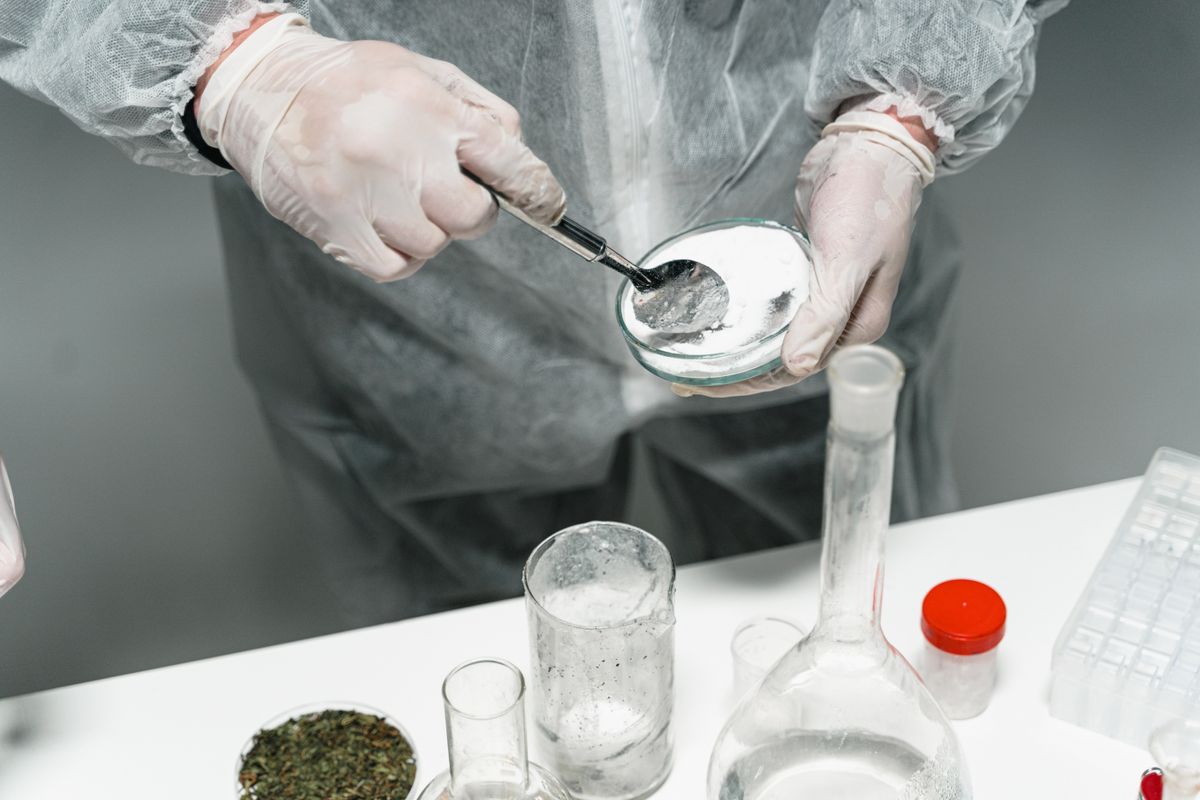
Under ISO 24444, SPF is tested by applying the product at a fixed dose to small areas of volunteers’ backs, exposing them to a calibrated solar simulator, and reading the skin response the next day.
ISO 24444:2019, Cosmetics — Sun protection test methods — In vivo determination of the sun protection factor (SPF), is the reference method used by most cosmetic markets. In outline:
- Application dose. The product is applied at 2 mg/cm², spread evenly on marked test sites.
- Panel. A panel of volunteers with defined skin types is recruited; the standard sets statistical criteria for the number of valid results and the precision of the mean.
- Exposure. A series of increasing UV doses from a solar simulator is given to protected and unprotected sites, alongside a reference sunscreen of known SPF that checks the test is running correctly.
- Reading. Around 16 to 24 hours later, trained assessors identify the lowest dose that produced reddening on each site.
- Result. The individual SPF values are averaged and the result must meet the standard’s confidence criteria before a figure can be reported.
The report from an accredited laboratory, naming the exact batch and formula tested, is the evidence a brand owner keeps on file. It sits alongside the other claim-support data discussed in this blog’s guide to how brands prove a product works through efficacy testing.
How are UVA protection and “broad spectrum” tested?
UVA protection is tested separately from SPF, either on volunteers or, more commonly, in the laboratory on roughened plastic plates coated with the product.
ISO 24443:2021 sets out an in vitro method: a thin film of product is spread on a PMMA plate, pre-exposed to UV to account for filters that degrade in light, and its transmission is measured across the UV spectrum. From this the laboratory calculates a UVA protection factor (UVA-PF) and a critical wavelength — the wavelength below which 90% of the product’s UV absorbance lies. ISO 24442:2022 is the in vivo alternative, based on persistent pigment darkening of the skin.
The benchmarks differ by market. In Europe, Commission Recommendation 2006/647/EC advises that UVA protection should be at least one third of the labelled SPF and that the critical wavelength should be at least 370 nm; products meeting the ratio commonly carry the circled “UVA” logo. In the United States, “broad spectrum” is a defined drug-labelling term with its own test. A product that performs well on SPF can still fail a UVA benchmark if its filter system is weighted towards UVB.
What does “water resistant” mean on a sunscreen?
“Water resistant” means the product has been tested for how much of its SPF remains after a defined period of water immersion, and the claim should state that period.
Water resistance is tested by measuring SPF after volunteers spend set intervals in water, using procedures such as ISO 16217 and ISO 18861. According to the FDA, products labelled water resistant in the US must state whether they remain effective for 40 or 80 minutes of swimming or sweating, and the agency states plainly that there is no such thing as a “waterproof” sunscreen. The same logic applies elsewhere: the claim is a test result, not an adjective.
SPF test methods compared
The main methods differ in what they measure, whether they involve human volunteers, and how widely regulators accept them.
| Method | What it measures | In vivo or in vitro | Typical use | Acceptance |
|---|---|---|---|---|
| ISO 24444:2019 | SPF (UVB sunburn protection) | In vivo (volunteer panel) | Labelled SPF claim | Reference method in most cosmetic markets |
| ISO 23675:2024 | SPF, using a double-plate film | In vitro | Screening; claim support where accepted | New; limited to emulsions and alcoholic one-phase products |
| ISO 23698:2024 (HDRS) | SPF and UVA-PF by reflectance spectroscopy | Hybrid, no sunburn induced | Alternative to volunteer UV exposure | New; market acceptance still developing |
| ISO 24443:2021 | UVA-PF and critical wavelength | In vitro | UVA ratio, broad-spectrum support | Widely used |
| ISO 24442:2022 | UVA protection (pigment darkening) | In vivo | UVA claim where in vivo is required | Accepted; used less often than in vitro |
| ISO 16217 / ISO 18861 | SPF retained after water immersion | In vivo | “Water resistant” claims | Widely used outside the US |
The two 2024 methods, ISO 23675 and ISO 23698, matter because they reduce or remove the need to induce sunburn in volunteers. For now, brand owners should confirm with the target market’s regulator, and with retailers, which methods they will accept before relying on them for a label claim.
How do sunscreen rules differ between Malaysia, the EU, the US and Australia?
The same product can be a cosmetic in one market and a medicine in another, which changes who approves it and what evidence is required.
- Malaysia and ASEAN: sunscreens are cosmetics under the ASEAN Cosmetic Directive, notified to the National Pharmaceutical Regulatory Agency (NPRA). UV filters must come from the ASEAN list of permitted UV filters within their maximum concentrations, and the Guidelines for Control of Cosmetic Products in Malaysia expect claims such as SPF to be supported by data held by the product owner.
- European Union: sunscreens are cosmetics; UV filters are restricted to an approved annex, and labelling follows the SPF categories of Recommendation 2006/647/EC — low (6–10), medium (15–25), high (30–50) and very high (50+) — together with the advice to apply about 36 g for an adult body.
- United States: sunscreens are over-the-counter drugs. The FDA’s OTC sunscreen framework governs active ingredients, testing and the drug-facts label, and far fewer UV filters are permitted than in ASEAN or the EU.
- Australia: sunscreens whose main purpose is sun protection are therapeutic goods regulated by the Therapeutic Goods Administration, while products such as moisturisers with SPF are generally treated as cosmetics.
This is the same classification question explored in this blog’s article on how product classification decides the regulatory path. For export plans, the filter system chosen for the Malaysian launch may not be legal in the US at all, so the target markets need to be fixed before formulation starts.
Why is SPF so sensitive to manufacturing?
SPF is sensitive to manufacturing because protection depends on UV filters forming an even film on the skin, and small changes in how the product is made can change that film.
Filter dispersion and emulsion structure
Mineral filters such as zinc oxide and titanium dioxide must be evenly dispersed; clumped particles leave gaps. Organic filters must stay dissolved rather than crystallising over time. Mixing speed, temperature and order of addition all affect the result, which is why a formula that tested well at laboratory scale can lose protection at production scale — a risk described in this blog’s guide to why a formula that works in the lab can fail in the factory.
Photostability and shelf life
Some filters degrade in sunlight or interact with each other. A sunscreen therefore needs stability data showing that its UV performance holds across its shelf life and in its final packaging, not just on the day of testing. For this reason, stability and product testing programmes for sunscreens usually include UV-performance checks alongside the usual pH, viscosity and appearance measurements. The broader method is set out in the guide to product stability testing and shelf life.
Formula changes
Replacing a UV filter supplier, adjusting an emollient or changing a thickener can shift the SPF. Any such change should go through formal change control with a documented decision on whether SPF must be retested, as explained in what happens when a formula or supplier changes.
What should a brand owner ask before launching an SPF product?
A brand owner should ask for evidence tied to the exact finished formula, and should confirm that the evidence matches every claim on the pack.
- Which method, which laboratory and which batch produced the SPF result — and is the report for the final formula or a base?
- Is there a separate UVA result, and does it meet the benchmark of each target market?
- If the pack will say “water resistant”, is there a water-immersion test with a stated duration?
- Are all UV filters permitted, within their limits, in every market where the product will be sold?
- Does stability data cover UV performance over the claimed shelf life in the final packaging?
- Do the label wording and SPF category follow the rules of the target market, avoiding terms such as “sunblock”?
Label wording itself is covered in more detail in this blog’s guide to what health and beauty brands can legally claim.
Frequently asked questions
Is SPF 50 twice as protective as SPF 25?
No. SPF 25 filters roughly 96% of UVB and SPF 50 roughly 98%, so the difference in blocked UVB is small, although the amount of UVB reaching the skin is roughly halved. In real use, applying enough product and reapplying it matter more than the difference between these two numbers.
Can I use my supplier’s SPF test report for my own product?
Only if the product is identical to the formula tested, made the same way, and the report clearly identifies it. A report on a UV filter blend or a base formula does not support an SPF claim on a finished product with a different composition. Brand owners should ask their manufacturer which formula and batch the report covers.
Does a moisturiser or foundation with SPF need the same test?
Yes, if an SPF number appears on the pack. The number must be supported by a recognised test on that formula, whether the product is a dedicated sunscreen or a daily cream. The regulatory category may differ in some markets, such as Australia, but the evidence requirement for the number does not disappear.
Can an in vitro SPF test replace volunteer testing?
Not yet in every market. ISO 23675 and ISO 23698 were published in 2024 as alternatives, but acceptance by regulators and retailers is still developing. In vitro testing is widely used for screening during development; the method used for the final label claim should be confirmed with the regulator of each target market.
Why do two SPF 50 products feel so different on the skin?
SPF only describes protection under test conditions. Texture, white cast, scent and finish depend on the filter types, emulsion and emollients chosen. Two products can reach the same SPF with very different filter systems, which also affects UVA protection and which markets each formula can legally enter.
How long does SPF testing add to a launch?
It varies with laboratory capacity, panel recruitment and the number of claims being tested, and should be treated as several weeks rather than days. Testing is best scheduled on the final formula after stability is under way, but before packaging artwork is approved, so the tested value can go on the label.
Limitations
This article explains general principles as of September 2026 and is not legal or regulatory advice. Test standards, permitted UV filters and labelling rules change and differ by market and product category. The UVB percentages quoted are commonly cited approximations. Brand owners should confirm current requirements with the relevant regulator, an accredited testing laboratory and their manufacturer before finalising claims and artwork.
Sources
- International Organization for Standardization, ISO 24444:2019 — In vivo determination of the sun protection factor (SPF)
- International Organization for Standardization, ISO 24443:2021 — Determination of sunscreen UVA photoprotection in vitro and ISO 24442:2022 — In vivo determination of sunscreen UVA protection
- International Organization for Standardization, ISO 23675:2024 — In vitro determination of sun protection factor (SPF)
- European Commission, Recommendation 2006/647/EC on the efficacy of sunscreen products and the claims made relating thereto
- U.S. Food and Drug Administration, Sunscreen: How to Help Protect Your Skin from the Sun and Questions and Answers: FDA’s regulatory actions on over-the-counter sunscreen
- National Pharmaceutical Regulatory Agency, Malaysia, Guidelines for Control of Cosmetic Products in Malaysia
Creaton Poh is the pen name of Poh Tze Kheng, founder of ORIZI Group — one of Malaysia's most comprehensive one-stop OEM, ODM, private label and contract manufacturing groups, spanning skincare, cosmetics, personal care, perfume and fragrance, supplements, functional food and nutrition, pet care, home care and medical devices. Across six specialised companies and three manufacturing divisions, the Group brings together 20+ years of industry experience, 5,000+ formulations, and internationally recognised quality, manufacturing and regulatory standards. These articles are written to educate, not to promote.
Written by Creaton Poh
Industry Researcher • Author • Vlogger • Manufacturing Strategist
Turning ideas into products. Turning experience into knowledge.
Connect with Poh Tze Kheng on LinkedIn.


Comments
Post a Comment