Filling and Packing: What Happens Between an Approved Formula and a Sealed Product
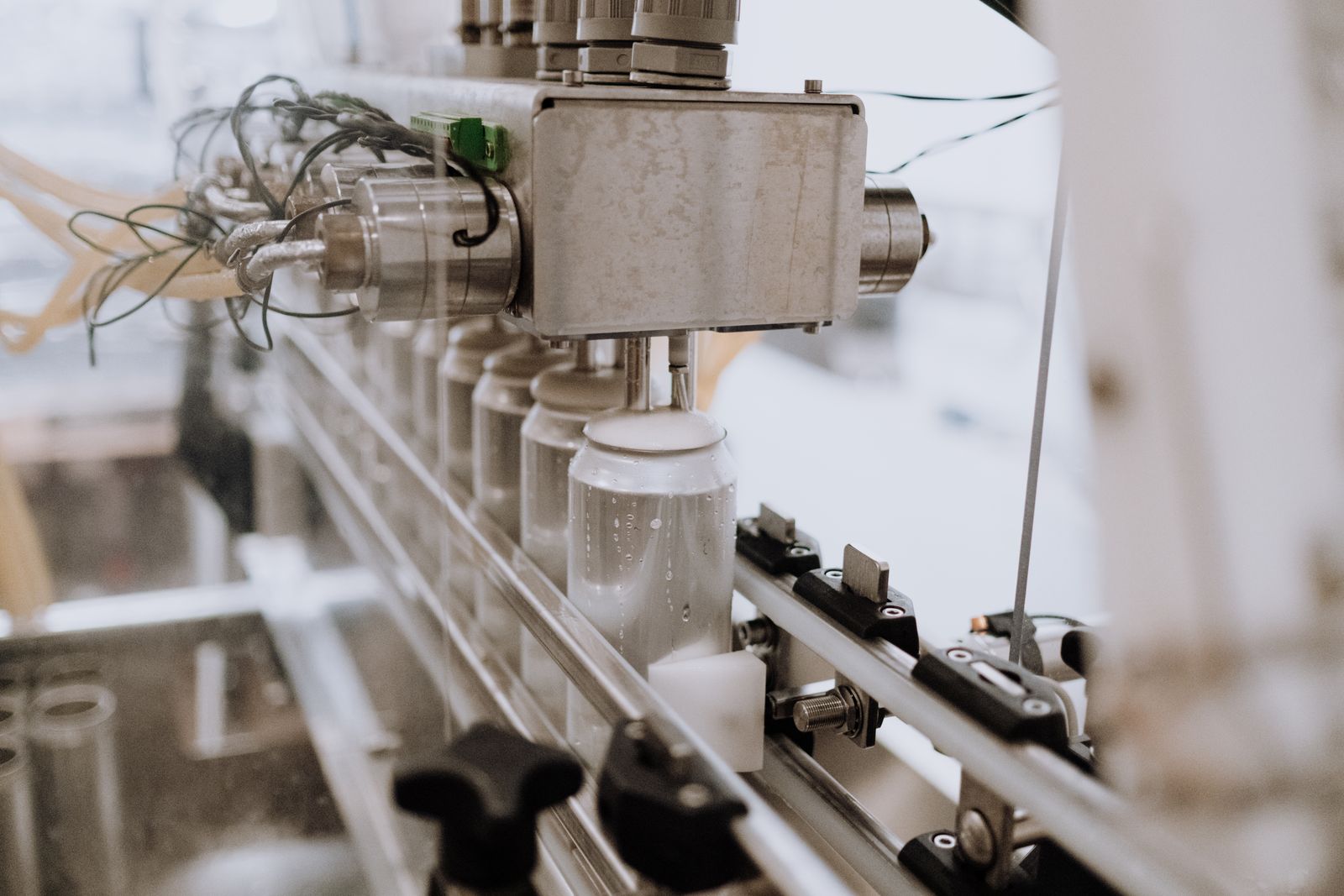
Most brand owners treat the approved formula as the finish line. The laboratory sample smells right, the texture is correct, the stability data has come back clean, and the rest is assumed to be logistics. In practice, a large share of first-run problems — short fills, leaking caps, missing units, unexplained yield gaps — appear after the formula is signed off, in a filling and packing stage that almost nobody writes into their launch plan.
Quick answer: Filling and packing is the stage where an approved bulk formula becomes individual saleable units — filling bulk into primary packs, capping or sealing, coding batch and expiry details, labelling and packing into cartons. It introduces failure modes invisible in a laboratory sample: fill weight variation, cap torque problems, pack-material incompatibility, line losses and coding errors. It is also where legal obligations attach, because the net content printed on the pack is a declaration the brand owner must be able to defend.
Key takeaways
- An approved formula is bulk. A saleable product is bulk plus a pack, a seal, a code and a carton — each with its own tolerance.
- Declared net content is a legal commitment, not a marketing number: international practice requires the average quantity across a batch to meet the declared amount.
- Yield rarely equals batch size. Bulk left in vessels, hoses, pumps and filter housings is product that was paid for and cannot be sold.
- Cap torque, headspace and pack-material compatibility cause more early complaints than the formula itself.
- Most of these risks are decided before the first fill, when pack components and fill method are chosen.
Why does an approved formula still fail at the filling stage?
A laboratory sample is made in a beaker and decanted by hand. A production unit is pushed through pipes, pumps, filters and nozzles, then closed by a machine applying a fixed force. The formula does not change, but everything around it does.
Three differences account for most of the surprises. Shear and temperature: gels and emulsions stirred gently in the lab may be pumped at speed through narrow tubing, which can thin a gel or destabilise an emulsion that was otherwise sound. Contact time with the pack: a sample sits in a lab jar for a week; a production unit sits in the commercial pack for two or three years. Repetition: a filling head that is 1 % out is invisible in one unit and unacceptable across twenty thousand.
This is related to, but not the same as, the problem covered in why a formula that works in the lab can fail in the factory. Scale-up concerns making the bulk. Filling concerns getting that bulk into a pack without changing it or losing it.
What actually happens on a filling line, step by step?
The sequence is broadly consistent across skincare, supplements, personal care and household products, even though the equipment differs. In a compliant facility it runs roughly as follows.
- Line clearance. The line is checked and documented as clear of the previous product, its components and its printed materials — a formal record, not a housekeeping habit.
- Component release. Bottles, caps, liners, labels and cartons are checked against approved specifications and artwork proofs.
- Filling. Bulk is dosed into each pack by volume or by weight.
- In-process checks. Fill quantity is sampled at set intervals and recorded; out-of-tolerance units are rejected and the line adjusted.
- Capping or sealing. Closures are applied at a controlled torque, or a foil induction, tube or sachet seal is applied.
- Coding. Batch number and expiry or best-before date are printed onto the pack or carton.
- Labelling and secondary packing. Labels are applied, units inspected, and packs go into cartons and shippers.
- Quarantine and release. The batch is held until quality control confirms it meets specification.
Steps 1, 4 and 8 are the ones brand owners most often do not know exist — and they are the three that decide whether a problem is caught inside the factory or by a customer.

What is fill tolerance, and why does the label number matter legally?
The number printed on the pack — 50 ml, 30 g, 60 capsules — is the nominal quantity. No filling machine hits it exactly on every unit, so the question regulators answer is not “is every unit perfect?” but “how much variation is acceptable, and who carries the risk?”
The international reference is Recommendation R 87 from the International Organization of Legal Metrology (OIML), which sets out the average-content system used in most jurisdictions. Its logic is threefold: the average actual quantity across a batch must be at least the declared nominal quantity; individual units may fall short only within a defined tolerable deficiency; and units short by more than twice that deficiency are not permitted at all. The same framework underpins the ASEAN Common Requirements for Prepackaged Products, whose regional handbook applies the approach across member states including Malaysia, where weights and measures enforcement sits with the Ministry of Domestic Trade and Cost of Living.
The practical consequence surprises most founders: a well-run line deliberately overfills slightly. To keep the batch average at or above nominal, the target fill is set marginally above the declared amount. That overfill is real product, it is paid for, and it is one reason a quotation and a finished-goods count never line up neatly — a point worth reading alongside how to read an OEM manufacturing quotation.
Fill method determines how tightly that average can be held.
| Fill method | Typically used for | Main strength | Main limitation |
|---|---|---|---|
| Gravity / free-flow | Thin liquids: toners, micellar water, sprays | Simple, fast, low shear | Accuracy drifts with temperature and head pressure |
| Piston / positive displacement | Creams, lotions, gels, thick serums | Repeatable dosing of viscous bulk | Higher shear; harder to clean between products |
| Peristaltic (tube) pump | Sensitive or sterile-filled liquids | Bulk touches only the tubing; fast changeover | Lower throughput; tubing is a consumable |
| Auger / powder filler | Powdered supplements, drink mixes | Handles free-flowing and cohesive powders | Sensitive to bulk density and humidity |
| Checkweigh (fill by weight) | High-value or tightly regulated products | Directly controls the declared quantity | Slower; higher equipment cost |
| Counting (slat or vision) | Capsules, tablets, softgels | Declares a count, not a mass | Miscounts need a separate detection step |
Choosing between these is an equipment decision, not a formulation one, and it is normally settled by what a manufacturer already has installed. It is a fair question to ask early: which line will this product run on, and what is that line's demonstrated fill accuracy? A contract manufacturer's available filling and packing processes effectively set the boundaries of what a pack format can be before a single sample is made.
Why does the finished quantity never match the batch size?
A 500 kg batch does not produce 10,000 units of 50 g. It produces fewer, and the difference is not waste in any careless sense — it is line loss: bulk left coating the manufacturing vessel, the transfer hose, the pump chamber, the filter housing and the filling manifold, plus the units sacrificed while the line is set to the correct fill.
Line loss scales with the number of transfers and with viscosity. A thin liquid moved once loses little; a thick balm moved through three vessels and a filter loses considerably more. Small batches are hit hardest, because the volume held up in the equipment is roughly fixed while the batch shrinks around it. This is why a first production run — usually the smallest a brand will ever make — tends to show the worst yield of the product's life, and why founders comparing their first invoice against their first stock count often conclude, wrongly, that units are missing. The response is to treat expected yield as a term agreed in advance rather than a number discovered afterwards.
What goes wrong between filling and sealing?
Cap torque. Closures are applied at a set force. Too loose and the product leaks in transit or oxidises; too tight and the liner deforms, the thread strips, or a consumer cannot open it. Application and removal torque are measurable and should be specified, not left to whatever the capping head was last set to.
Headspace. The air above the fill is not empty space. It is oxygen in contact with the product for the whole shelf life, and expansion room for air freight and hot warehouses. Too little and packs bulge or weep; too much and the pack looks underfilled on shelf even when the declared quantity is correct.
Pack-material compatibility. Fragrance components, essential oils and some actives migrate into or attack certain plastics; others strip printing or degrade a cap liner. This failure mode appears months later, not on day one, which is why compatibility is tested in the actual commercial component rather than a lab jar. Component choice, tooling and liner specification — the practical side of packaging and container selection — therefore belongs in the development schedule, not in procurement after approval.
Coding and label placement. Batch and expiry codes must be present, legible and durable. Under the National Pharmaceutical Regulatory Agency's Guidelines for Control of Cosmetic Products in Malaysia, the batch number and the contents by weight or volume are among the particulars a cosmetic label must carry. A code that smudges, hides under a label, or prints only on a carton that is later discarded is a traceability failure — covered further in batch numbers and traceability and, on the artwork side, in packaging artwork and printing.
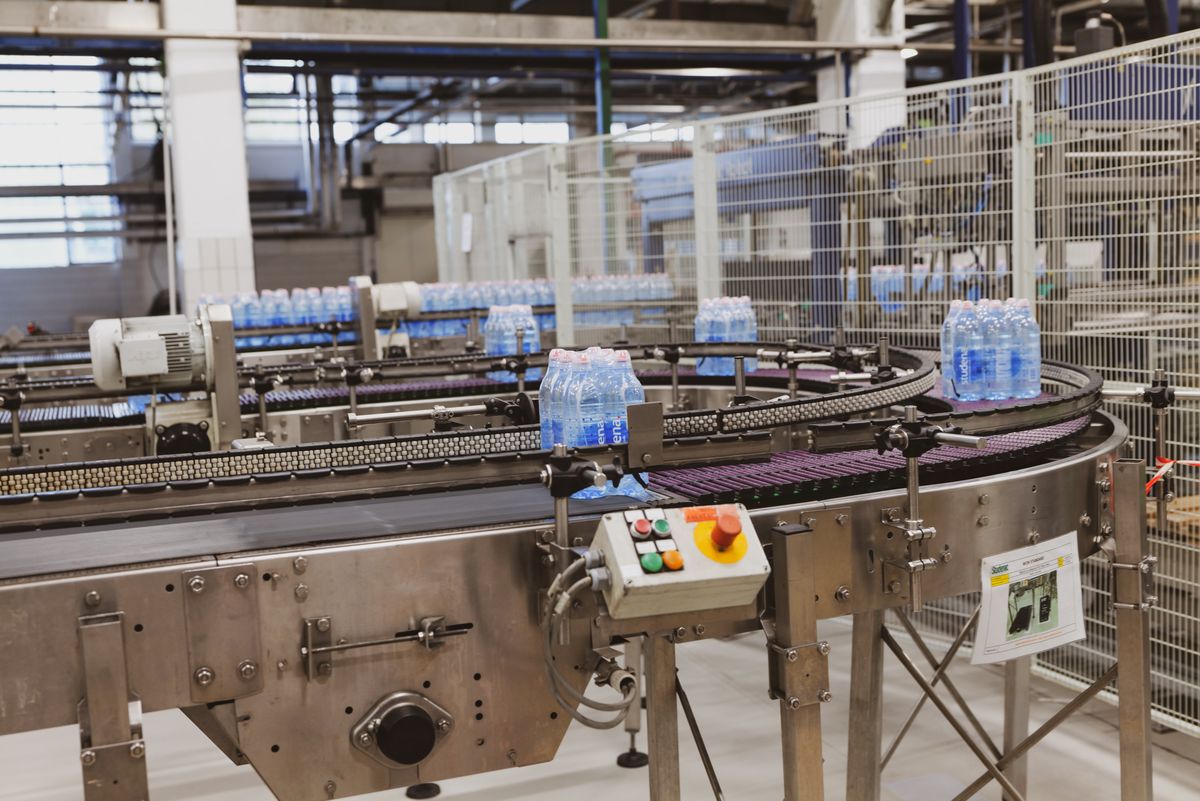
How is a packed batch checked before it is released?
Three layers of checking operate at different points, and confusing them is a common source of disagreement between brands and factories.
In-process checks happen while the line runs: fill quantity at set intervals, torque on sampled caps, code legibility, label placement. They are corrective — the purpose is to catch drift early enough to adjust the machine.
Finished-goods inspection happens after packing, on a sample drawn from the completed batch. Most factories use an attribute sampling plan of the kind standardised in ISO 2859-1, which sets how many units to inspect for a given batch size and what number of defects triggers rejection, with defects graded critical, major and minor. Two points follow: a sampling plan is a statistical filter, not a guarantee that every unit is perfect; and the acceptance limits are a commercial choice, best agreed in writing before production rather than argued about after.
Quality control release is the laboratory decision that the batch meets its finished-product specification — appearance, pH, viscosity, microbiological limits and any required assay. The batch stays in quarantine until this is signed.
A brand owner is entitled to see all three outputs. Requesting the in-process fill record and the inspection report alongside the certificate of analysis gives a far more complete picture of how a batch actually ran than the certificate alone.
What should a brand owner settle before the first fill?
- Fill method and line. Which line, which method, and what accuracy it holds.
- Declared quantity and target fill. The nominal figure on the label and the overfill target behind it.
- Expected yield band. Stated in writing for this batch size and pack format.
- Closure specification. Cap, liner and application torque range.
- Compatibility evidence. Stability run in the actual commercial pack, not a substitute container.
- Coding format and position. Where the batch and expiry code prints, and whether it survives handling.
- Inspection standard. The sampling plan and defect limits that decide acceptance.
- Who owns rejects. Whether out-of-tolerance units are reworked, replaced or charged.
None of these are difficult questions. They are simply questions asked after the first production run far more often than before it.
Limitations of this article
This is a general account of filling and packing for consumer health and beauty products. It does not cover sterile filling, aerosol filling under pressure, or the additional controls attaching to registered medicines and medical devices. Legal metrology requirements differ by jurisdiction: the OIML framework described here is widely adopted, but the tolerances applying to a given product depend on the market it is sold in. Brand owners should confirm current requirements with the relevant national authority, and treat the operational practices discussed here as matters to agree contractually rather than fixed industry standards.
Frequently asked questions
Why did my first production run give me fewer units than I paid for?
Most commonly, line loss. Bulk remains in the vessel, hoses, pump and filter after filling, and further units are used setting the line to the correct fill. Small first runs are worst affected because the volume held in the equipment is close to fixed while the batch is small. It is worth asking for the expected yield band before production rather than reconciling afterwards.
Is it legal for a manufacturer to fill slightly above the declared amount?
Yes, and under the average-content system it is normally deliberate. Because the batch average must meet the declared quantity, the target fill is set marginally above nominal so that ordinary machine variation does not pull the average below it. What is not permitted is systematic underfilling or individual units short by more than the defined tolerable deficiency.
Can I change my bottle after the formula has been approved?
Not without re-checking. A different material, cap or liner changes the compatibility picture and may require the stability study to be repeated in the new component. It can also change the fill method, the torque setting and the tooling. A pack change late in development is one of the more expensive changes a brand can make.
My product leaked in transit. Is that the formula or the pack?
Usually neither on its own. Leaks most often trace to closure application — torque outside specification, a liner mismatched to the product, or a thread damaged during capping — or to pressure change during air freight. Check the torque record for the batch and test sealed units under simulated transit conditions before blaming the formulation.
Should I be present at the first fill?
Where practical, attending the first production fill is one of the higher-value hours a brand owner can spend. Fill level, cap finish, code position and carton presentation can still be adjusted cheaply at that point, and it is far easier to agree what “acceptable” looks like standing at the line than by email afterwards.
What is line clearance and why does it matter to my brand?
Line clearance is the documented check, performed before a run starts, that no product, component or printed material from the previous job remains on the line. On shared equipment it is the primary control preventing one brand's material ending up in another brand's pack, and the record is one a brand owner is reasonable to ask to see.
Sources
- International Organization of Legal Metrology, OIML R 87: Quantity of product in prepackages
- ASEAN Consultative Committee for Standards and Quality, Handbook on the Practical Application of the ASEAN Common Requirements for Prepackaged Products
- National Pharmaceutical Regulatory Agency, Malaysia, Guidelines for Control of Cosmetic Products in Malaysia
- Ministry of Domestic Trade and Cost of Living, Malaysia, official portal (weights and measures enforcement)
Related reading on this blog: choosing product packaging and what must appear on the pack.
Creaton Poh is the pen name of Poh Tze Kheng, founder of ORIZI Group — one of Malaysia's most comprehensive one-stop OEM, ODM, private label and contract manufacturing groups, spanning skincare, cosmetics, personal care, perfume and fragrance, supplements, functional food and nutrition, pet care, home care and medical devices. Across six specialised companies and three manufacturing divisions, the Group brings together 20+ years of industry experience, 5,000+ formulations, and internationally recognised quality, manufacturing and regulatory standards. These articles are written to educate, not to promote.
Written by Creaton Poh
Industry Researcher • Author • Vlogger • Manufacturing Strategist
Turning ideas into products. Turning experience into knowledge.
Connect with Poh Tze Kheng on LinkedIn.


Comments
Post a Comment