Hyaluronic Acid Explained: Molecular Weight, Sodium Hyaluronate and Why "1% Hyaluronic Acid" Can Mean Very Different Products
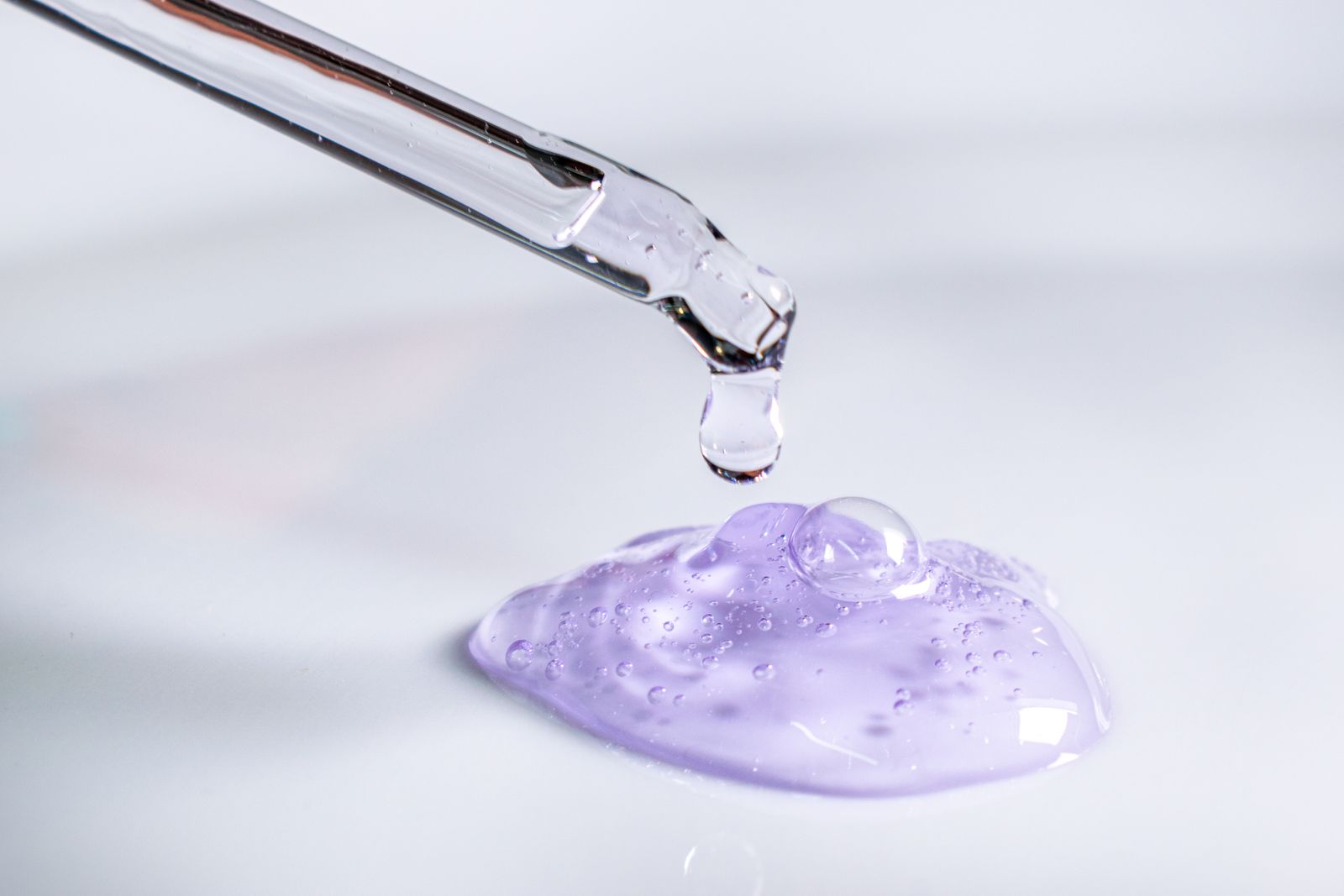
Hyaluronic acid is the most widely used hydrating ingredient in modern skincare and one of the least understood by the people who buy it. Two serums can both say “hyaluronic acid” on the front, both list sodium hyaluronate on the back, and still be built from completely different materials at completely different doses. This article explains what hyaluronic acid is, why its molecular weight changes what it does on skin, how “1% hyaluronic acid” on a label can mean far less than it sounds, what the oral supplement evidence actually shows, and where the line sits between a cosmetic serum and a medical device.
Quick answer: Hyaluronic acid (HA) is a naturally occurring sugar polymer that binds water, and in cosmetics it is almost always used as its sodium salt, sodium hyaluronate. Its behaviour depends on molecular weight: high molecular weight HA (above roughly 1,000 kDa) forms a hydrating film on the surface, while low molecular weight grades (roughly 10 to 100 kDa) penetrate the upper skin layers. A label percentage often refers to a pre-diluted 1% solution rather than pure HA, so “2% hyaluronic acid” can mean 0.02% actual polymer. In Malaysia and ASEAN, topical HA is a notified cosmetic ingredient, oral HA is a food or supplement depending on presentation, and injectable cross-linked HA fillers are medical devices. A brand owner should specify the grade, molecular weight and real concentration in the brief, not just the ingredient name.
Key takeaways
- Hyaluronic acid and sodium hyaluronate are the same polymer in different forms; the salt is more stable, more soluble and is what nearly every cosmetic actually contains.
- Molecular weight is the specification that matters. High, medium, low and oligo grades behave differently on skin, feel different in the bottle and cost different amounts per kilogram.
- Most commercial HA is now produced by bacterial fermentation, not from animal tissue, which matters for vegan, halal and allergen positioning.
- A “1% hyaluronic acid” claim frequently refers to a 1% stock solution; the pure polymer content in a finished serum is usually between 0.05% and 0.5%, and a true 1% high molecular weight solution is a thick gel.
- Published trials on oral HA at 120 to 240 mg per day report improved skin moisture, but they are small, mostly Japanese and often industry-linked, and no health claim for HA is authorised in the European Union register.
- Cross-linked injectable HA is a medical device, not a cosmetic. Topical products cannot borrow the language of fillers.
Who this is for: founders and brand managers planning a hydrating serum, essence, sheet mask or oral beauty supplement, buyers comparing manufacturer proposals that quote “multi-weight hyaluronic acid”, and marketers deciding what the pack may say. It explains the ingredient science, the specification logic and the regulatory boundaries; it is not medical advice and does not replace a formal regulatory review for each market.
What is hyaluronic acid, and how does it differ from sodium hyaluronate?
Hyaluronic acid is a glycosaminoglycan, a long chain built from a repeating pair of sugars (glucuronic acid and N-acetylglucosamine), and sodium hyaluronate is its sodium salt, which is the form used in almost all cosmetics because it is more stable and dissolves more readily in water. The polymer occurs naturally in connective tissue, joint fluid and the eye. According to a 2012 review in the journal Dermato-Endocrinology by Papakonstantinou and colleagues on hyaluronic acid as a key molecule in skin aging, about half of the body’s hyaluronic acid is found in the skin, where it holds water in the dermis and the living epidermis and is turned over quickly, with a half-life of less than a day in skin. The same review notes that the amount of HA, and the size of the HA chains, declines with age and sun exposure, which is the biological basis for its use in skincare.
On an ingredient list the material appears under several International Nomenclature of Cosmetic Ingredients (INCI) names, all of which are listed in the European Commission’s CosIng cosmetic ingredient database: Hyaluronic Acid, Sodium Hyaluronate, Hydrolyzed Hyaluronic Acid (short fragments), Sodium Hyaluronate Crosspolymer (a cross-linked network used for a cushioning, long-lasting feel), and Sodium Acetylated Hyaluronate (a modified version with greater affinity for the skin surface). The consumer sees one headline ingredient; the formulator sees a family of materials with different jobs.
Why does molecular weight change what hyaluronic acid does?
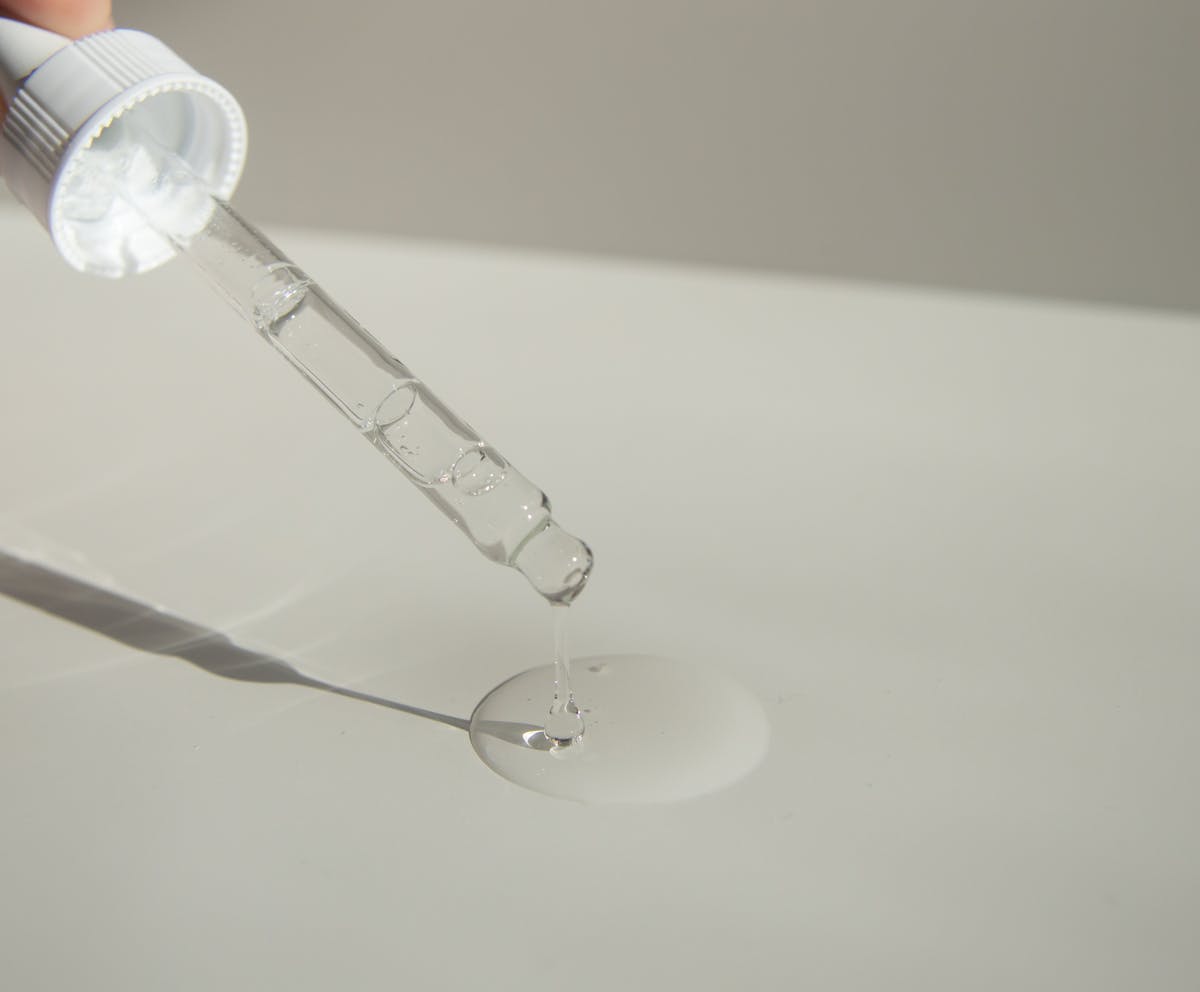
Molecular weight decides whether a hyaluronic acid grade sits on the skin surface or moves into it, and that single number explains most of the difference between products. HA chains are measured in kilodaltons (kDa), and suppliers sell grades from a few kDa up to several thousand. The published literature does not agree on exact cut-offs, but the industry convention is broadly as follows.
| Grade | Typical molecular weight | Where it acts | Feel and formulation behaviour | Usual role |
|---|---|---|---|---|
| High molecular weight | Above about 1,000 kDa | Stays on the surface; forms a breathable hydrating film | Very viscous; 1% solution is a gel; can feel tacky at high dose | Immediate smoothing, reduced water loss, texture building |
| Medium molecular weight | About 100 to 1,000 kDa | Surface and outermost stratum corneum | Moderate viscosity; the general-purpose grade | Everyday hydration in serums, lotions and masks |
| Low molecular weight | About 10 to 100 kDa | Penetrates into the stratum corneum and upper epidermis | Thin, watery; adds little texture; costs more per kilogram | Deeper hydration claims, “plumping” positioning |
| Oligo or ultra-low | Below about 10 kDa | Deepest penetration of the group | Water-like; most expensive; usually a few hundredths of a percent | Premium “multi-layer” serums |
| Cross-linked (crosspolymer) | Network, not a single chain | Surface; holds water longer than linear HA | Soft, bouncy gel texture; resists drying out | Long-lasting hydration, sleeping masks |
Ranges are industry conventions compiled from supplier literature and published reviews; suppliers and authors draw the boundaries differently, and a grade should always be specified by its measured molecular weight on the certificate of analysis, not by its marketing name.
Two points follow from the table. First, “multi-weight” or “five types of hyaluronic acid” is a genuine formulation strategy, not only a marketing line, because each grade does a different job; but it is only meaningful if the brief states which grades and at what dose. Second, the biology of small fragments is not entirely benign. The Dermato-Endocrinology review describes very large HA as anti-inflammatory and immunosuppressive in intact tissue, while smaller fragments can act as “distress signals” that promote inflammation and new blood vessel growth in experimental models. Whether cosmetic doses of low molecular weight HA on intact skin produce any such effect is not established, and most dermatological evidence treats topical HA as well tolerated. The point for a brand owner is that “lower is deeper, so lower is better” is an oversimplification, and a formulation that balances grades is more defensible than one that chases the smallest fragment.
Where does hyaluronic acid come from, and does the source matter?
Commercial hyaluronic acid today is produced almost entirely by bacterial fermentation, and the source matters for purity, allergen and ethical claims rather than for performance. Early production extracted HA from rooster combs, and animal-derived material is still available, but fermentation using Streptococcus strains, and increasingly non-pathogenic Bacillus strains, now dominates because it yields a cleaner, more consistent polymer at scale. Fermentation-derived HA can support vegan positioning and is the only practical route for a halal-certified skincare line, as discussed in the guide to what vegan and cruelty-free claims actually require. The quality questions that follow from fermentation are different from those of animal extraction: residual protein, nucleic acid and endotoxin from the fermentation broth are the impurities to control, and a reputable supplier’s certificate of analysis reports them alongside molecular weight, HA content by uronic acid assay, pH, loss on drying, heavy metals and microbial limits.
What does “1% hyaluronic acid” on a label actually mean?
A percentage claim for hyaluronic acid is only meaningful if the brand states whether it refers to pure polymer or to a pre-diluted solution, and in practice it very often refers to the solution. Raw material suppliers commonly sell sodium hyaluronate as a ready-made 1% aqueous solution, because the dry powder is slow to hydrate and prone to forming undissolved lumps. A formula that uses 2% of that solution contains 0.02% actual sodium hyaluronate, yet the marketing may say “2% hyaluronic acid complex”. Neither statement is false in the narrow sense; one of them simply describes the carrier rather than the active.
The physics sets a ceiling. A 1% solution of high molecular weight HA is a thick, stringy gel, and a serum with 1% pure high molecular weight polymer would be unpleasant to spread and prone to peeling. Realistic levels of pure HA in a finished serum sit between about 0.05% and 0.5% across the blended grades, with low and oligo grades contributing a few hundredths of a percent each. The same confusion arises with other actives, and the guide to what an active ingredient percentage really tells you explains the general rule: ask whether the number is the raw material as supplied or the active it contains. For hyaluronic acid, the honest specification in a development brief is the pure sodium hyaluronate content by grade, with the molecular weight of each grade attached. A manufacturer’s dermatology and aesthetic skincare development team would normally work from exactly that kind of brief, because it fixes both the cost of goods and the claim before the first lab sample is made.
How is hyaluronic acid handled in manufacturing, and what can go wrong?
Hyaluronic acid is simple to use and easy to damage, and the manufacturing risks are hydration, shear, heat, pH and microbial attack. Dry sodium hyaluronate powder added directly to water forms clumps, known as fish-eyes, that can take hours to dissolve and leave visible specks in a clear serum; the standard practice is to disperse the powder in glycerin or another glycol first, or to sprinkle it slowly into a vortex, and then allow it to hydrate without heat. High shear homogenisation and prolonged heating break the chains, which lowers the molecular weight and the viscosity, so HA is usually added in the cool-down phase of an emulsion rather than into the hot water phase.

Over shelf life, the polymer continues to degrade under acidic conditions, ultraviolet light, trace metal ions and oxidative stress, and the first symptom is a serum that thins. A formula built around a high molecular weight grade can lose much of its texture within months if the pH is low or the packaging is clear. Hyaluronic acid is also a sugar, which makes a water-based HA serum a comfortable environment for microbes, so the preservative system must be challenge tested rather than assumed. These are the reasons a stability and challenge testing programme is run on the finished formula rather than on the raw material’s certificate alone; the general method is covered in the guide to product stability testing and shelf life. For emulsions, HA also interacts with the thickener system, and the guide to why creams separate and how manufacturers keep them stable explains the viscosity checks that catch a drifting formula early.
Does oral hyaluronic acid work, and how is it regulated?
Oral hyaluronic acid has a modest body of published evidence for skin moisture, and it is regulated as a food or supplement rather than a cosmetic. A 2014 review in Nutrition Journal by Kawada and colleagues on ingested hyaluronan and dry skin summarised randomised, placebo-controlled trials, mostly conducted in Japan, in which 120 mg or 240 mg of HA per day for six weeks increased measured skin moisture compared with placebo. The trials are small, several authors were employed by an HA manufacturer, and the review is narrative rather than systematic, so the evidence is best described as promising but limited. In the European Union, no health claim for hyaluronic acid appears as authorised in the EU Register of nutrition and health claims, which means an oral HA product sold there cannot state a skin benefit on pack. In Malaysia, the classification depends on presentation: a plain food-format product falls under the Food Act 1983, while a product presented as a health supplement is notified with the National Pharmaceutical Regulatory Agency, as explained in the guide to how product classification decides the regulatory path. Brand owners who already sell collagen peptides will find the dosage, evidence and claim logic closely parallel to that described in the guide to collagen supplements and what the evidence supports.
Where is the line between a hyaluronic acid serum and a medical device?
Injectable cross-linked hyaluronic acid is a medical device in every major market, and the boundary is defined by route and purpose, not by the ingredient. The United States Food and Drug Administration describes dermal fillers as medical device implants approved for specific uses, notes that some contain hyaluronic acid derived from bacterial fermentation, and states that none are approved for over-the-counter use. In Malaysia, such devices fall under the Medical Device Act 2012 and are registered with the Medical Device Authority, while a topical HA serum is notified as a cosmetic with the National Pharmaceutical Regulatory Agency under the ASEAN cosmetic framework. The practical consequence for marketing is strict: a topical product cannot describe itself as “filler-like”, “injection-free filler” or “replaces lost volume” without inviting reclassification or a claims challenge, and the guide to what health and beauty brands can legally say sets out how hydration and appearance claims are worded within cosmetic limits.
What should a brand owner write into a hyaluronic acid brief?
A workable brief names the grades, the real doses and the tests, and leaves the marketing phrase to be derived from them afterwards. The following checklist is the practical minimum.
- Grades and doses. Each sodium hyaluronate grade by measured molecular weight range and its pure content in the formula, not the percentage of a stock solution.
- Source. Fermentation-derived, with the organism and the supplier’s specification attached, especially where vegan or halal claims are planned.
- Raw material release. Molecular weight, HA content, residual protein, endotoxin where relevant, heavy metals and microbial limits on every lot, with a certificate of analysis as described in the guide to how brand owners verify product quality with a COA.
- Finished product tests. Viscosity and pH at release and through accelerated stability, a preservative challenge test, and packaging that protects against light if a high molecular weight grade carries the texture.
- Claims. Hydration and appearance language only for a cosmetic; no filler, volume or medical wording; any oral product’s claims checked against the register of the market where it will be sold.
Frequently asked questions
Is sodium hyaluronate as good as hyaluronic acid?
Yes. Sodium hyaluronate is the salt form of the same polymer and is what nearly all cosmetics use because it is more stable and dissolves more easily. A product that lists sodium hyaluronate is not using a lesser ingredient; the difference between products lies in molecular weight and dose, not in which name appears.
Does low molecular weight hyaluronic acid really go deeper?
Smaller chains penetrate further into the outer skin layers than very large ones, which stay on the surface, so the general claim holds. The depth is still the stratum corneum and upper epidermis, not the dermis where fillers act. Brands should treat “deeper” as a hydration mechanism, not as a replacement for a dermal procedure.
Why does a hyaluronic acid serum sometimes feel sticky or make skin feel drier?
Stickiness usually comes from a high dose of high molecular weight polymer. Reports of dryness arise in very low-humidity conditions, where a humectant film can draw water from the skin rather than the air if the product has no occlusive component; this is a formulation balance issue, addressed by pairing HA with emollients or applying it to damp skin, rather than a defect of the ingredient itself.
Can a hyaluronic acid product be vegan and halal?
It can, provided the HA is fermentation-derived and the supplier documents that the fermentation medium and processing aids are free of animal-derived materials. Older animal-extracted grades still exist, so the source must be specified and certified rather than assumed.
Is a 2% hyaluronic acid serum stronger than a 1% one?
Not necessarily. Both numbers may describe a diluted stock solution, and a true comparison requires the pure sodium hyaluronate content and the molecular weight profile of each product. A serum with 0.1% pure HA across three grades can outperform one with “2%” of a 1% solution, which contains 0.02% polymer.
Do oral hyaluronic acid supplements work?
Small randomised trials at 120 to 240 mg per day report improved skin moisture over six to twelve weeks, but the studies are limited in size and independence, and no European health claim is authorised. A brand should describe oral HA conservatively and plan its claims around the regulatory register of each market rather than the trial headlines.
Sources and further reading
- Papakonstantinou E, Roth M, Karakiulakis G. Hyaluronic acid: A key molecule in skin aging. Dermato-Endocrinology, 2012;4(3):253–258.
- Kawada C, et al. Ingested hyaluronan moisturizes dry skin. Nutrition Journal, 2014;13:70.
- European Commission, CosIng cosmetic ingredient database (INCI entries for Hyaluronic Acid, Sodium Hyaluronate, Hydrolyzed Hyaluronic Acid and related materials).
- European Commission, EU Register of nutrition and health claims made on foods.
- United States Food and Drug Administration, Dermal fillers (soft tissue fillers).
- Medical Device Authority Malaysia, official portal, Medical Device Act 2012.
- National Pharmaceutical Regulatory Agency Malaysia, cosmetic notification and guidelines.
Limitations: molecular weight ranges and typical use levels are industry conventions and vary by supplier, test method and author; they are not specifications. The oral supplement evidence summarised here is drawn from a small number of trials and one narrative review and should not be read as proof of efficacy. Regulatory classifications are summarised as publicly documented at the time of writing and must be confirmed against the current rules of each market. The article does not give medical or dietary advice.
Creaton Poh is the pen name of Poh Tze Kheng, founder of ORIZI Group — one of Malaysia's most comprehensive one-stop OEM, ODM, private label and contract manufacturing groups, spanning skincare, cosmetics, personal care, perfume and fragrance, supplements, functional food and nutrition, pet care, home care and medical devices. Across six specialised companies and three manufacturing divisions, the Group brings together 20+ years of industry experience, 5,000+ formulations, and internationally recognised quality, manufacturing and regulatory standards. These articles are written to educate, not to promote.
Written by Creaton Poh
Industry Researcher • Author • Vlogger • Manufacturing Strategist
Turning ideas into products. Turning experience into knowledge.
Connect with Poh Tze Kheng on LinkedIn.


Comments
Post a Comment