Retinol and Retinoids in Skincare: Forms, Stability and the New EU Concentration Limits Explained
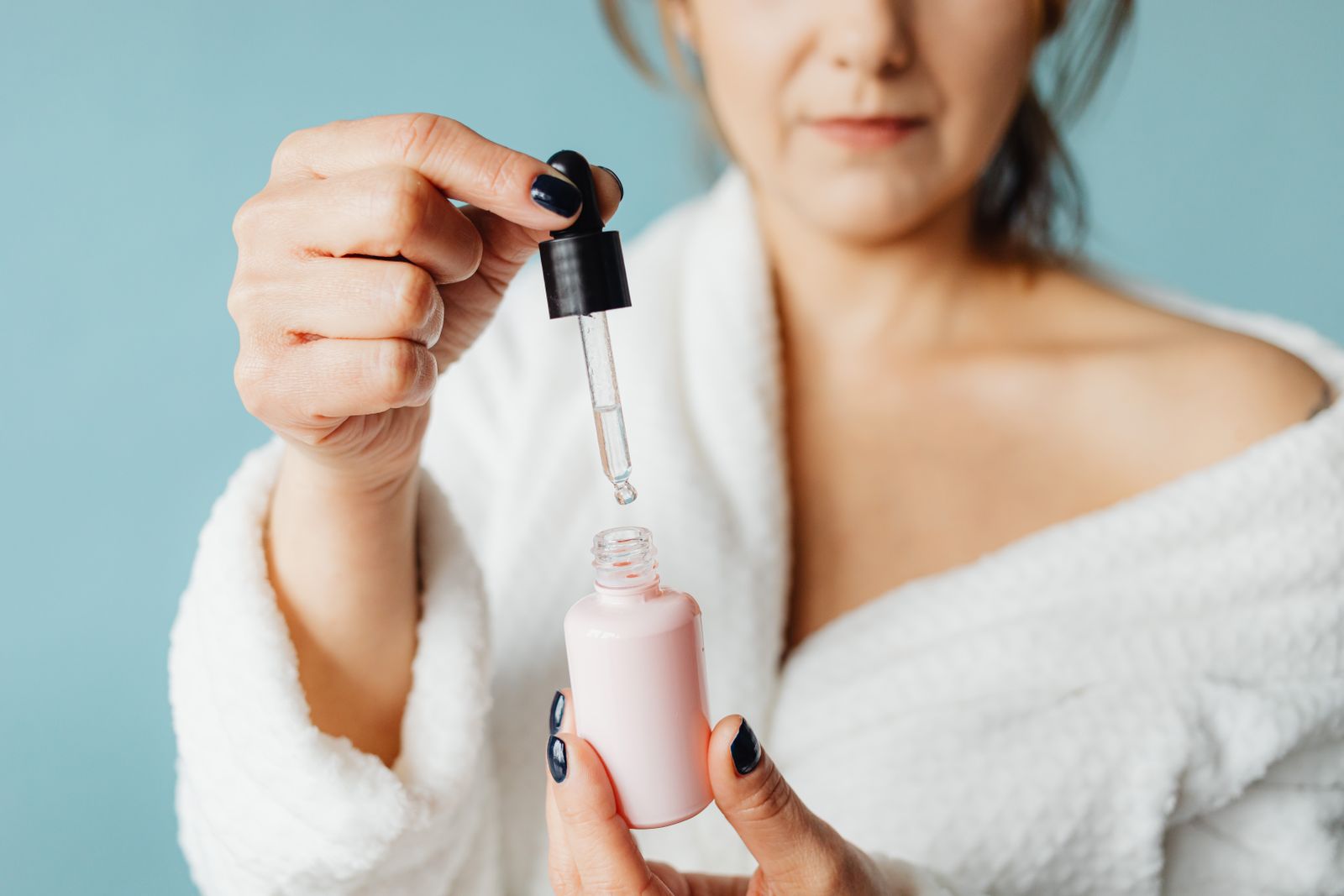
Retinol is one of the few cosmetic ingredients with decades of published evidence behind it, and one of the hardest to manufacture well. It is a family of related molecules rather than a single ingredient, it breaks down in light and air, it can irritate skin in the first weeks of use, and from 2025 the European Union caps how much of it a cosmetic may contain. This article explains what the different retinoids are, how they differ in strength and stability, how factories keep retinol products potent through their shelf life, and what the new EU limits mean for brands in Malaysia and elsewhere that sell into, or benchmark against, the European market.
Quick answer: Retinoids are vitamin A derivatives that skin converts, step by step, into retinoic acid, the form that actually acts on skin cells. Retinyl esters are the mildest and most stable, retinol sits in the middle, retinaldehyde is one step stronger, and retinoic acid (tretinoin) is a prescription medicine in most markets, including Malaysia. Under Commission Regulation (EU) 2024/996, cosmetics in the EU are limited to 0.3% retinol equivalent for face, hand and most other products and 0.05% for body lotions, with a mandatory vitamin A label statement; non-compliant products could not be placed on the EU market after 1 November 2025 and cannot be made available after 1 May 2027. Retinol is highly unstable, so the real manufacturing challenge is proving the labelled strength survives to the end of shelf life.
Key takeaways
- “Retinol” on a label can mean several different molecules. Each conversion step between an ester and retinoic acid reduces potency, so form matters as much as percentage.
- Retinol degrades on exposure to light, oxygen and heat. Stability depends on antioxidants, encapsulation, opaque air-tight packaging and verified assay data, not on the formula alone.
- The EU now caps vitamin A in cosmetics at 0.3% retinol equivalent (0.05% for body lotion), based on total dietary exposure rather than skin safety, and requires the statement “Contains Vitamin A. Consider your daily intake before use.”
- Esters count towards the limit at their retinol equivalent: roughly 1% retinyl palmitate equals about 0.55% retinol, and 1% retinyl acetate about 0.87%.
- Tretinoin (retinoic acid) is a prescription drug, not a cosmetic ingredient. A cosmetic brand cannot formulate with it, and should not imply drug-level results from a cosmetic retinoid.
Who this is for: founders developing anti-ageing or acne-prone skincare, product teams specifying retinoid actives and packaging, and regulatory or marketing staff aligning claims with the EU and ASEAN frameworks.
What is the difference between retinol, retinoids and retinoic acid?
“Retinoid” is the umbrella term for vitamin A and the molecules chemically related to it. In skin, only retinoic acid binds to the receptors in skin cells that trigger the well-documented effects: faster cell turnover, more even pigmentation, thicker and better-organised dermis over months of use. Every other cosmetic retinoid is a precursor that the skin must convert first.
The conversion pathway runs in one direction: retinyl esters (such as retinyl palmitate and retinyl acetate) are stored and converted to retinol; retinol is oxidised to retinaldehyde (also called retinal); and retinaldehyde is oxidised to retinoic acid. Each step is slow and only partly efficient. A review by Mukherjee and colleagues in Clinical Interventions in Aging (2006) put retinol at roughly twenty times less potent than tretinoin, with retinyl esters weaker still, and noted that retinol and retinaldehyde cause considerably less redness, scaling and water loss than retinoic acid. That lower irritation is the direct consequence of the same conversion steps that make them weaker.
Two newer entries sit alongside the classical pathway. Hydroxypinacolone retinoate (sold under the trade name Granactive Retinoid) is an ester of retinoic acid that is marketed as binding receptors without conversion; its published clinical evidence is thinner than retinol’s. Bakuchiol, a plant-derived compound, is not a retinoid at all but is often positioned as a “retinol alternative” because some studies report similar visible effects with less irritation. Both are analysis points for a formulator, not drop-in substitutes.
How do the common retinoid forms compare?
The table below summarises the forms a cosmetic brand is likely to encounter. Use levels are typical industry ranges for orientation; regulatory limits, where they exist, are discussed in the EU section below.
| Form | Steps to retinoic acid | Relative strength | Stability | Typical cosmetic use | Status |
|---|---|---|---|---|---|
| Retinyl palmitate / acetate (esters) | Three | Mildest | Most stable of the group | 0.1–1%, often in body and daily-use products | Cosmetic; counts towards EU vitamin A limit at retinol equivalent |
| Retinol | Two | Moderate; the best-evidenced cosmetic form | Poor: light, oxygen and heat sensitive | 0.1–1%, night-time face products | Cosmetic; EU cap 0.3% face, 0.05% body lotion |
| Retinaldehyde (retinal) | One | Stronger than retinol at equal percentage | Poor; usually encapsulated | 0.03–0.1% | Cosmetic; not named in the 2024 EU entry, which covers retinol and its two esters |
| Hydroxypinacolone retinoate | Marketed as none | Claimed comparable to retinol; less published evidence | Better than retinol (company-stated) | Supplied as 10% blends used at 1–5% | Cosmetic |
| Retinoic acid (tretinoin) | Zero | Strongest; reference standard in clinical studies | Light sensitive | 0.025–0.1% in medicines only | Prescription medicine in Malaysia, the EU and the US; not permitted in cosmetics |
The practical lesson for brand owners is the same one that applies to any active: the percentage on the label only has meaning alongside the form. A 1% retinyl palmitate cream and a 0.3% retinol serum are not in the same strength class, and a label reading “1% retinoid complex” tells the buyer almost nothing. The earlier guide to what active ingredient percentages actually tell you covers how blends and carriers inflate headline numbers.
Why is retinol so difficult to keep stable?

Retinol is a long chain of alternating double bonds, which is exactly the structure that oxygen, ultraviolet light and heat attack. The same 2006 review describes retinol as extremely unstable, degrading on exposure to light and air. Degraded retinol is not dangerous, but it is inactive and often discoloured, so a product can be labelled 0.5% and deliver a fraction of that by the end of its shelf life. Manufacturers manage this on four fronts.
Formula protection
Antioxidants such as tocopherol (vitamin E), BHT and ascorbyl palmitate are added to be consumed before the retinol is. Chelating agents tie up trace metals that catalyse oxidation. Water activity is kept low or the retinol is held in the oil phase, and the pH of any water phase is kept in the mildly acidic range retinol tolerates best. The guide to pH in skincare explains why that range matters to other ingredients in the same formula.
Encapsulation
Much of the commercial retinol supply is now sold pre-encapsulated: in liposomes, cyclodextrins, lipid nanoparticles or polymer microspheres. The shell slows oxygen and light reaching the molecule and releases it gradually on skin, which also softens the irritation curve. Encapsulated grades cost more per kilogram of active and must be handled gently during mixing so the capsules are not sheared open.
Process control
Retinol is typically added late, at low temperature, under subdued lighting and sometimes under a nitrogen blanket. Batch sizes and hold times are set so the bulk does not sit exposed. This is the kind of active where a manufacturer experienced with dermatological actives earns its place: the handling steps are routine once written into the batch record, and costly to learn by trial.
Packaging
Clear glass dropper bottles photograph well and are the wrong container for retinol. Opaque or amber packaging blocks light; airless pumps and aluminium tubes limit the oxygen that enters each time the product is used. The guide to choosing product packaging discusses the trade-offs between airless formats and cost.
How does a factory prove the labelled strength lasts?
Because retinol loses potency over time, a claim such as “0.3% retinol” raises a question the brand must be able to answer: at which point in the product’s life is that true? Three practices address it.
Assay at release and through stability. The retinol content is measured by high-performance liquid chromatography (HPLC) when the batch is released, and again at each time point of the stability study, in the final packaging. A structured product testing programme would normally track both the retinol assay and the appearance, odour and colour of the product, since yellowing and a characteristic smell are early signs of degradation. The general principles are covered in the guide to stability testing and shelf life.
Overage. Manufacturers commonly add slightly more retinol than the label states so that the product still meets the label at the end of shelf life. The overage must be justified by stability data and, in the EU, must not push the formula over the legal maximum at the time of manufacture.
Specification language. The product specification should state the retinol content as a range at release and a minimum at expiry, the assay method, the pack in which stability was tested, and the shelf life and period-after-opening that follow from the data.
What do the new EU vitamin A limits actually say?
The limits are the result of a long scientific process. The European Commission’s Scientific Committee on Consumer Safety (SCCS) first assessed vitamin A in cosmetics in 2016 and confirmed its conclusions in a revised opinion adopted in 2022: vitamin A is safe in cosmetics at 0.05% retinol equivalent in body lotion and 0.3% retinol equivalent in hand cream, face cream and other leave-on and rinse-off products. The concern was not skin safety at those levels. It was cumulative exposure: the SCCS calculated that if every product used contained the maximum, cosmetics could contribute up to 85% of the tolerable upper intake level for vitamin A, on top of food and supplements, and that the most exposed consumers may already exceed that level from diet alone.
The Commission then wrote those conclusions into law. Commission Regulation (EU) 2024/996, adopted on 3 April 2024, added retinol, retinyl acetate and retinyl palmitate to Annex III of the EU Cosmetics Regulation with the following conditions:
- Maximum 0.05% retinol equivalent in body lotion.
- Maximum 0.3% retinol equivalent in other leave-on and rinse-off products.
- Mandatory label statement: “Contains Vitamin A. Consider your daily intake before use.”
- Products not meeting these conditions could not be placed on the EU market from 1 November 2025, and cannot be made available on the EU market from 1 May 2027, which gave retailers a sell-through period for stock already placed.
“Retinol equivalent” is the detail that catches brands out. The limit is counted as retinol, so esters are converted by their molecular weight: 1% retinyl acetate corresponds to about 0.87% retinol equivalent, and 1% retinyl palmitate to about 0.55%. A body lotion with 0.1% retinyl palmitate, a common and historically modest level, is at roughly 0.055% retinol equivalent and therefore over the body-lotion limit. The same regulation also restricted alpha-arbutin and arbutin and banned several substances identified as endocrine disruptors, so it is worth reading in full.
Two further points of analysis. First, the 0.3% figure is below what some professional and online brands have sold as “1% retinol”; those products either leave the EU market, reformulate, or reposition. Second, the entry names retinol and its two esters specifically. Retinaldehyde and hydroxypinacolone retinoate are not listed, which is likely to shift some formulation interest towards them, although the general safety obligation on the responsible person still applies and the SCCS may assess them in future.
What does this mean for brands in Malaysia and ASEAN?
In Malaysia, cosmetics are notified to the National Pharmaceutical Regulatory Agency (NPRA) under the ASEAN Cosmetic Directive, whose ingredient annexes are harmonised across the ten member states and have historically followed EU restrictions after a lag. At the time of writing, retinol in cosmetics is not subject to a specific concentration cap in the ASEAN annexes in the way the EU now applies, but brand owners should treat the EU figures as the likely direction of travel and check the current annexes before finalising a formula. Tretinoin, by contrast, is a registered prescription medicine in Malaysia and cannot be used in a notified cosmetic at all; a cream containing it is a pharmaceutical product with a completely different approval route, as explained in the guide to how product classification decides the regulatory path.
For a Malaysian brand that exports, or that sells to consumers who compare against European products, the practical position is straightforward: formulating to the EU limits today avoids a reformulation later and makes a single formula sellable in more markets. A brand that chooses a higher level for a domestic-only product should understand that it is taking a position the EU’s scientific committee declined to support.
How should a brand brief and label a retinoid product?
A good development brief for a retinoid product is more specific than for most actives. It should state:
- The form and the retinol-equivalent level, with the target market’s legal maximum written next to it.
- Whether the retinol must be encapsulated, and whether the brand will accept a supplier’s pre-encapsulated grade or wants a named one.
- The packaging, chosen for light and oxygen protection before aesthetics, and the fact that stability will be run in that pack.
- The release and expiry assay limits, and the intended shelf life.
- Usage directions: night use, gradual introduction (for example two or three nights a week for the first month), daytime sun protection, and a note that it is not intended for use during pregnancy, which is standard precautionary labelling for vitamin A derivatives.
- Claims that describe appearance (“visibly smoother”, “reduces the look of fine lines”) rather than drug effects. A cosmetic retinol product cannot claim to treat acne or repair sun damage; the boundary is discussed in the guide to what health and beauty brands can legally say.
The first-use irritation, often called retinisation, is predictable and manageable with directions and a sensible starting strength. It is not a sign the product is working harder; it is the skin adjusting to faster turnover. Brands that launch at the top of the allowed range without a ramp-up schedule tend to generate the returns and complaints that a lower starting strength would have avoided.
Frequently asked questions
Is a higher retinol percentage always more effective?
Not in proportion. Efficacy rises with concentration but so does irritation, and above a certain level many users stop using the product, which is the opposite of effective. Clinical studies have shown visible results at 0.1% to 0.4% retinol with consistent use over months. Consistency and stability matter more than the headline number.
Does the EU limit apply to retinaldehyde or bakuchiol?
No. Regulation (EU) 2024/996 names retinol, retinyl acetate and retinyl palmitate. Retinaldehyde is a retinoid but is not in that entry; bakuchiol is not a retinoid at all. Both remain subject to the general requirement that the product be safe under normal use, supported by a safety assessment.
Can a Malaysian brand still sell a 1% retinol product?
Domestically, there is currently no specific ASEAN cap equivalent to the EU figure, but the product must still be safe and notified correctly with NPRA, and ASEAN annexes tend to follow EU restrictions over time. It could not be placed on the EU market. Brand owners should check the current ASEAN ingredient annexes and consider the EU limit the prudent benchmark.
Why does my retinol serum turn yellow and smell different after a few months?
Those are typical signs of retinol oxidising. The product may still be safe to use, but its potency is falling. Clear packaging, repeated opening, heat and daylight accelerate it. Opaque, airless packaging and storage away from light slow it down.
Can retinol and vitamin C be used in the same product?
They can be formulated together, but each prefers different conditions: pure vitamin C is most stable at low pH, retinol in a mildly acidic oil phase. Many brands separate them into a morning product and a night product rather than compromise both.
Is tretinoin ever allowed in a cosmetic?
No. Tretinoin is a prescription medicine in Malaysia, the EU and the United States. A product containing it is a drug, must be registered as one, and can only be supplied through pharmaceutical channels.
What should a certificate of analysis show for a retinol product?
At minimum, the retinol assay result against the specification range, the method used, and the usual appearance, pH (if water-based), microbial and physical results. For stability time points, the assay should be compared with the release value to show the rate of loss.
Sources and limitations
This article draws on the European Commission’s Scientific Committee on Consumer Safety opinions on vitamin A, Commission Regulation (EU) 2024/996 as published in the Official Journal of the European Union, the Mukherjee et al. (2006) review of retinoids in Clinical Interventions in Aging, and the regulatory framework administered by Malaysia’s NPRA under the ASEAN Cosmetic Directive. Use levels in the table are typical industry ranges, not legal limits, and retinol-equivalent conversions are calculated from molecular weights and rounded. Regulatory positions change; brand owners should confirm current annexes for each target market before finalising a formula. This is general educational content, not regulatory or medical advice.
Creaton Poh is the pen name of Poh Tze Kheng, founder of ORIZI Group — one of Malaysia's most comprehensive one-stop OEM, ODM, private label and contract manufacturing groups, spanning skincare, cosmetics, personal care, perfume and fragrance, supplements, functional food and nutrition, pet care, home care and medical devices. Across six specialised companies and three manufacturing divisions, the Group brings together 20+ years of industry experience, 5,000+ formulations, and internationally recognised quality, manufacturing and regulatory standards. These articles are written to educate, not to promote.
Written by Creaton Poh
Industry Researcher • Author • Vlogger • Manufacturing Strategist
Turning ideas into products. Turning experience into knowledge.
Connect with Poh Tze Kheng on LinkedIn.


Comments
Post a Comment