Low MOQ for OEM Own-Brand Products: Why It Matters and How to Get Started
Article type: Independent editorial • Scope: New health, beauty, personal care and supplement brands using OEM manufacturing • Written and researched by: Creaton Poh • Last reviewed: 2 August 2026
Creating your own brand product is exciting, but producing too much too early can expose a new business to unnecessary risk.
Many first-time founders focus mainly on the manufacturing cost per unit. A larger order normally gives a lower unit cost, so it can appear more profitable. However, the cheapest unit price does not always represent the safest or most practical business decision.
For a new brand, low minimum order quantity — or low MOQ — is often more important than achieving the lowest possible production cost.
Why does low MOQ matter?
1. It allows you to test the market
Market research can provide useful direction, but it cannot fully predict whether customers will buy a product.
A low-MOQ first batch allows the brand owner to test:
- Whether customers understand the product
- Whether the selling price is acceptable
- Which marketing message performs best
- Whether the packaging attracts the target market
- Whether customers are satisfied after using the product
- Whether the product generates repeat purchases
Actual customer behaviour is generally more valuable than assumptions. A smaller first production gives the entrepreneur room to gather real market feedback before committing to a larger order.
2. It protects your reserve fund
Not every product will succeed, even when the formula, packaging and branding appear promising.
A product may fail because of weak positioning, unsuitable pricing, poor timing, ineffective marketing or changes in customer preferences. Sometimes the product itself is acceptable, but the brand does not have enough reach to sell it.
New entrepreneurs should therefore avoid investing all their available capital in the first production.
Keeping a reserve fund allows the business to:
- Improve the product or packaging
- Change its marketing approach
- Reorder a better-performing product
- Manage operating expenses
- Recover from an unsuccessful launch
- Test another business direction
Low MOQ does not eliminate the possibility of failure. It makes failure more manageable.
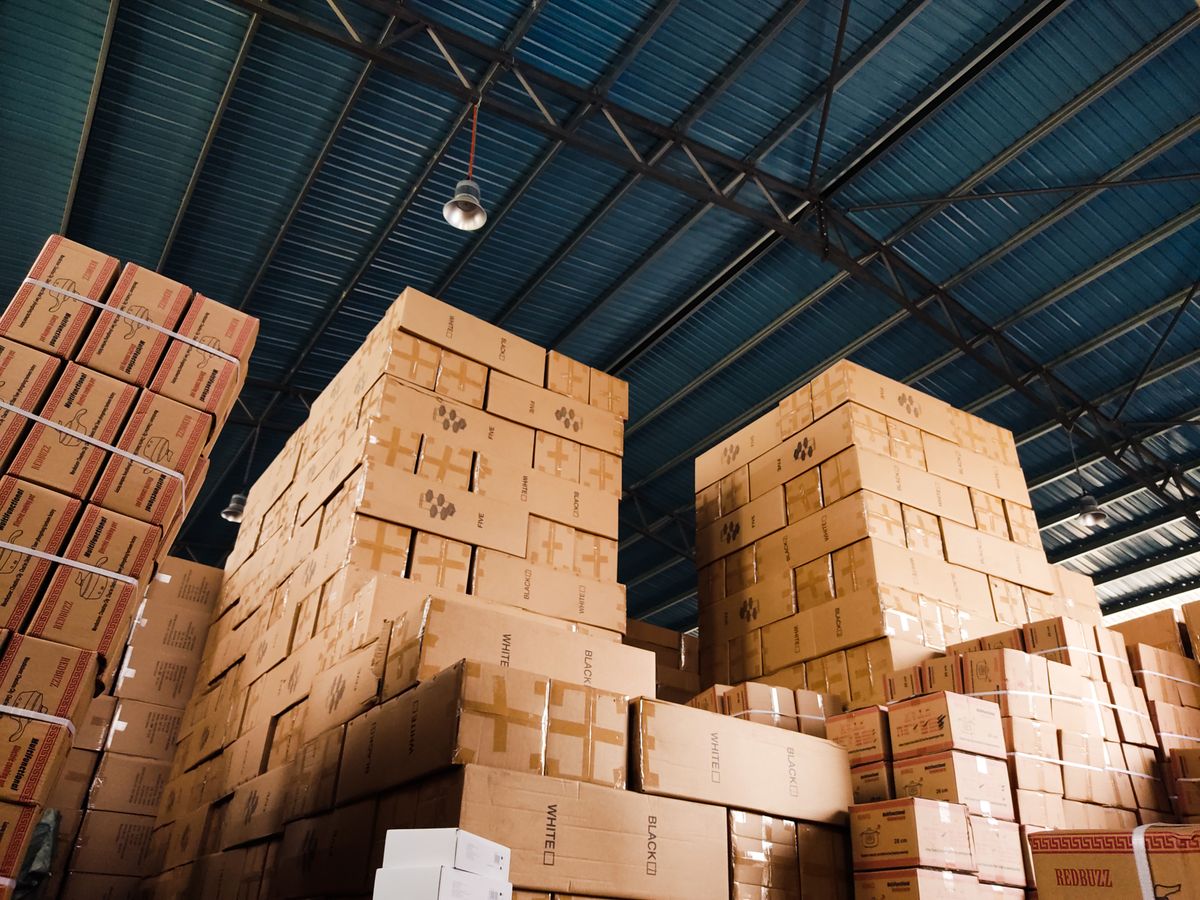
Unsold inventory is capital that cannot be redeployed. Photo: Pexels.
3. It preserves money for marketing
Manufacturing the product is only one part of creating a successful brand.
The business may also need funding for:
- Brand and packaging design
- Product photography and video
- Social media content
- Samples for influencers or affiliates
- TikTok or marketplace advertising
- Live-streaming activities
- Promotions and introductory offers
- Warehousing and fulfilment
- Platform commissions
- Customer service
A founder who spends almost all available capital on inventory may have a good product but insufficient resources to introduce it to the market.
The objective is not merely to manufacture a product. The objective is to manufacture, market and sell it successfully. Working through a full product costing from unit cost to shelf price before confirming an order usually makes this trade-off visible.
4. It gives the brand greater flexibility
Customer preferences and online trends can change quickly. A smaller first order makes it easier to change the formula, packaging, claims, positioning or marketing strategy.
This flexibility is particularly valuable for online brands, influencer-led products and trend-sensitive consumer categories.
Low MOQ is not always cheaper
Low MOQ has advantages, but it also involves trade-offs.
Compared with large-volume production, a low-MOQ order may have:
- A higher manufacturing cost per unit
- Fewer choices of packaging
- Limited formula customization
- Higher printing or labelling costs
- Fewer options for special ingredients or packaging finishes
Entrepreneurs should therefore evaluate total business risk — not only the unit price.
Paying slightly more per unit for the first batch may be reasonable if it reduces the amount of capital locked into unsold inventory. Once market demand has been demonstrated, the brand can consider increasing its order quantity to obtain better production costs. The related question of how big a first production run should actually be is worth working through in parallel.
How can you create your own brand product with low MOQ?
1. Discuss your situation with the OEM manufacturer
Speak openly with the manufacturer about:
- Your total starting budget
- Your expected selling price
- Your target customers
- Your preferred product category
- Your intended sales channel
- Your first-order quantity
- Your future expansion plan
Do not ask only, “What is your lowest MOQ?”
A more useful discussion is: “What product and packaging combination can be produced within my budget while leaving sufficient money for marketing?”
An experienced OEM manufacturer may be able to suggest a more practical starting arrangement.
2. Look for manufacturers that support start-ups
Some factories focus mainly on large corporate orders. Others provide more support for entrepreneurs and emerging brands.
Start-up support may include:
- Ready-developed formulas
- Available packaging recommendations
- Branding and label coordination
- Regulatory guidance
- Product registration support
- Smaller initial production
- Structured brand-launch packages
Some manufacturers publish this positioning openly — for example, ORIZI Group describes its start-up terms on a dedicated low-MOQ supplement manufacturing page, and its broader capability under private-label OEM services. Comparable information from several manufacturers is more useful than a single quotation.
The right manufacturer is not necessarily the factory offering the lowest price. It is the manufacturer whose production model matches the entrepreneur’s present stage of business. The eight questions to ask before signing with an OEM/ODM manufacturer apply here as well.
3. Consider a structured start-up package
Some manufacturers offer start-up or ready-to-brand packages that combine the formula, packaging and selected supporting services.
For example, ORIZI Group developed its Ready2Brand — or R2B — model to simplify the starting process for entrepreneurs who may not yet be ready for a fully customized OEM project.
A structured package can reduce the number of decisions required during the first launch. However, entrepreneurs should still examine what is included, the available customization, the applicable MOQ and the responsibilities they must manage themselves.
A first batch small enough to sell through is worth more than a warehouse of untested stock. Photo: Pexels.
4. Use ex-stock packaging materials
Custom-made bottles, jars, boxes and printing usually require their own MOQ, which may be higher than the product manufacturing quantity.
Using ex-stock packaging means selecting packaging that is already available from the factory or its suppliers — the kind of ready inventory listed on a manufacturer’s container and packaging range. This may offer several advantages:
- Lower initial quantity
- Shorter preparation time
- Less capital tied up in packaging
- Easier replacement for repeat orders
- Reduced risk of excess packaging inventory
The trade-off is that the packaging may be less exclusive. A brand can compensate through good label design, positioning, photography and customer experience — the wider considerations covered in this practical guide to choosing product packaging.
5. Start with a ready formula
Developing a completely new formula requires additional time, testing and development cost. Some ingredients may also have high supplier MOQs.
A ready formula is an existing formulation that has already been developed by the manufacturer and can be offered to different brand owners, subject to the manufacturer’s terms. The distinction between this route and full development is examined in private label versus custom formulation.
It can help a start-up achieve:
- Lower development risk
- Faster product preparation
- More predictable costing
- Lower initial production quantity
- A simpler route to market testing
A ready formula does not mean the brand must look generic. Differentiation can still come from branding, packaging, target audience, product education, customer service and marketing strategy — which is why design and branding support is often bundled with low-MOQ programmes.
6. Begin with one focused product
Launching many products may appear more impressive, but it also divides the budget across more packaging, inventory and marketing activities.
For many new brands, one clearly positioned hero product is more practical than several weakly supported products.
Once the first product establishes demand and customer trust, the brand can expand into related products more confidently.
Questions to ask before confirming an order
Before proceeding, ask the manufacturer:
- What is the MOQ for the formula?
- Does the packaging have a separate MOQ?
- Is the packaging ex-stock or custom-made?
- What services are included in the quotation?
- Are there separate design, testing or regulatory charges?
- Can the formula or packaging be changed later?
- What will the MOQ be for a repeat order?
- What are the expected production and delivery timelines?
- Are there different price tiers for higher quantities?
- What support will the manufacturer provide after the first order?
These questions provide a clearer picture than comparing unit prices alone. Most established manufacturers will answer them through their published service scope or on request.
Final thoughts
Low MOQ is not simply about making fewer products. It is a form of risk management.
It allows entrepreneurs to test real demand, preserve capital, fund their marketing and improve the business based on customer feedback. Once the product demonstrates consistent sales, the brand can move towards higher-volume production and better economies of scale.
A successful own-brand business does not begin with the largest possible order. It begins with an order size that the entrepreneur can realistically manufacture, market, sell and learn from.
Limitations
MOQ terms, pricing tiers and packaging availability differ between manufacturers, product categories and markets, and change over time. The figures and arrangements a brand owner is offered will depend on the specific formula, packaging and regulatory pathway involved. This article is general and educational; it does not constitute commercial, regulatory or financial advice for a particular product.
Disclosure: Creaton Poh is the pen name of Poh Tze Kheng, founder of the ORIZI Group, a Malaysian OEM/ODM manufacturer. Ready2Brand (R2B) is a brand-launch model developed by ORIZI Group. This relationship is disclosed because ORIZI Group pages are referenced as examples in this article, which is educational rather than promotional.
Written by Creaton Poh
Industry Researcher • Author • Vlogger • Manufacturing Strategist
Turning ideas into products. Turning experience into knowledge.
Connect with Poh Tze Kheng on LinkedIn.


Comments
Post a Comment