How to Validate a Product Idea Before You Manufacture: A Practical Market Research Guide

Quick answer: how do you validate a product idea before manufacturing?
A product idea is validated when a founder can show, with evidence collected outside their own circle, that a specific group of buyers already has the problem, is already spending money to solve it, and finds the proposed product better on at least one dimension they care about. The main reason validation fails is that most founders test enthusiasm ("would you buy this?") instead of behaviour (what people already buy, at what price, and why they switch). The important exception: validation reduces risk, it does not remove it, and it cannot substitute for regulatory feasibility checks. A practical first step is to spend one week mapping every product a target buyer already uses for that problem, with actual prices.
Key takeaways
- Validation is about observed behaviour and spending, not stated intention. Survey answers reliably overstate purchase intent.
- The cheapest evidence comes first: shelf and marketplace audits, search demand, and existing category pricing — all obtainable before any formulation work begins.
- A product idea should be tested on three separate axes: demand, differentiation, and feasibility. Passing two out of three is a common and expensive trap.
- Regulatory feasibility is part of validation, not a later step. An idea that cannot be legally claimed or registered is not a validated idea.
- Validation has a natural stopping point: when the remaining uncertainty can only be resolved by producing and selling a real batch.
Who this guide is for
This guide is written for founders and brand owners in health, wellness, beauty and consumer products who have an idea they believe in and are deciding whether to commit money to formulation, sampling and a first production run. It is also useful for marketing teams inside established companies preparing an internal business case for a line extension. It assumes no research background and no budget for a commissioned market study.
Why do so many validated-looking ideas still fail?
Most failed launches were not unvalidated — they were validated against the wrong question. The common pattern is that a founder confirms the category is large and growing, then treats that as confirmation that their specific product will sell. Those are different claims. A collagen drink category growing at double digits says nothing about whether a fourteenth mango-flavoured collagen drink at a mid-market price will find shelf space.
Three failure modes appear repeatedly in post-mortems of first-time consumer launches:
Friendly-sample bias. The people asked are friends, family, existing followers or members of the founder's own professional network. They answer to be supportive, and they answer about a product that does not yet exist, at a price they will never actually pay. This is the single most common source of false confidence.
Category-size substitution. A large addressable market is used as evidence of demand for one product. Market size determines whether the category is worth entering at all; it says nothing about whether a particular entrant can win a place in it.
Feasibility deferred. Demand and positioning are tested thoroughly, while the questions that can actually kill the product — whether the active can be dosed at the claimed level and stay stable, whether the claim is permitted, whether the pack format can be filled at a viable minimum order quantity — are pushed to "when we talk to the manufacturer". By then the brand identity, name and claims are already built around assumptions that may not hold.
What are the three axes a product idea must pass?
A usable validation framework tests three independent questions, and an idea must clear all three. Passing two is the pattern behind most expensive failures — a desirable, differentiated product that cannot legally be made as described, or a feasible, differentiated product nobody is looking for.
| Axis | The question it answers | Evidence that counts | Evidence that does not |
|---|---|---|---|
| Demand | Are people already spending money on this problem? | Search volume trends, marketplace review counts and dates, repeat-purchase behaviour, competitor restocking | "Would you buy this?" surveys, social media likes, category growth reports |
| Differentiation | Is there a reason to switch from what they use now? | Complaint themes in competitor reviews, unmet-need language from real buyers, blind sensory comparisons | Founder conviction, a nicer logo, "better quality" without a defined measure |
| Feasibility | Can this be legally made, claimed and sold at a workable cost? | Regulatory category check, ingredient permissibility, indicative cost and MOQ from a manufacturer, stability risk | Assumed costs, claims copied from an overseas product, "the factory will figure it out" |
Original framework. Table prepared for this article.
How do you test demand without spending money?
Demand evidence is the cheapest to collect because it already exists in public data — the work is reading it correctly rather than generating it. Four sources are available to any founder in an afternoon.
Search behaviour. Google Trends shows relative interest over time and by region, which is more useful than absolute volume for a founder deciding between two concepts. The signal to look for is a sustained multi-year baseline, not a spike. A spike usually means a viral moment that will have passed by the time a product clears formulation and registration — a gap discussed in the realistic launch timeline for new brands.
Marketplace listings. On Shopee, Lazada, Amazon or a local pharmacy chain's site, the useful fields are review count, review dates, and the visible price ladder. A product with 4,000 reviews spread over three years is a stable seller. A product with 4,000 reviews concentrated in one quarter is usually a campaign, not a category.
Official statistics. For Malaysian founders, the Department of Statistics Malaysia publishes household expenditure and wholesale/retail trade data, and MATRADE publishes export market reports by product category. These establish whether a category is real and where it is concentrated, which is the correct use of category data.
Existing product registers. The number of products already notified in a category is itself a demand and saturation signal. Malaysia's National Pharmaceutical Regulatory Agency (NPRA) maintains searchable registers of notified cosmetics and registered health supplements.

What questions actually produce useful answers?
Useful research questions ask about the past, not the future, because people can report what they did far more accurately than they can predict what they will do. Replacing hypothetical questions with retrospective ones changes the quality of the data more than any increase in sample size.
Instead of "Would you buy a Malaysian-made vitamin C serum at RM89?", the productive questions are: What did you last buy for this concern, and what did it cost? Where did you buy it? How long did it last, and did you repurchase? What made you stop using the previous one? What almost stopped you from buying the one you use now?
That last question is the most underused. It surfaces the specific friction — price threshold, texture, smell, pack size, a missing certification — that a new entrant can design against. It also produces language the brand can use verbatim later, which is more persuasive than marketing copy written from the inside.
Twelve to twenty conversations of this kind, with people the founder does not already know, generally produce more decision-useful information than a 300-response online survey. The value is in the reasons, not the counts.
How useful is a shelf and competitor audit?
A physical shelf audit is the highest-value hour in the entire validation process, because it shows the competitive set as a buyer actually encounters it rather than as a search result. Visiting three or four retail locations where the target buyer already shops — a pharmacy chain, a health store, a supermarket personal-care aisle — and recording what is there produces evidence that no desk research can substitute.
Worth recording for every competing product: brand, pack size, shelf price, price per unit of active or per millilitre, the three claims printed on the front, country of manufacture, and whether the product carries a certification the buyer might look for. Shelf facings matter too — the number of facings a retailer gives a product is that retailer's own judgement about its rate of sale.
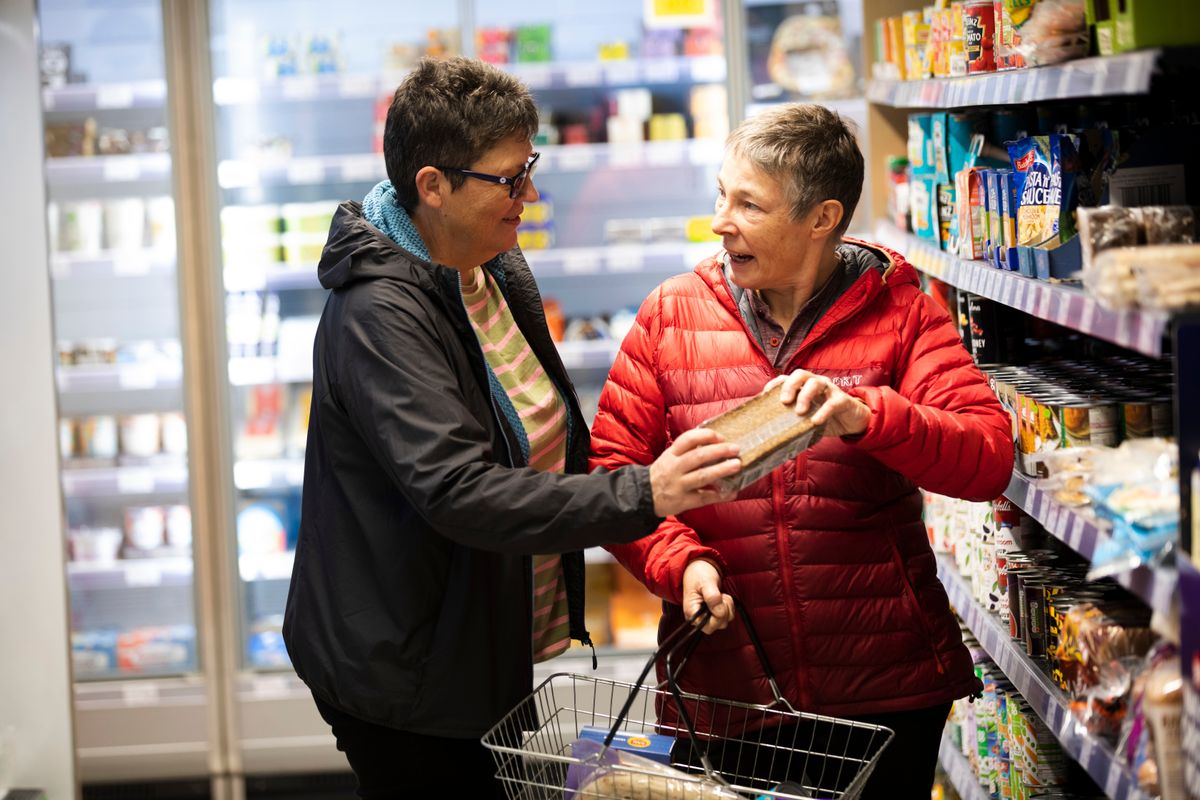
The audit usually delivers one of three verdicts. The gap is real and unoccupied, which is rare and worth moving on quickly. The gap is occupied but poorly served, which is the most common workable outcome. Or the gap is well served by three established brands at a price the new entrant cannot match, which is a signal to change the concept rather than proceed with a better logo.
Why must regulatory feasibility be tested during validation?
Regulatory feasibility belongs in validation because it is the only axis that can invalidate an idea outright rather than merely weaken it. A concept built on a claim that cannot legally be made does not become viable with better marketing or a lower price.
Three checks are worth completing before formulation begins. First, the product's regulatory category — cosmetic, health supplement, food, or medical device — because the category determines the registration pathway, the timeline and the permitted claims. Second, ingredient permissibility, including whether any intended active appears on a restricted or prohibited list in the target market and whether the intended dose is within limits. Third, whether the marketing idea survives the claim rules, since the phrasing that makes a concept exciting is often the phrasing that is not permitted; this is covered in more detail in what brands can legally say about health and beauty products.
A short conversation with a manufacturer at this stage is also worth more than it costs. Indicative unit cost, minimum order quantity and stability risk for the intended format can each change the business case fundamentally, and all three are known to a formulator long before a sample exists. Founders preparing for that conversation may find a structured product development brief useful, and minimum order quantity is usually the number that decides whether the first run is affordable at all.
When is an idea validated enough to proceed?
An idea is validated enough when the remaining uncertainty can only be resolved by making and selling a real product. Validation is a method for removing cheap-to-answer questions, and it reaches diminishing returns quickly.
Practically, that threshold has been reached when a founder can state, without hedging: who the buyer is and what they currently spend on the problem; which existing product the new one takes sales from and why a buyer would switch; the intended shelf price and how it compares with the audited competitive set; the regulatory category and the claim that will be used; and an indicative unit cost and minimum order quantity from at least one manufacturer.
If any of those five cannot be stated, more validation is justified. If all five can be stated, further research is usually procrastination — the next real information comes from a first production run and live sales data.
Frequently asked questions
How much should validation cost?
For a single product concept, validation can usually be completed for the cost of travel to a few retail locations and the founder's own time — commonly under a few hundred ringgit. The expensive items in early-stage research are commissioned surveys and consumer panels, and neither is necessary at concept stage. Paid research becomes worthwhile later, when a formulation exists and the question shifts from "should this be made" to "which of these two versions performs better".
Is a pre-order campaign a good validation method?
Pre-orders are among the strongest demand signals available, because money changing hands is behaviour rather than intention. The caution is that a pre-order tests the offer — the promise, the price, the presentation — not the product, which does not yet exist. A successful pre-order still leaves formulation, stability and regulatory risk untested, and it creates a delivery obligation on a timeline the founder may not control.
Does a large social media following mean the product will sell?
Audience size predicts reach, not conversion, and the two behave very differently for physical products. Engagement is a response to content the audience receives free; a purchase asks for money, an address and a wait. Founders with an existing audience still benefit from the same shelf audit and price-comparison work, because their buyers are comparing the product against the same competitive set as everyone else.
How many people need to be interviewed?
Roughly twelve to twenty conversations with people outside the founder's own network is usually sufficient at concept stage, because the same reasons and objections begin repeating well before that point. The stopping rule is repetition rather than a target number: when three consecutive conversations produce nothing new, the useful information has been collected. Sample size matters far more for quantitative claims than for understanding motivation.
What if the research says the idea will not work?
A negative result is the highest-return outcome validation can produce, because it is delivered before the money is spent. In most cases the finding is narrower than "the idea fails" — it is that the price is wrong, the format is wrong, the claim is not permitted, or the target buyer is a different group than assumed. Treating the result as a specification change rather than a verdict is what separates a redirected concept from an abandoned one.
Can competitor research be done entirely online?
Online research covers price, claims and review sentiment well, but it misses shelf facings, in-store promotions, pack feel and where a product is physically positioned relative to alternatives. Those factors influence purchase decisions substantially in health and beauty categories, where packaging is often the primary quality cue. A practical approach is to build the competitor list online and verify the shortlist in person.
Limitations of this guide
This article describes a general method, not a substitute for professional regulatory or legal advice. Registration pathways, permitted claims and ingredient restrictions vary by jurisdiction and change over time, and the primary sources named above should be checked directly for any specific product. The framework reflects patterns observed in consumer product launches in Malaysia and the wider ASEAN region and may generalise imperfectly to other markets or to categories such as medical devices, where the regulatory burden is substantially higher. No original quantitative study was conducted for this article; the comparison table is an analytical framework rather than survey data.
Sources
- National Pharmaceutical Regulatory Agency (NPRA), Malaysia — cosmetic notification and health supplement registration requirements and registers.
- Department of Statistics Malaysia — household expenditure and wholesale and retail trade statistics.
- Malaysia External Trade Development Corporation (MATRADE) — export market reports by product category.
- Google Trends — relative search interest over time and by region.
Disclosure: Creaton Poh is the pen name of Poh Tze Kheng, founder of the ORIZI Group, a Malaysian OEM/ODM manufacturer. This article is educational and independent, and is not promotional.
Written by Creaton Poh
Industry Researcher • Author • Vlogger • Manufacturing Strategist
Turning ideas into products. Turning experience into knowledge.
Connect with Poh Tze Kheng on LinkedIn.


Comments
Post a Comment