Raw Material Sourcing for Health and Beauty Brands: A Practical Guide to Ingredients, Suppliers and Documentation

Behind every finished cream, capsule or serum sits a supply chain of raw materials that most brand owners never see. Yet the quality, safety and cost of a health or beauty product are largely decided long before the first production run — at the point where ingredients are sourced, qualified and documented. Understanding how raw material sourcing works helps a founder ask sharper questions, avoid quiet quality failures, and build a product that can pass regulatory scrutiny.
What does raw material sourcing actually involve?
Raw material sourcing is the process of selecting, qualifying and documenting every ingredient that goes into a product, from the primary active down to the preservative and the packaging that touches the formula. It is far more than finding a supplier with a low price. In a properly run health, beauty or supplement operation, each material must be traceable to a named supplier, backed by a specification, and verified against that specification before it enters a batch.
For most emerging brands working with an OEM or ODM manufacturer (OEM = Original Equipment Manufacturer; ODM = Original Design Manufacturer), sourcing is handled by the factory rather than the brand. That is usually an advantage — established manufacturers already hold qualified supplier lists and volume pricing. But it does not remove the brand owner's responsibility. The founder still owns the brand promise on the label, and regulators hold the responsible person accountable regardless of who bought the ingredient.
Why does ingredient origin matter so much?
Ingredient origin matters because two materials with the same name can behave very differently in a formula and in the body. "Vitamin C", "collagen" or "hyaluronic acid" are categories, not specifications. The molecular form, purity, particle size, source organism and country of manufacture all change how an ingredient performs, how stable it is, and whether it is even permitted in a given market.
A few examples illustrate the point. Collagen may be bovine, porcine, marine or plant-derived — a distinction that carries direct consequences for Halal status, allergen labelling and target market. A preservative permitted in one jurisdiction may be restricted or banned in another. An active with a certificate from a well-audited plant is not interchangeable with a cheaper equivalent from an unverified trader, even when both carry the same chemical name. Analysis of ingredient-related recalls consistently points to substitution, contamination and mislabelling as recurring causes — problems that trace back to sourcing decisions, not the manufacturing line itself.
How are suppliers qualified?
Supplier qualification is the structured process a manufacturer uses to decide whether a vendor is trustworthy enough to supply a regulated product. It is the single most important control in sourcing, because a qualified supplier reduces risk on every future order rather than one shipment at a time. A disciplined qualification process typically examines several dimensions.
- Documentation capability — can the supplier provide a Certificate of Analysis (CoA), safety data sheet, specification sheet and, where relevant, allergen, Halal or origin declarations for every lot?
- Consistency — do repeated lots meet the same specification, or do purity and appearance drift between shipments?
- Regulatory fit — is the ingredient permitted, and at the intended concentration, in the markets the brand will sell into?
- Audit history — is the manufacturing site certified to a recognised standard such as ISO or GMP, and has it been audited by a credible party?
- Supply reliability — can the supplier meet lead times and volumes as the brand scales, and is there a second source if they cannot?
The distinction between a manufacturer and a trader is worth understanding here. A trader resells material sourced elsewhere and may offer attractive prices, but often has limited visibility into the original production conditions. A direct manufacturer controls the process and the documentation. Neither is automatically wrong, but a brand owner should know which one stands behind each critical ingredient.
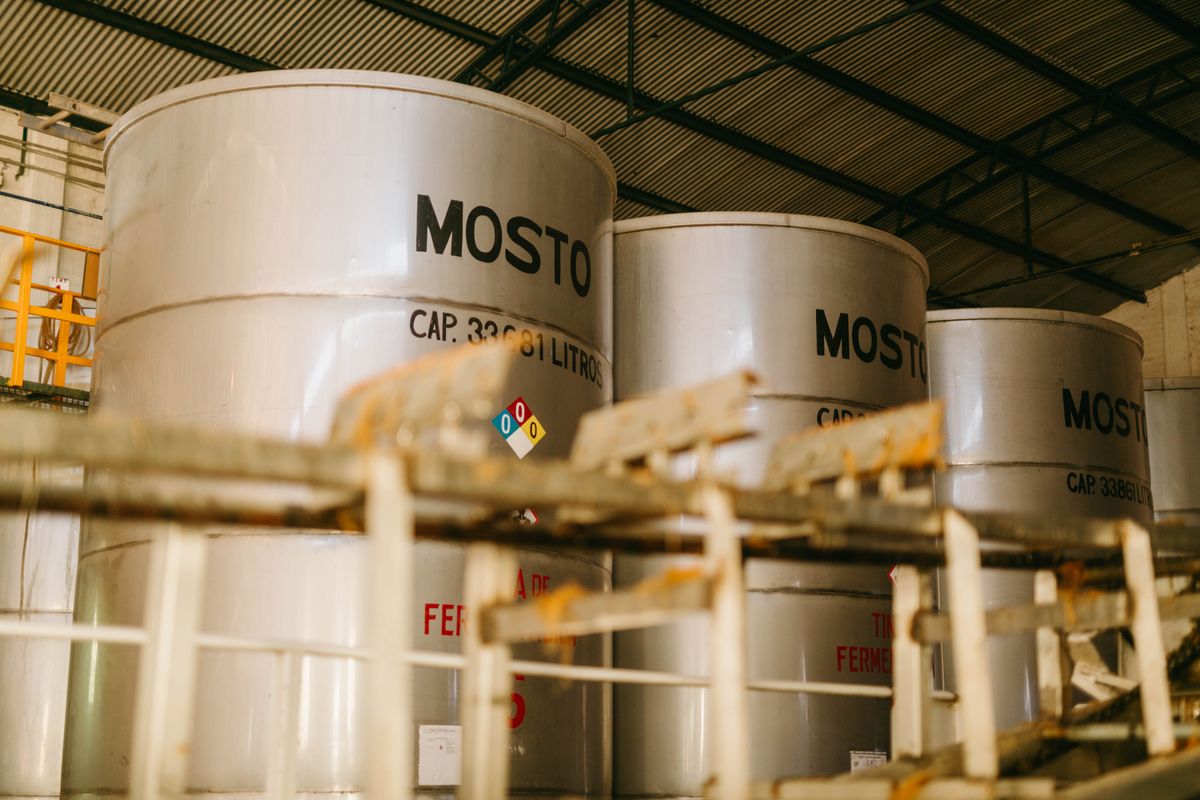
Bulk raw materials are held to a specification and released only after incoming verification. Photo: Pexels.
What is a Certificate of Analysis, and why does it matter?
A Certificate of Analysis, or CoA, is a document issued for a specific lot of material that states the tests performed and the results obtained against the agreed specification. It is the primary evidence that a raw material is what the supplier claims it is. A meaningful CoA lists the batch number, manufacture and expiry dates, the parameters tested — identity, assay or potency, microbial limits, heavy metals where relevant — and the actual measured values, not merely a "pass" stamp.
The important discipline is that a CoA is verified, not simply filed. Responsible manufacturers perform incoming inspection: they confirm identity, check the material against its specification, and in higher-risk cases run independent testing rather than relying solely on the supplier's paperwork. For a founder, the practical question to a prospective manufacturer is direct — "How do you verify incoming raw materials, and can I see a sample CoA?" The confidence and specificity of the answer reveals a great deal about the operation.
Comparing sourcing routes
Brand owners rarely source ingredients themselves, but understanding the routes clarifies where quality and cost are decided. The table below compares the common paths from the brand owner's perspective.
| Sourcing route | Typical control & traceability | Cost pressure | Best suited for |
|---|---|---|---|
| Manufacturer-sourced (factory buys) | High — factory holds qualified suppliers and documents | Built into unit price; volume discounts | Most emerging and mid-size brands |
| Brand-nominated supplier | Shared — brand specifies, factory verifies | Brand negotiates, but may lose factory volume pricing | Signature or proprietary actives |
| Direct from ingredient manufacturer | High at source, but brand must manage logistics | Lower per-kilo at scale; higher overhead | Established brands with volume |
| Trader / distributor | Variable — depends on the trader's own controls | Often lowest headline price | Non-critical or commodity materials |
How does sourcing connect to cost and formulation?
Sourcing decisions ripple directly into both product cost and formulation feasibility. A premium active can account for a large share of the unit cost, so ingredient choice is inseparable from product costing. Substituting a cheaper grade to protect margin can quietly change texture, colour, potency or shelf life — which is why any material change should be re-validated through stability testing rather than assumed to be equivalent.
There is also a scale dimension. An ingredient that is easy to obtain in sample quantities for a prototype may carry a high minimum order quantity at production scale, or a long lead time from an overseas producer. Founders sometimes fall in love with a hero ingredient during development, only to discover that its supply economics do not work for a first commercial run. Raising the supply question early — availability, minimum order, lead time and second source — avoids an expensive reformulation later.
Practical guidance: questions and red flags
A brand owner does not need to become a procurement specialist, but a short set of informed questions separates a well-run manufacturing partner from a risky one. Before committing to a manufacturer or a formula, it is worth asking how raw materials are qualified and verified, whether Certificates of Analysis are available for critical ingredients, how origin and Halal or allergen status are documented, and whether a second source exists for the key active.
Several signals warrant caution. A supplier or manufacturer that cannot produce a CoA for a critical ingredient, that is vague about where a material comes from, that resists incoming testing, or that offers a headline price far below the market for a premium active, is showing a red flag rather than a bargain. In sourcing, an unexplained discount usually reflects a hidden compromise — in grade, purity, documentation or origin.
Frequently asked questions
Should a small brand source its own ingredients?
In most cases, no. Emerging brands are generally better served by letting a qualified manufacturer source materials, because the factory already holds vetted suppliers, volume pricing and the documentation systems that regulators expect. Self-sourcing becomes worthwhile mainly for a proprietary or signature ingredient, or once volumes are large enough to buy directly with proper quality controls in place.
What is the difference between a CoA and a specification?
A specification is the agreed standard a material must meet — the target ranges for identity, purity and other parameters. A Certificate of Analysis is the lot-specific result showing whether a particular batch actually met that standard. The specification is the rule; the CoA is the evidence for one shipment. Both are needed, and the CoA should always be read against the specification, not in isolation.
How can a founder tell whether an ingredient is Halal-compliant?
Halal status depends on the ingredient's source and processing, not its name, and must be documented rather than assumed. Animal-derived materials such as collagen, gelatin and certain emulsifiers are the usual concern. The reliable approach is to request origin declarations and, where required, recognised Halal certification for each relevant material, then confirm that the manufacturing site itself is certified. For a fuller treatment, see the guide on Halal certification for health and beauty products.
Does changing a single ingredient supplier require re-testing?
Often, yes. Even the "same" ingredient from a different supplier can vary in purity, particle size or trace composition, any of which can affect stability, appearance or performance. Prudent practice is to treat a supplier change as a formulation change and re-validate through stability and, where relevant, compatibility testing before the new material reaches the market.
Are natural ingredients harder to source consistently?
Frequently they are. Botanical and other naturally derived materials can vary batch to batch with harvest, season and origin, and may carry higher microbial or contaminant risk than synthesised equivalents. This does not make them unsuitable — it makes tighter specifications, careful supplier qualification and consistent testing more important, not less.
Sources & further reading
Readers seeking primary references may consult the Malaysian National Pharmaceutical Regulatory Agency (NPRA) for cosmetic and product notification requirements; the International Organization for Standardization (ISO) for quality and cosmetic GMP standards such as ISO 22716; and the U.S. Food and Drug Administration (FDA) for general guidance on cosmetic ingredients and supply-chain responsibility. Ingredient permissibility and concentration limits vary by market and change over time, so current regulatory sources should always be checked for the specific country of sale.
Limitations & disclosure
This article is a general educational overview and not regulatory, legal or formulation advice. Sourcing practices, permitted ingredients and documentation requirements differ by product category and jurisdiction and change over time; specific decisions should be validated with a qualified manufacturer and the relevant regulator. The analysis reflects the author's professional interpretation of common industry practice.
Disclosure: Creaton Poh is the pen name of Poh Tze Kheng, founder of the ORIZI Group, a Malaysian OEM/ODM manufacturer. This article is educational and independent, and is not promotional.
Written by Creaton Poh
Industry Researcher • Author • Vlogger • Manufacturing Strategist
Turning ideas into products. Turning experience into knowledge.
Connect with Poh Tze Kheng on LinkedIn.


Comments
Post a Comment