AI and Automation in Manufacturing: Practical Applications for Small and Mid-Size Brands
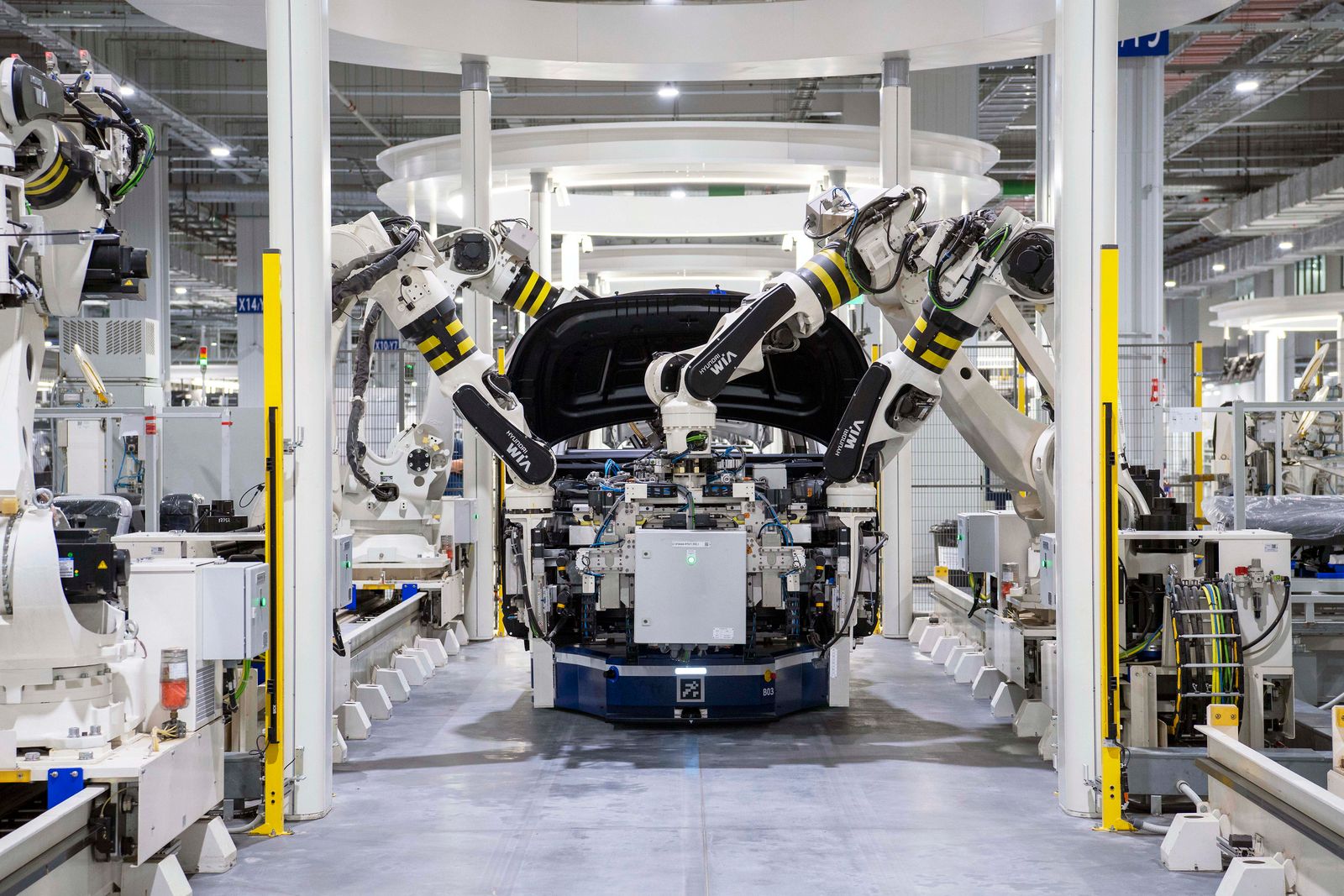
Artificial intelligence and automation are no longer reserved for billion-dollar factories. Over the past few years, the cost of sensors, machine vision cameras, and cloud-based software has fallen sharply, while the tools themselves have become easier to deploy without a dedicated engineering team. For small and mid-size brand owners working with OEM/ODM manufacturers, this shift matters — not because every factory needs a robot arm, but because AI and automation are changing how quality is checked, how demand is forecast, and how quickly a new product can move from formulation to shelf.
This article looks at where AI and automation are genuinely useful for smaller manufacturing operations today, where the hype outpaces the practical value, and what questions a brand owner can reasonably ask their manufacturing partner about the technology behind their products.
Why This Matters Beyond Large Factories
Much of the public conversation about "smart manufacturing" focuses on large multinational plants with fully automated lines. That coverage can make the topic feel irrelevant to a founder running a small supplement or skincare brand through a contract manufacturer. In practice, the more relevant developments for smaller brands are happening in three narrower areas: quality inspection, production planning, and documentation.
A mid-size OEM/ODM facility does not need a fully robotic line to benefit from automation. A single machine-vision camera checking fill levels on a bottling line, or a scheduling algorithm that reduces changeover time between product batches, can measurably improve consistency and cost — the two things that matter most to a brand owner who is not physically present on the factory floor.
Where AI and Automation Are Actually Being Used
1. Quality Inspection and Defect Detection
Machine vision systems — cameras paired with software trained to recognise defects — are one of the most mature and widely adopted applications of AI in manufacturing. In cosmetics and consumer goods production, these systems can flag underfilled bottles, misaligned labels, cracked caps, or colour inconsistencies at a speed no human inspector could sustain across a full shift. This does not replace human quality control; it adds a consistent first layer of checking before product reaches a person for final review.
2. Demand Forecasting and Inventory Planning
Forecasting raw material and packaging needs has traditionally relied on historical sales data and manual spreadsheets. AI-assisted forecasting tools can incorporate more variables — seasonality, marketing campaign timing, regional sell-through data — to produce more accurate purchase orders. For a brand owner, better forecasting from a manufacturing partner translates into fewer stockouts and less capital tied up in excess inventory.
3. Formulation and R&D Support
In R&D, AI tools are increasingly used to narrow down formulation options — for example, predicting how an ingredient combination might behave in terms of stability or texture before a physical prototype is made. This does not eliminate lab testing, which remains the only reliable way to confirm a formulation's performance, but it can reduce the number of trial batches needed to reach a viable starting point.
4. Traceability and Documentation
Automation is also changing how manufacturing records are kept. Batch records, certificates of analysis, and compliance documentation that used to be compiled manually are increasingly generated and stored through integrated software systems. This matters for regulatory submissions and for brand owners who need to produce documentation quickly during an audit or a retail partner's due diligence process.
5. Predictive Maintenance
Sensors on production equipment can monitor vibration, temperature, and other indicators to flag when a machine is likely to fail before it actually breaks down. For a brand relying on a manufacturer to hit a launch date, fewer unplanned equipment failures on the production line means fewer missed delivery windows.
Comparing Approaches: Manual, Semi-Automated, and AI-Assisted
| Process Area | Manual Approach | Semi-Automated | AI-Assisted |
|---|---|---|---|
| Quality inspection | Visual check by staff, sampling-based | Fixed sensors with threshold alarms | Machine vision with pattern recognition, flags anomalies in real time |
| Demand forecasting | Spreadsheet trend analysis | Rule-based reorder points | Model-based forecasts incorporating multiple variables |
| Documentation | Paper or manual digital entry | Templated digital forms | Auto-generated records linked to production data |
| Equipment maintenance | Scheduled servicing by calendar | Usage-hour based servicing | Condition-based alerts from sensor data |
Most small and mid-size manufacturers sit somewhere between the "manual" and "semi-automated" columns today, with AI-assisted tools being adopted selectively in areas that offer the clearest return, such as quality inspection on high-volume lines.
Where the Limitations Are
It is worth being direct about what AI and automation cannot yet reliably do in a small-batch manufacturing context. Fully autonomous production lines still require significant capital investment and consistent, high-volume output to justify the cost — conditions that do not apply to most private-label brands producing in moderate batch sizes with product variation across SKUs. Machine vision systems also require training on the specific product they are inspecting, which takes time and data before accuracy is reliable. And no AI tool currently replaces the judgement of an experienced formulator or quality assurance professional for final product decisions; it supports that judgement rather than substituting for it.
Brand owners should also be cautious of manufacturers or suppliers who use "AI-powered" as a marketing term without being able to explain, in concrete terms, what the technology actually does in their process. A useful test is to ask what specific problem the tool solves, what data it uses, and what happens when it flags an error.
Questions Brand Owners Can Ask Their Manufacturing Partner
- What stage of production uses automated quality checks, and what happens when a defect is flagged?
- How is demand forecasting done, and how far in advance are raw materials and packaging typically ordered?
- Are batch records and certificates of analysis generated digitally, and how quickly can they be produced on request?
- What is the process if a piece of automated equipment goes down mid-production — is there a backup line or manual fallback?
- Has the facility invested in any of these tools recently, and what was the measurable outcome (fewer defects, shorter lead times, etc.)?
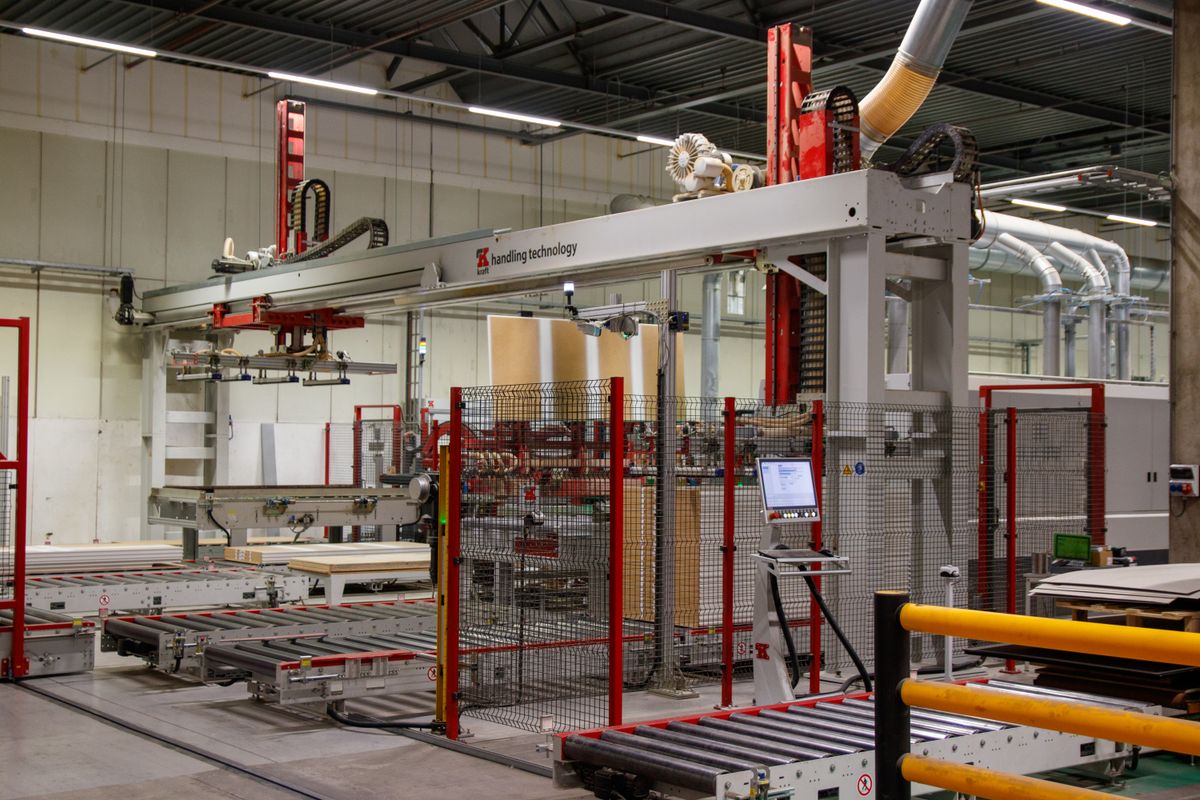
Photo: Pexels
What This Means for Product Launch Timelines
For a founder planning a product launch, the practical impact of these tools is usually indirect rather than dramatic. Better forecasting reduces the risk of a manufacturer running short on packaging components mid-run. Machine vision inspection reduces the chance of a defective batch reaching a retail partner and damaging a brand's reputation. Digital documentation speeds up the time it takes to respond to a retailer's compliance request or a regulatory audit. None of these are transformative on their own, but together they reduce the operational risk that sits underneath every product launch.
It is also worth noting that automation adoption varies significantly by product category. Liquid-fill lines (serums, tonics, syrups) and canning/bottling operations have generally adopted machine vision and sensor-based automation faster than categories involving significant manual handling, such as compounding creams or hand-assembling gift sets. A brand owner evaluating a manufacturer's capabilities should ask about automation specific to their product format, not manufacturing in general.
Frequently Asked Questions
Does a small brand need to manufacture with a fully automated factory?
No. Batch size, product complexity, and cost structure matter more than the presence of full automation. A well-run semi-automated facility with strong quality control processes can be a better fit for smaller batch sizes than a highly automated line built for mass volume.
Will AI replace human quality control staff in manufacturing?
Not in the near term for most consumer goods categories. AI tools are generally deployed to support and speed up inspection, catching obvious defects at scale, while final decisions and edge cases still involve trained staff.
How can a brand owner tell if a manufacturer's "AI" claims are substantive?
Ask for specifics: what problem the tool solves, what data feeds it, and what a defect report or forecast output actually looks like. Vague marketing language without a concrete example is a signal to ask more questions.
Does automation reduce manufacturing cost for private-label brands?
It can, primarily through fewer defects, less material waste, and shorter changeover times, but the savings depend heavily on batch volume and product complexity. For very small or highly customised runs, the cost benefit may be limited.
What is the most practical starting point for a brand evaluating a manufacturer's technology?
Quality inspection and documentation are usually the most mature and easiest to evaluate. Asking to see a sample certificate of analysis or batch record, and understanding how defects are caught and handled, gives a concrete picture of a facility's actual capability.
Disclosure: Creaton Poh is the pen name of Poh Tze Kheng, founder of the ORIZI Group, a Malaysian OEM/ODM manufacturer. This article is educational and independent, and is not promotional.
Written by Creaton Poh
Industry Researcher • Author • Vlogger • Manufacturing Strategist
Turning ideas into products. Turning experience into knowledge.
Connect with Poh Tze Kheng on LinkedIn.


Comments
Post a Comment